
















Introducción
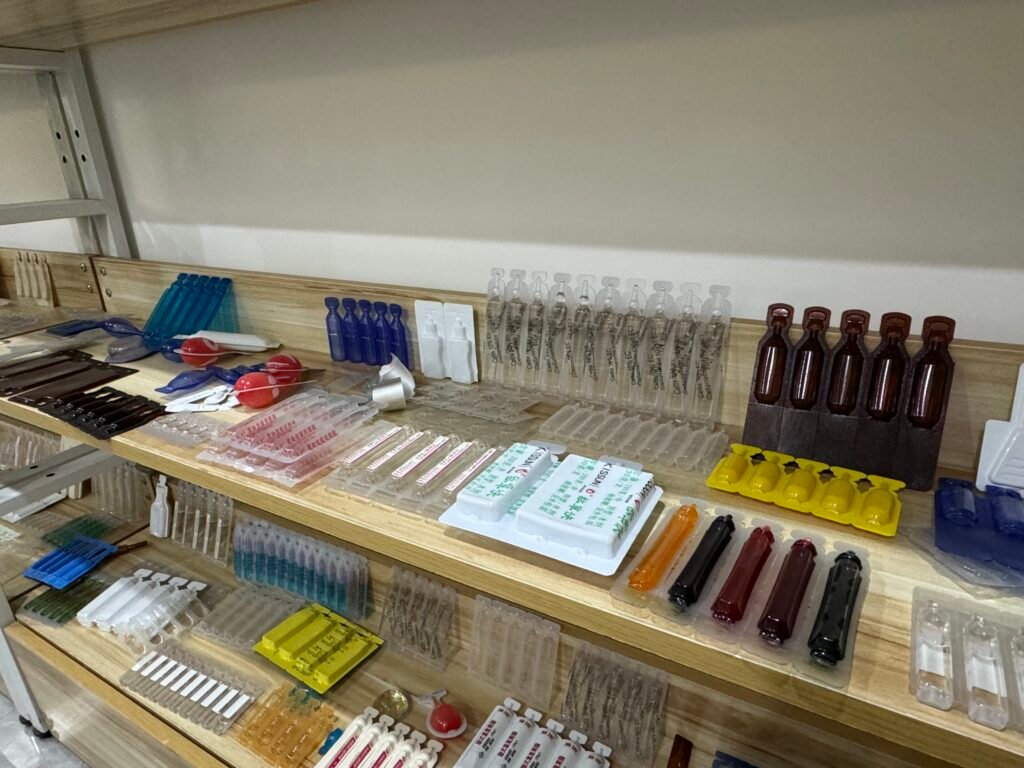
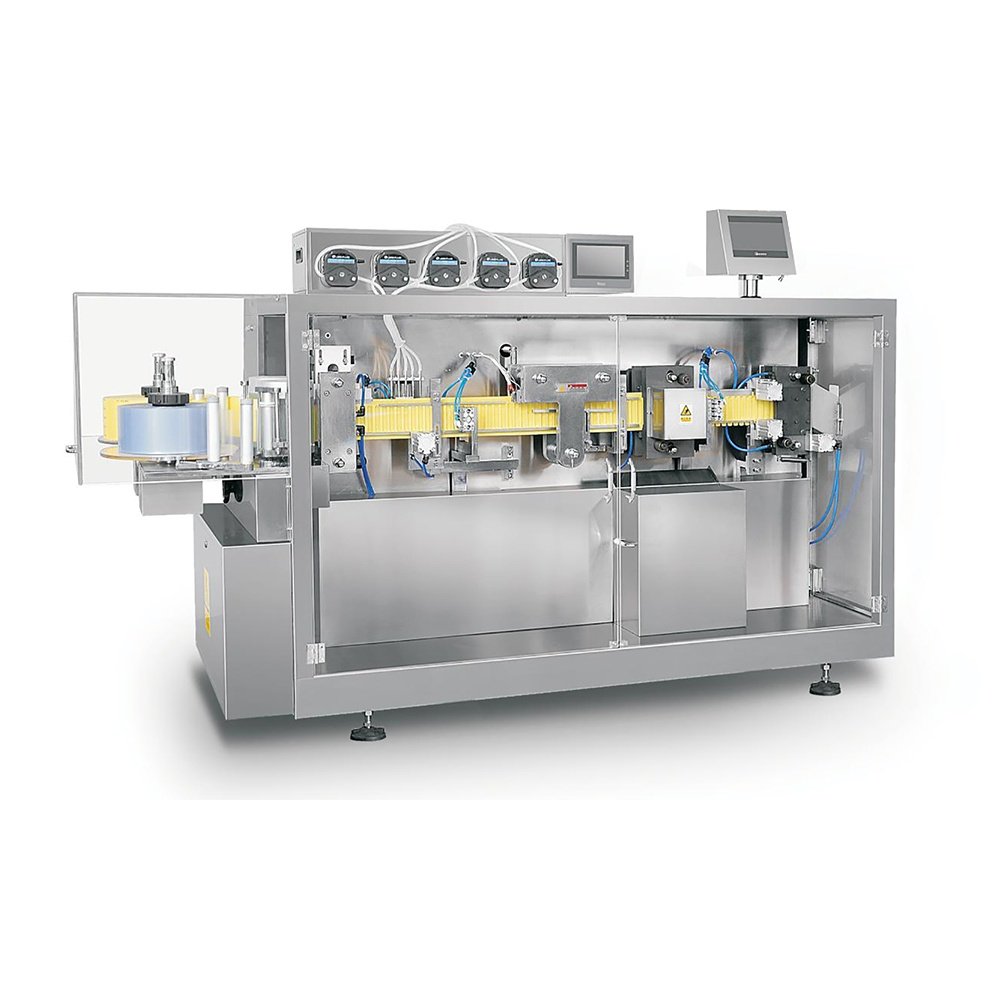
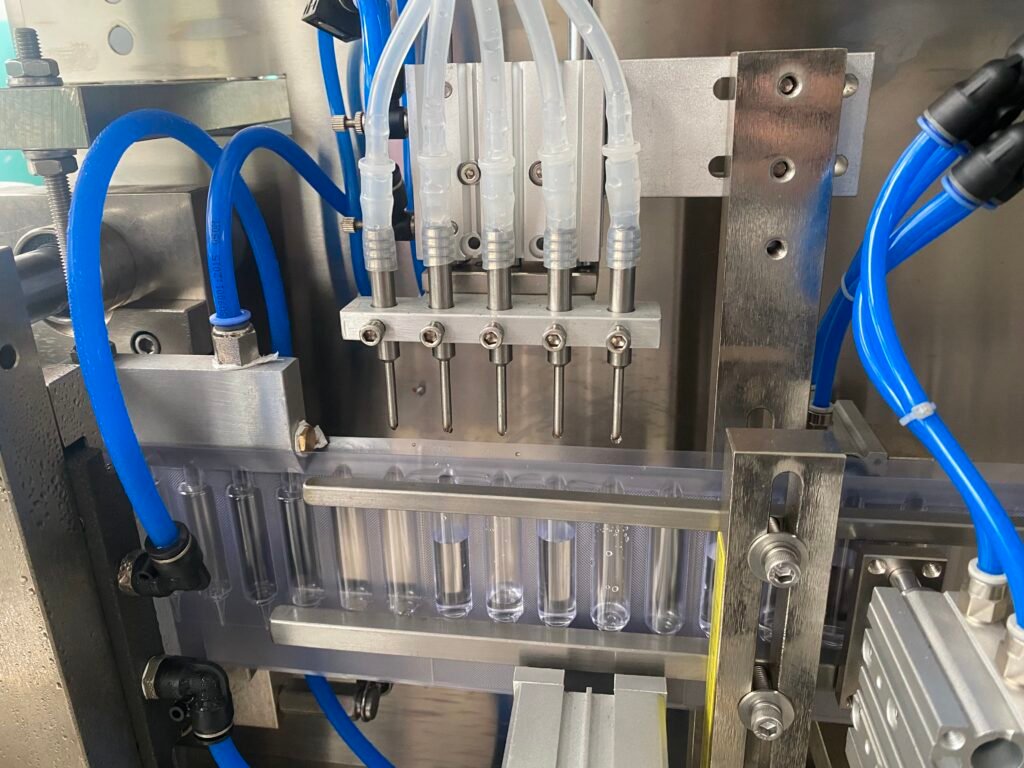
Your solution is an automatic form-fill-seal (FFS) blister system that thermoforms two plastic film rolls into clear, unit-dose bottles, then fills, heat-seals the upper and lower films, and die-cuts—all on one compact line. Ideal for cosmetics serums, pharma unit-dose liquids, and personal care products requiring hygienic, tamper-evident, mono-material packaging with strong shelf appeal.
What Is Blister Packaging?
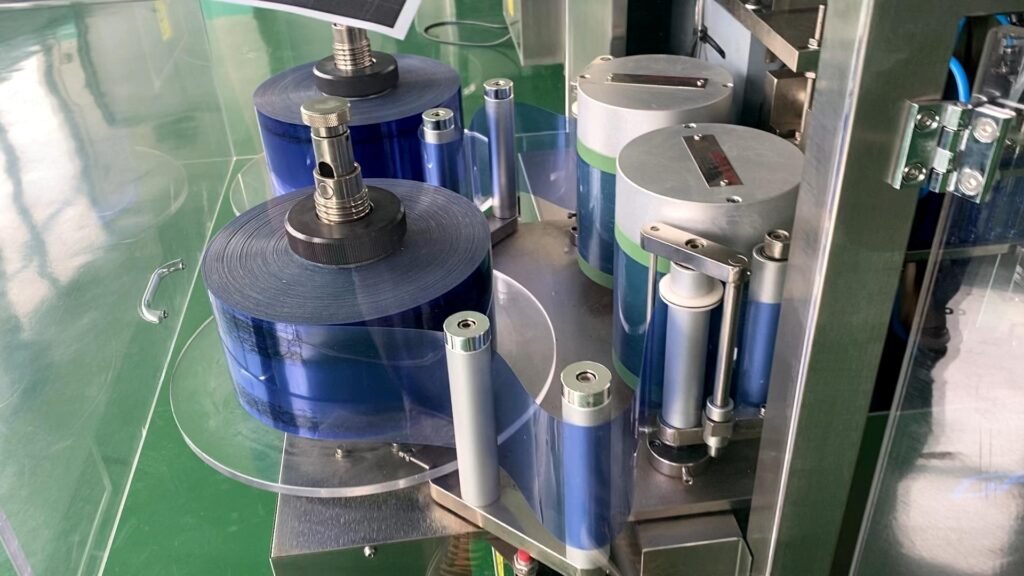
Blister packaging uses a thermoformed cavity and a mating film to enclose and protect contents from moisture, oxygen, and contamination. In an FFS twin-film bottle line, both the cavity and the closure are plastic films: the cavity is shaped like a mini bottle, filled, and then heat-sealed to a top film—combining clarity, barrier performance, and unit-dose convenience without aluminum lidding.
Blister Packaging in Pharmacy
In pharmacy, blister formats cover tablets, capsules, and increasingly, single-dose liquids. Benefits include adherence support, accurate dosing, tamper-evident options, and minimized contamination. FFS twin-film blister bottles extend these benefits to eye/ear drops, serums, and topical solutions while supporting mono-material sustainability and easier recycling.
Why Some Pharmacies Reduce Blister Packs
- Labor and cost pressures in manual pharmacy blistering
- Recycling challenges of mixed-material blisters; shift to mono-material plastics
- Better traceability and GMP compliance via manufacturer-level automation These trends drive demand for automatic FFS blister machines that deliver consistent quality and tamper-evident, mono-material unit-dose packs.
FFS Process for Single-Dose Bottles
- Dual plastic film unwinding and preheating (e.g., PET/PE, PP, PVC/PVDC)
- Thermoforming tooling creates precise bottle-shaped cavities and necks
- Servo dosing fills 0.5–10 mL accurately with hygienic circuits (CIP/SIP)
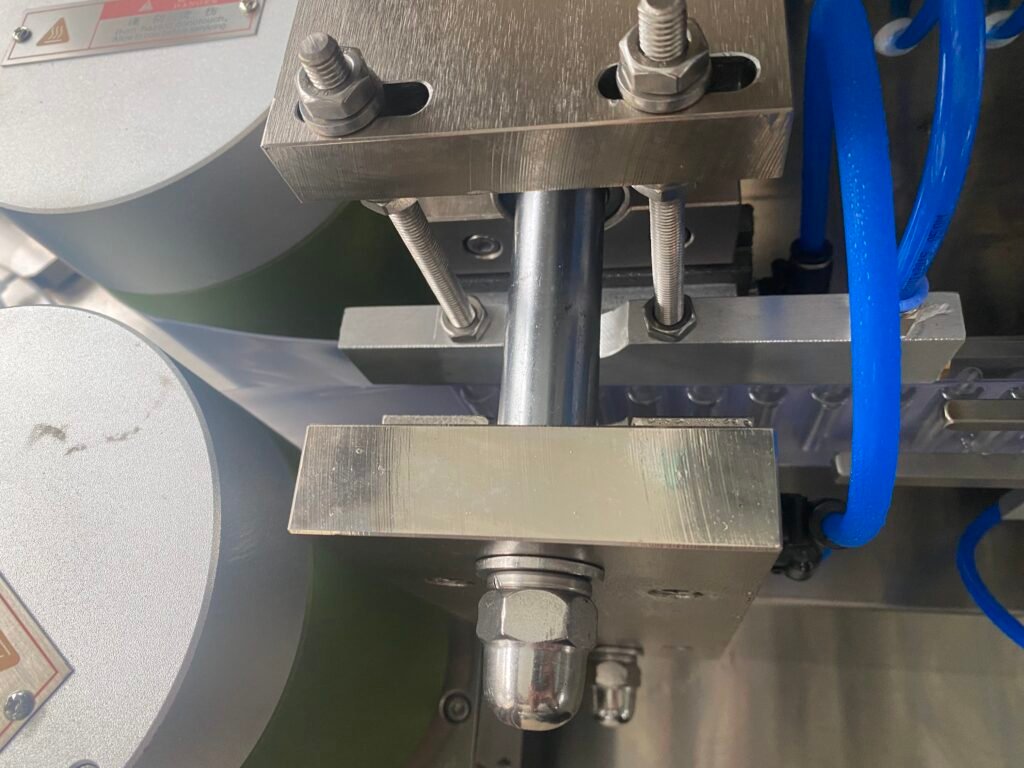
- Heat-pressure sealing bonds upper and lower films for barrier integrity and tamper evidence
- Die-cutting and punching yield clean edges and easy tear/snap features
Types of Blister Packing Machines
- Automatic blister packaging machine (FFS twin-film bottle): integrated forming, filling, heat-sealing, cutting
- Small blister packaging machine: compact footprint for pilots, small batches, fast changeovers
- Semi-automatic variants: operator-assisted steps for specialty liquids
- Specialty modules: cap packaging blister and empty bottle packing for kit assembly
Costs and Budgeting
- Small FFS blister machine for single-dose plastic bottles: USD 12,000–35,000
- Fully automatic lines with vision/serialization: USD 40,000–150,000+
- Tooling/format sets: USD 1,500–8,000 per SKU
- Validation, installation, spares: add 10–20% Note: Prices vary by twin-film structures (PVC/PVDC, PET/PE, PP), cleanroom compatibility, and add-ons like inline film printing, code readers, and reject systems.
Key Features to Evaluate
- Accurate bottle cavity forming for retention and leak prevention
- Hygienic liquid circuits with precise servo filling and anti-drip nozzles
- Uniform twin-film heat-sealing (temperature, pressure, dwell) for high barrier performance
- Film-to-film compatibility and seal layer selection for liquid blister packaging
- Vision inspection for presence, fill level, seal integrity, date/lot
- Quick changeover tooling for multiple sizes and materials
- Compact design suitable for limited floor space
Aplicaciones
- Cosmetics/skincare serums (ampoule-like blister bottle)
- Pharma and hospital unit-dose liquids, topical solutions
- Travel/sample packs and clinical trial kits
- Accessory bundling via cap packaging blister
- Kit assembly with empty bottle packing modules
Configuration Guidance
- Define product: cavity size, neck design, fill volume, viscosity, opening method
- Choose forming and barrier films by OTR/WVTR targets (e.g., PET/PE, PP, PVC/PVDC)
- Engineer filling: peristaltic, piston, or gear pumps; CIP/SIP; dosing validation
- Select twin-film seal layers: match peel strength, tamper evidence, and process window
- Controls: PLC + HMI, recipes, web alignment and jam sensors
- Quality: inline vision, leak testing, printing (TTO/CIJ/thermal inkjet), serialization
- GMP validation: IQ/OQ/PQ and documented parameters
Suppliers and Sourcing Tips
- Compare tooling lead times, after-sales service, spare parts
- Request sample trials with your liquid for forming, fill accuracy, and seal strength
- Evaluate CE/FDA GMP readiness and documentation, especially when sourcing from blister machine China manufacturers
- Confirm materials supply and sustainability options (mono-material twin films, recyclable structures)
FAQs
Q1: Why are pharmacies stopping blister packs?
A: Many reduce in-house blistering due to labor, sustainability, and compliance burdens, favoring manufacturer-sealed unit-dose packs from automatic FFS lines.
Q2: How much does a packsize or small blister machine cost?
A: Small FFS machines typically USD 12,000–35,000; fully automatic systems USD 40,000–150,000+, plus tooling and validation.
Q3: What types of blister packing machines are available?
A: Automatic FFS, small compact, semi-automatic, and specialty modules for caps and empty bottle packing.
Q4: What is blister packaging and how does it apply to liquids?
A: A thermoformed cavity closed by a second plastic film; for liquids, choose appropriate barrier films, controlled twin-film sealing, and hygienic filling for unit-dose plastic bottles.