
















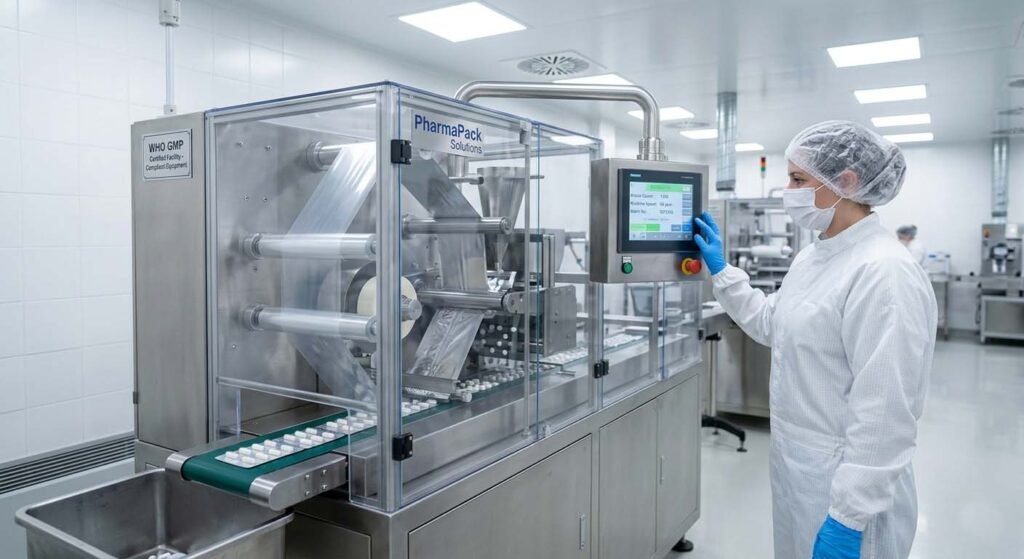
To qualify as WHO GMP packaging equipment, pharmaceutical machinery must meet three uncompromising criteria: verifiable sanitary mechanical design (such as balcony-style construction and 316L stainless steel contact parts), comprehensive IQ/OQ/PQ validation documentation, and strict 21 CFR Part 11 compliance for data integrity. For facilities in emerging markets seeking WHO prequalification packaging standards, investing in a properly validated GMP certified blister machine and automated secondary packaging lines is the only way to guarantee audit success and secure global supply tenders.
“Over my 20 years navigating global pharmaceutical projects, I’ve seen countless companies struggle with WHO GMP certification. Here is the hard truth: auditors don’t just inspect the stainless steel; they inspect the traceability.
Many clients come to me exhausted, believing they must choose between budget-breaking European equipment and lower-cost alternatives that inevitably fail validation. But hitting WHO GMP standards isn’t just about buying a machine—it’s about flawless IQ/OQ/PQ documentation, strict 21 CFR Part 11 compliance, and seamless line integration.
At HIJ, we engineered our solutions precisely for this pain point. My advice to anyone upgrading their facility? Never treat compliance as an afterthought. Don’t just buy equipment; invest in a partner who understands that your validation documents are just as critical as the machine’s mechanical performance. That is how you achieve European-level compliance with smart, accessible pricing.”
— Forester, Founder of HIJ Machinery
Table of Contents
1. The Foundation: Sanitary Mechanical Design
For pharmaceutical manufacturers in Africa, Southeast Asia, and the Middle East, winning government tenders often hinges on achieving WHO prequalification. The very first thing an auditor will look for on your production floor is the mechanical design of your packaging equipment. If the design inherently allows for cross-contamination, the audit is over before it begins.
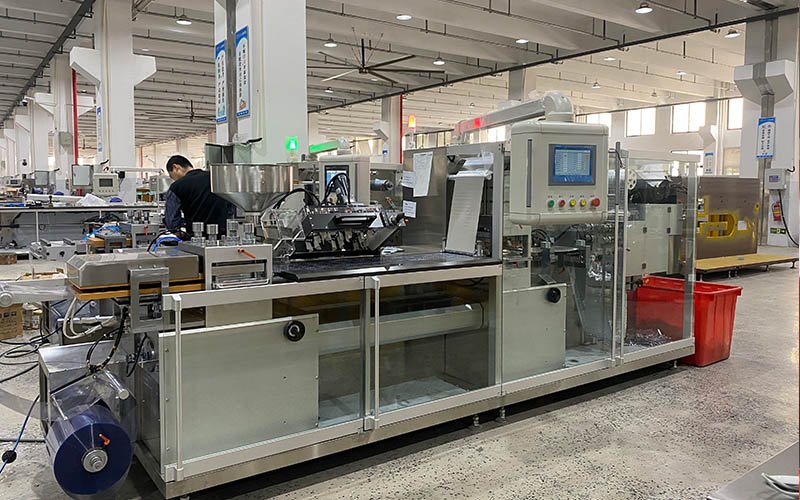
A true GMP certified blister machine utilizes a “balcony design” (cantilever structure). This critical engineering approach physically separates the drive mechanisms (motors, gears, lubrication) at the back of the machine from the product handling and packaging zones at the front. Furthermore, all product contact parts must be constructed from SUS316L stainless steel, while the outer body should be SUS304. Smooth welding seams, absence of dead corners, and easily removable tooling are mandatory for verifiable cleaning validation.
2. 21 CFR Part 11: The Software Requirement
While mechanical design prevents physical contamination, software controls prevent data manipulation. WHO GMP guidelines increasingly align with FDA 21 CFR Part 11 requirements regarding electronic records and electronic signatures.
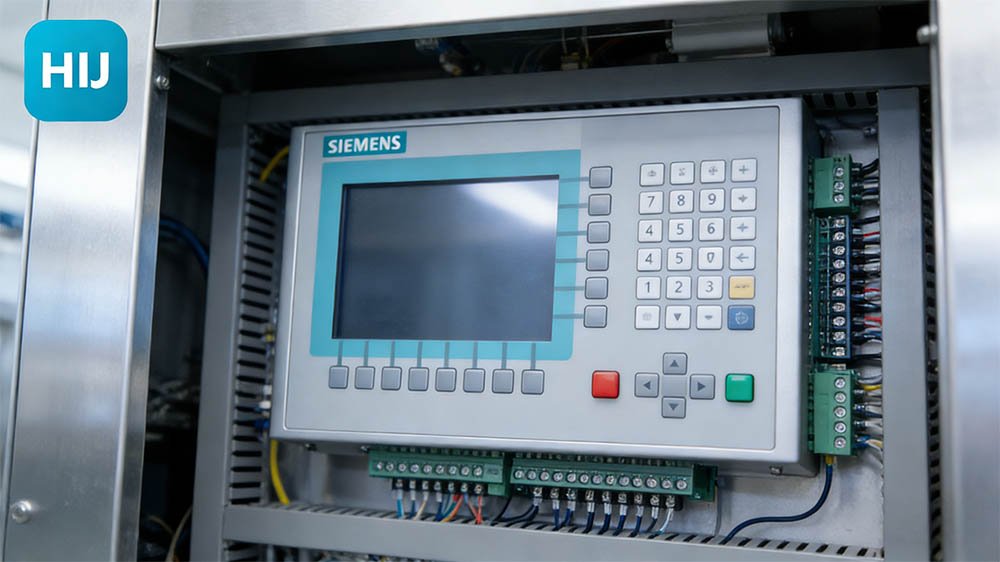
Modern WHO GMP packaging equipment must feature advanced PLC and HMI systems (such as Siemens or Allen-Bradley) that provide:
- Multi-level User Access: Different password-protected permission levels for operators, maintenance engineers, and QA managers.
- Unalterable Audit Trails: Every parameter change, alarm acknowledgment, or user login must be recorded with a timestamp and cannot be deleted or modified.
- Secure Data Export: Batch reports must be exportable in secure formats (like encrypted PDF) directly via USB or integrated into the facility’s SCADA/MES system.
3. The Validation Package: IQ, OQ, PQ, and FAT
Perhaps the biggest pitfall for manufacturers upgrading their facilities is treating the machine and the documentation as separate entities. You cannot pass a WHO audit with a great machine and a generic, poorly translated user manual.
The equipment supplier must provide a robust, customized validation master plan. This starts with a rigorous Factory Acceptance Test (FAT) before the machine ever leaves the supplier’s facility. Once installed, the Installation Qualification (IQ) proves the machine is set up correctly. The Operational Qualification (OQ) proves it performs within specified parameters. Finally, the Performance Qualification (PQ) proves it consistently produces a compliant product under your specific daily operating conditions.
Factory-Floor Case Study: Navigating a WHO Audit in Nairobi
“In 2025, a mid-sized pharmaceutical manufacturer in Nairobi, Kenya, was bidding for a lucrative antimalarial drug tender that required strict WHO prequalification. They had previously purchased a low-cost blister line from another vendor, but the machine lacked material certificates for the 316L steel and had no software audit trail. They failed their initial assessment.
They urgently turned to HIJ Machinery. We didn’t just rush a new machine; we prepared a 200+ page validation dossier (IQ/OQ/PQ) specific to their antimalarial product. During the subsequent WHO audit, the inspector spent three hours reviewing our software’s 21 CFR Part 11 audit logs and the FAT documentation. The mechanical performance was flawless, but it was the impenetrable paper trail that secured their certification and won them the contract.”
4. Minimizing Human Intervention Through Integration
WHO GMP guidelines strongly emphasize reducing human intervention to lower the risk of cross-contamination and errors. A standalone blister packer might be GMP compliant on its own, but manually transferring blister cards into boxes introduces a critical risk point.
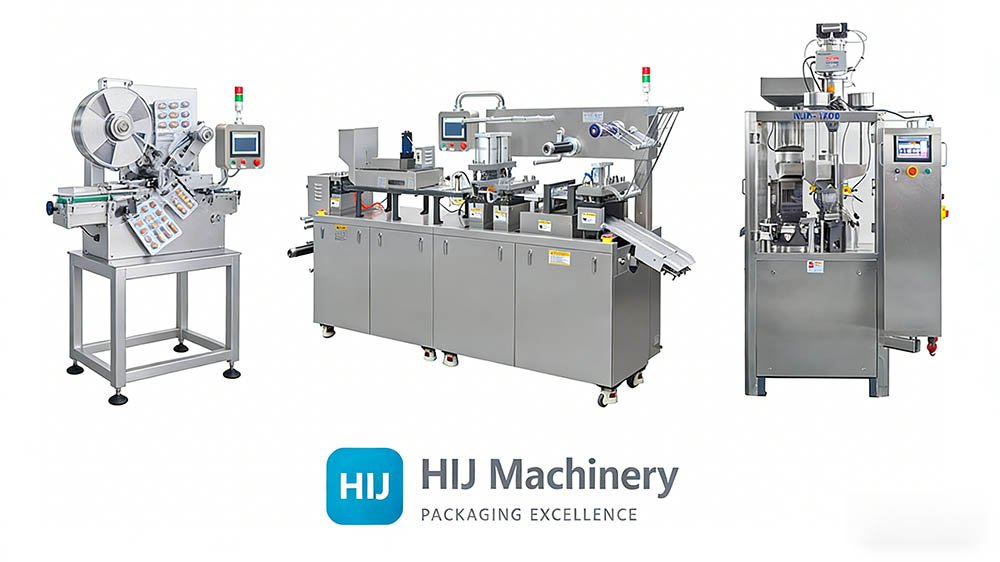
To truly elevate a facility to world-class standards, companies should look toward complete turnkey packaging solutions. Automatically connecting the blister machine to automatic cartoning machines using a smart transfer conveyor ensures that once the raw materials enter the line, the final product is only touched once it is securely sealed inside its secondary carton.
5. Standard vs. WHO GMP Certified Equipment Comparison
To clarify the differences, here is a breakdown of what separates standard commercial equipment from true WHO GMP compliant machinery.
| Feature / Requirement | Standard Packaging Machine | WHO GMP Certified Packaging Equipment |
|---|---|---|
| Structural Design | Enclosed box design; difficult to clean internals. | Balcony/Cantilever design; clear separation of mechanical and production zones. |
| Material of Construction | Standard 304 SS or painted carbon steel. | Strict SUS316L for all product contact parts; fully documented material certificates. |
| Software & Control | Basic touchscreen; single login; no memory. | 21 CFR Part 11 compliant; audit trails, electronic signatures, multi-level access. |
| Validation Documentation | Basic Operation Manual. | Comprehensive FAT, SAT, IQ, OQ, and PQ protocols tailored to the specific product. |
| Cleaning Validation | Dead corners present; requires tools to dismantle. | Tool-less format changeovers; smooth welds; designed for easy swab testing. |
Upgrade to WHO GMP Compliance Today
Don’t let subpar equipment or missing documentation cost you your WHO certification. Partner with HIJ Machinery for European-quality equipment, rigorous validation support, and smart pricing tailored for global emerging markets.
Frequently Asked Questions
What makes a blister packing machine WHO GMP compliant?
A WHO GMP compliant blister machine features a balcony design to separate mechanical drives from the packaging area, uses SUS316L stainless steel for product contact parts, has zero dead corners to allow for cleaning validation, and operates on software that meets 21 CFR Part 11 standards for data integrity and audit trails.
Why is IQ/OQ/PQ documentation necessary for pharmaceutical packaging?
IQ (Installation Qualification), OQ (Operational Qualification), and PQ (Performance Qualification) are mandatory documented proofs for auditors. They prove that the machine was installed correctly, operates within its designed limits, and consistently produces a quality product in your specific manufacturing environment.
What does 21 CFR Part 11 mean for packaging equipment?
It is an FDA regulation (widely adopted by WHO GMP standards) that requires electronic records and signatures to be trustworthy and reliable. For machinery, it means the software must have different user access levels, unalterable audit trails of every action, and secure data logging capabilities.
Can HIJ Machinery assist with FAT and SAT testing?
Yes, HIJ Machinery provides comprehensive Factory Acceptance Testing (FAT) at our facility before shipping, and we send our engineers globally to conduct Site Acceptance Testing (SAT) and assist with the complete IQ/OQ execution at your facility.