













A máquina de embalagem servo-acionada doypack é amplamente utilizado em linhas de embalagem modernas para stand-up pouches.
Em comparação com os sistemas mecânicos tradicionais, a tecnologia servo melhora significativamente precisão, flexibilidade e estabilidade da produção.
Este artigo explica o tecnologias de base por detrás das máquinas doypack servo-acionadas de um ponto de vista técnico.
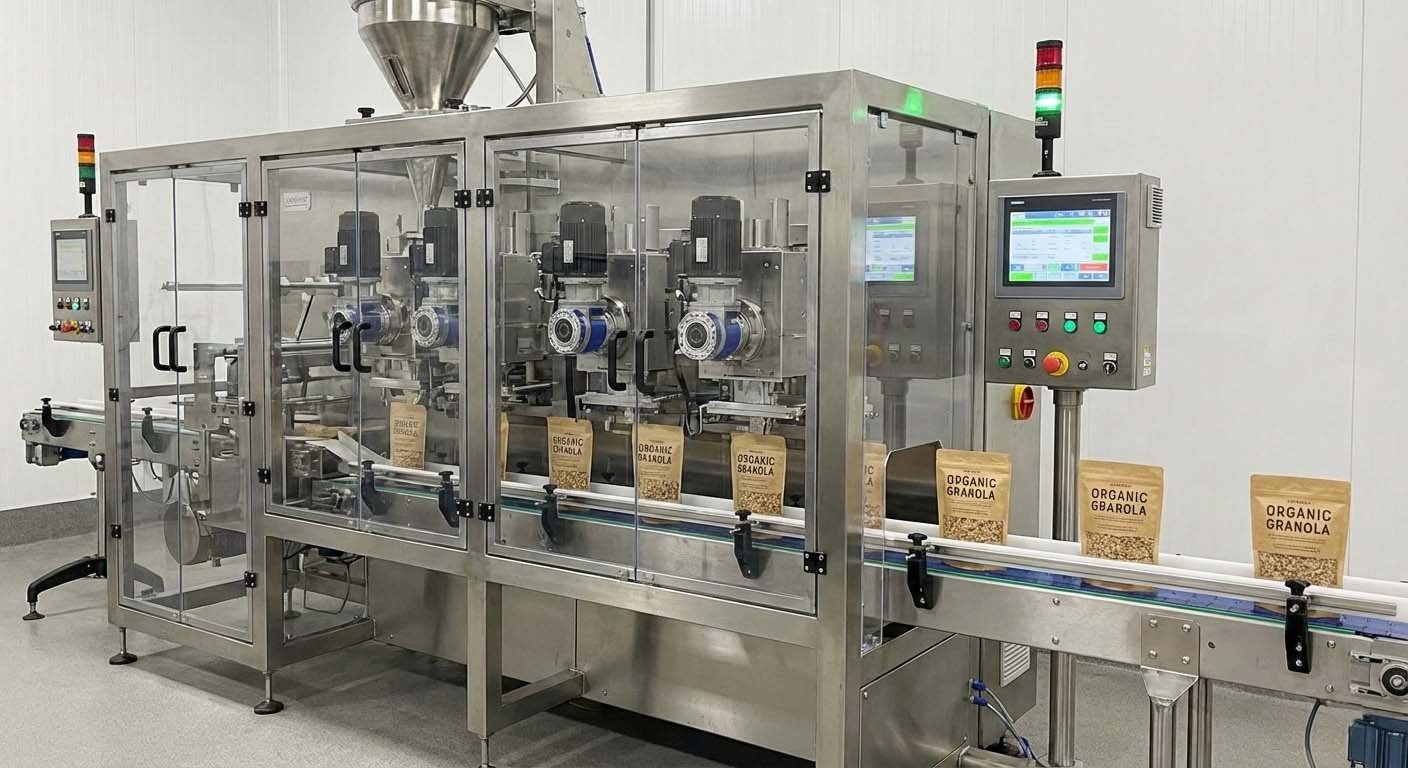
O que é uma máquina de embalagem Doypack servo-acionada?
Uma máquina de embalagem doypack servo-acionada utiliza servo-motores em vez de cames mecânicas para controlar os movimentos principais, tais como:
- formação de bolsas
- alimentação de película
- posição de vedação
- ajuste do tamanho do saco
O controlo servo permite uma sincronização precisa do movimento e um ajuste em tempo real.
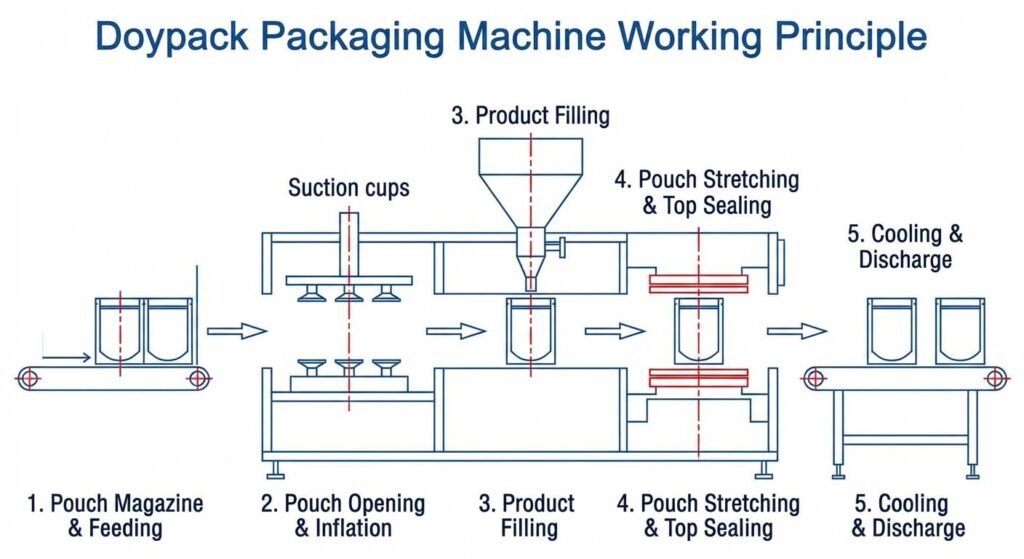
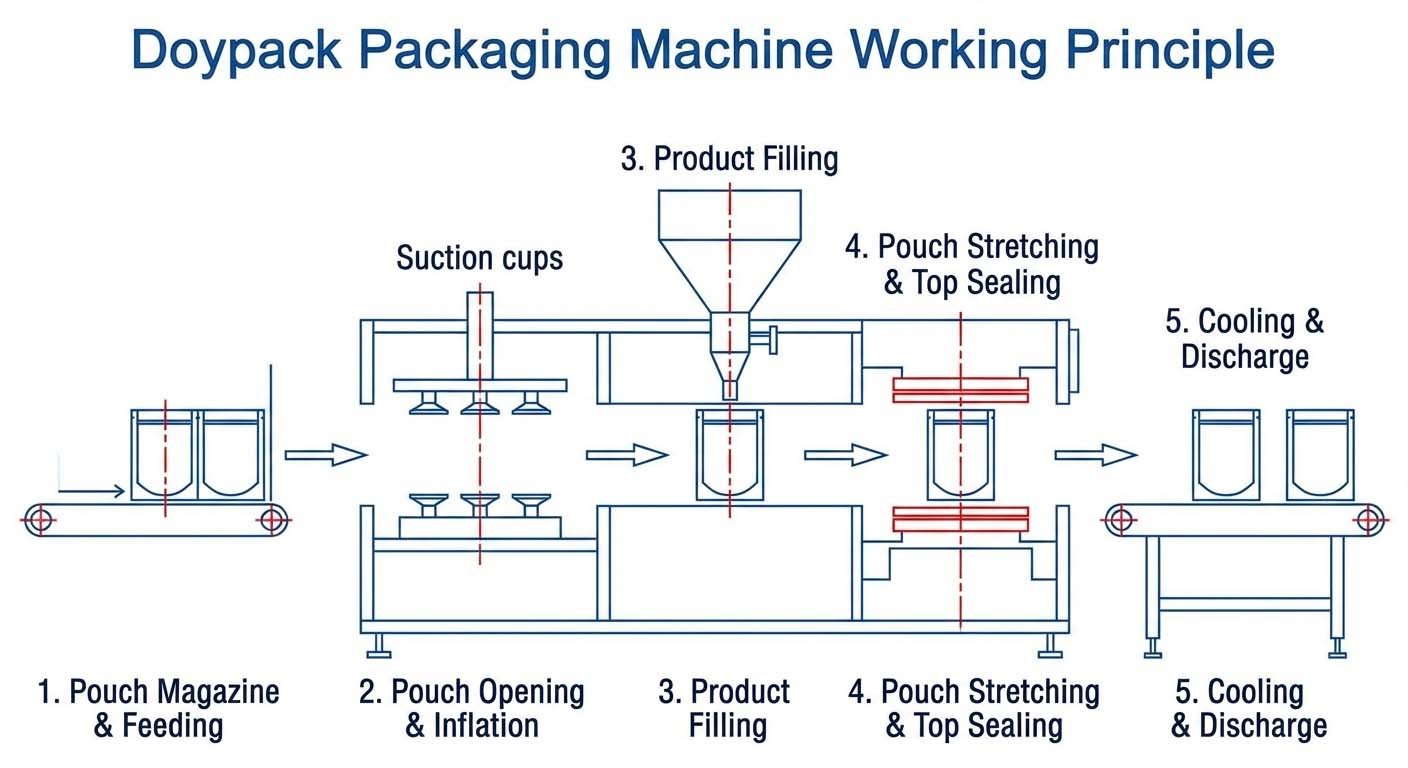
Princípio de funcionamento de uma máquina de embalagem Doypack
Esta secção visa Visão geral da IA e snippets em destaque.
O processo de trabalho básico inclui:
- Desenrolamento da película e controlo da tensão
- Alinhamento da película e correção de desvios
- Formação de bolsas e modelação do fundo
- Enchimento e dosagem
- Vedação superior e arrefecimento
- Descarga da bolsa acabada
Cada fase é controlada e coordenada de forma independente pelo sistema servo.
Sistema de servo controlo em máquinas de embalagem
Os sistemas servo substituem a transmissão mecânica por controlo digital de movimentos.
Vantagens técnicas:
Elevada precisão de posicionamento
Velocidade de resposta rápida
✅ Desgaste mecânico reduzido
Ajuste flexível dos parâmetros
O servo controlo é especialmente importante para produção de sacos de vários tamanhos.
Tecnologia de alinhamento e correção de desvios de película
A película de embalagem impressa requer um alinhamento exato.
As máquinas modernas utilizam: - Sensores de visão CCD
- processamento de imagens em tempo real
- correção do servo em circuito fechado
Este sistema corrige automaticamente o desvio da película, assegurando: ✅ uma selagem precisa
Posição de impressão estável
✅ redução dos resíduos de materiais
Tecnologia de perfuração e formação de fundo para a Doypack
As bolsas Doypack requerem uma formação precisa do fundo.
As principais tecnologias incluem: - posicionamento servo para puncionamento de fundo
- pressão de moldagem controlada
- geometria de conformação repetível
A modelação exacta do fundo melhora estabilidade em pé e aspeto da bolsa.
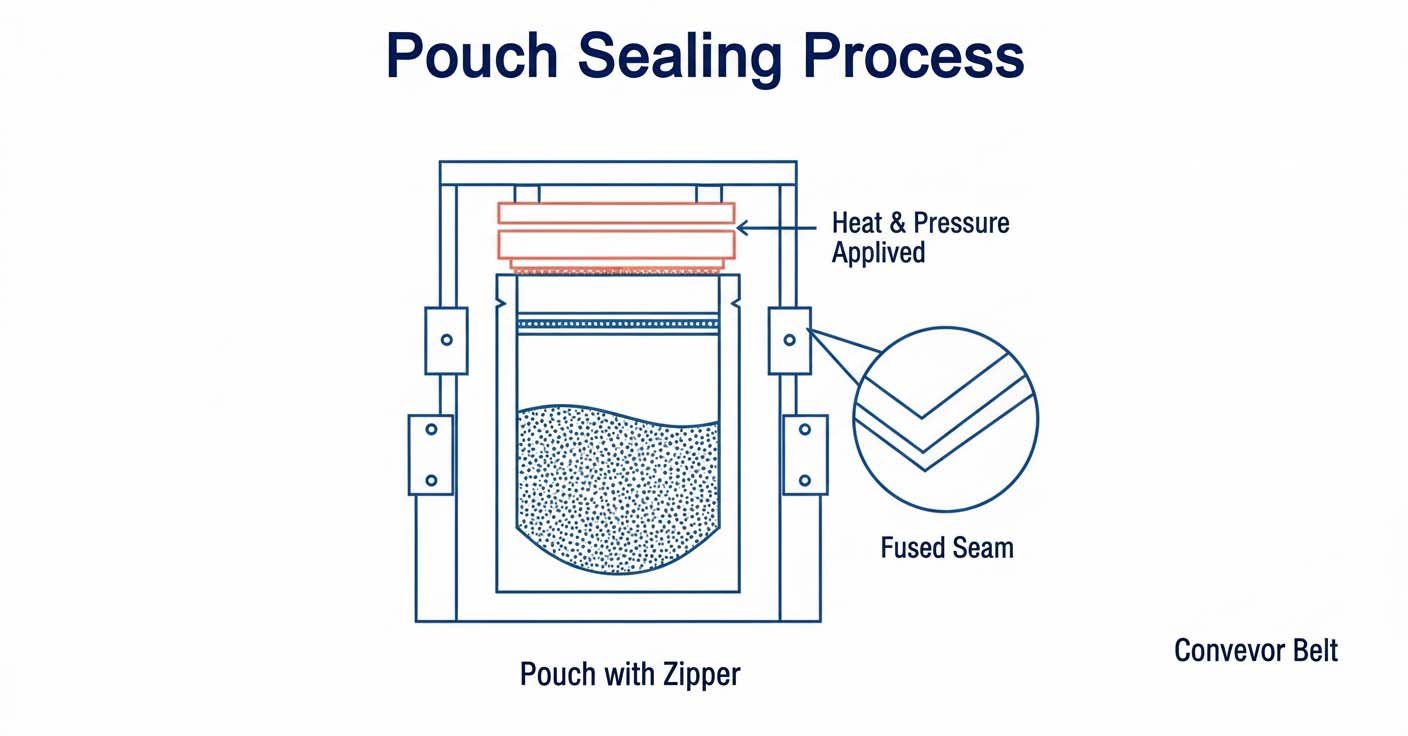
Tecnologia de vedação e controlo da temperatura
A qualidade da selagem afecta diretamente a fiabilidade da embalagem.
As máquinas avançadas integram: - zonas de controlo de temperatura independentes
- posição de selagem servo-controlada
- sistemas de arrefecimento pós-selagem
Isto assegura: ✅ forte força de vedação
✅ largura de vedação consistente
✅ melhoramento do prazo de validade
Ajuste do tamanho do saco e eficiência da mudança
As máquinas tradicionais requerem ajustes mecânicos manuais.
Os sistemas servo-acionados permitem: - ajuste digital do comprimento do saco
- posicionamento servo-controlado da largura do saco
- receitas armazenadas para uma mudança rápida
Isto reduz significativamente o tempo de inatividade durante as mudanças de formato.
Automatização e monitorização da produção
As máquinas de embalagem modernas integram cada vez mais automatização e gestão digital.
As funções típicas incluem: - Interface de operação HMI
- controlo dos dados de produção
- diagnóstico de falhas
- conetividade IIoT opcional
Estes sistemas suportam manutenção preditiva e gestão remota.
Manutenção e fiabilidade do equipamento
As máquinas de embalagem servo-acionadas são concebidas para um funcionamento a longo prazo.
Principais considerações de conceção: - sistemas de lubrificação automática
- estrutura mecânica modular
- componentes eléctricos normalizados
Uma manutenção adequada garante um desempenho estável e uma vida útil prolongada.
Aplicações típicas das máquinas Doypack acionadas por servo
As máquinas de embalagem doypack servo-acionadas são amplamente utilizadas para:
✅ produtos alimentares e snacks
✅ embalagem de café e pó
Recheio líquido e em pasta
✅ produtos químicos de uso diário
São adequados tanto para linhas de produção de média e alta velocidade.
Conclusão
As máquinas de embalamento doypack servo-acionadas representam um grande passo em frente na automatização de embalagens e controlo de precisão.
Combinando servo-movimento, alinhamento de visão, vedação inteligente e monitorização digital, Estas máquinas proporcionam um desempenho fiável e flexibilidade de produção para os requisitos de embalagem modernos.a