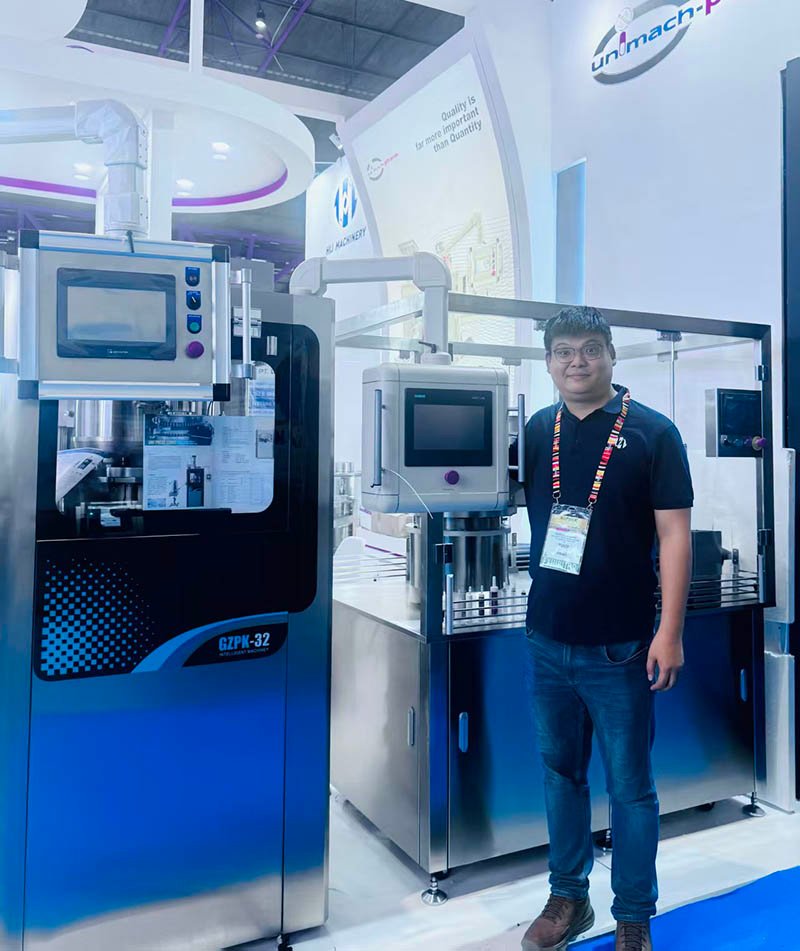
















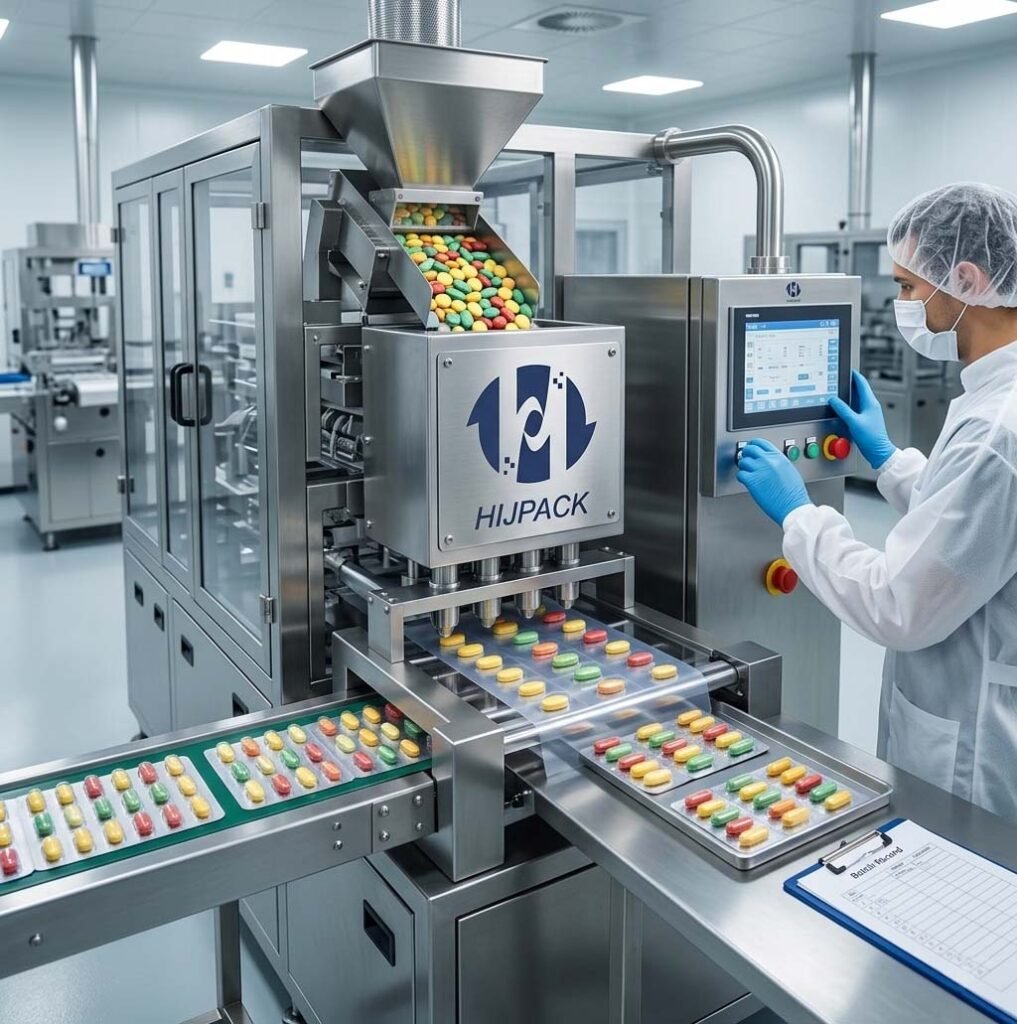
📋 Nutraceutical Blister Packaging Machine — Complete Technical Guide
Vitamin & Supplement Blister Packaging: What Your Machine Spec Sheet Doesn’t Tell You
Selecting a nutraceutical blister packaging machine on throughput alone — without validating WVTR-rated forming film, soft-gel sealing dwell time, and UV-blocking lidding options — is the single most expensive equipment mistake in the supplement industry. A forming film with a water vapor transmission rate above 0.5 g/m²/day will degrade hygroscopic B-vitamins measurably within 6 months, and no downstream labeling or marketing investment can recover that product loss.

💡 Forester’s Insight — The Direct Answer
“Nutraceutical blister packaging is fundamentally different from standard pharma — vitamins and soft-gel supplements demand tighter moisture barrier specs, UV-blocking film options, and torque-sensitive sealing parameters that generic blister lines simply aren’t calibrated for.”
Field Experience: In my 20 years of auditing production facilities — from Brazilian nutraceutical plants in São Paulo to contract manufacturers in Jakarta and Ho Chi Minh City — the single costliest mistake I’ve witnessed is buyers selecting a blister machine purely on tablet-per-minute throughput, ignoring WVTR ratings on forming film and heat-seal dwell time for soft-gels. A facility in Malaysia lost a USD 2.3 million EU export contract in 2022 because their Alu-PVC line was producing Omega-3 blisters with a sealing jaw temperature variance of ±12°C — causing a 40% drop in seal integrity that only surfaced during the importer’s incoming QC in Germany.
The Hidden Trap: Cheap standalone machines ship with no URS documentation, no FAT/SAT protocol, and zero support for the cGMP compliance audit your EU or FDA market will demand on day one. Always validate your blister line against the specific moisture sensitivity class of your SKU — Omega-3 soft-gels and hygroscopic B-vitamins are not the same beast. At HIJ Machinery, our turnkey integration approach means forming film selection, sealing station calibration, and PLC-driven reject logic are engineered together — eliminating the multi-vendor blame game when your seal integrity fails QC.
Why Nutraceutical Blister Packaging Machine Requirements Differ Fundamentally from Standard Pharma Lines
A nutraceutical blister packaging machine must be engineered around the chemical fragility of its contents — not just its physical dimensions. Vitamins, minerals, probiotics, and botanical extracts degrade through three primary vectors that a standard tablet blister line is never calibrated to control: moisture ingress, UV photodegradation, و oxygen permeation. Pharmaceutical blister lines for stable small-molecule drugs tolerate PVC forming film with a WVTR of 2–4 g/m²/day without clinical consequence. That same film specification applied to a hygroscopic Vitamin C or magnesium tablet produces measurable potency loss within 90 days at tropical ambient conditions (30°C / 75% RH — ICH Zone IVb stability conditions governing markets across Southeast Asia, Latin America, and the Middle East).

Blister forming station: selecting the correct WVTR-rated film is the first technical decision that determines shelf-life compliance for nutraceuticals.
The Three Critical Performance Gaps: Generic Blister Line vs. Nutraceutical-Grade Machine
| Parameter | Standard Pharma Blister Line | Nutraceutical-Grade Configuration | Risk if Wrong |
|---|---|---|---|
| Forming Film WVTR | PVC: 2–4 g/m²/day | PVDC: 0.1–0.5 g/m²/day / Alu-Alu: <0.01 g/m²/day Best | Hygroscopic degradation; caking; failed USP dissolution |
| Sealing Dwell Time | 0.4–0.6 s (rigid tablet) | 0.8–1.4 s (soft-gel, gummy) with torque control | Incomplete seals; soft-gel deformation; oil migration |
| UV-Blocking Lidding | Standard aluminum foil (no UV spec) | Opaque Alu or UV-barrier PVDC laminate | Photolabile vitamins (B2, D3, K2) degraded at retail shelf |
| Sealing Temperature Control | ±5°C variance acceptable | ±2°C variance required; PID-loop validated | Peelable seal failure; WVTR compromise at weak seam |
| Cavity Sizing Precision | ±0.3 mm (hard tablets) | ±0.1 mm (soft-gels; prevents squeeze deformation) | Capsule rupture; fill oil contamination; reject surge |
| GMP Documentation | CE mark only | URS + FAT/SAT + IQ/OQ/PQ protocols Required | Regulatory audit failure; EU/FDA market entry blocked |
Common Failure Modes & Forester’s Fix
- 🔴 Symptom: Omega-3 soft-gel blisters show visible oil staining on the aluminum lidding within 4 weeks of production — rejected by importer QC.
⚙️ Root Cause: Sealing jaw temperature set at 195°C with a dwell time of 0.5 s — correct for hard tablets, but causing micro-deformation of the soft-gel shell and oil migration through the compromised heat seal seam.
🔧 Forester’s Fix: Reduce sealing jaw temperature to 175°C, extend dwell time to 1.2 s, and add a cooling platen (set to 18°C) immediately downstream of the sealing station. Validate against ASTM F1886 peel-force test: target ≥3.5 N/15 mm for aluminum lidding on PVDC forming film. - 🔴 Symptom: Hygroscopic Vitamin C tablets exhibit caking and clumping inside sealed blisters after 3 months in tropical warehouse (32°C / 80% RH).
⚙️ Root Cause: Forming film specified as standard PVC (WVTR: 3.2 g/m²/day) — selected by procurement on price, not moisture class. The product stability data required PVDC laminate (WVTR: ≤0.3 g/m²/day).
🔧 Forester’s Fix: Retrofit the forming film unwind station for 250-µm PVDC/PVC laminate. No mechanical change needed on HIJ DPP-250 or DPP-260 platforms — only film tension and forming temperature adjustment (forming station: increase from 110°C to 130°C for thicker laminate). - 🔴 Symptom: Vision inspection system generating excessive false-reject alarms (>8% reject rate) on gummy vitamin blisters due to irregular surface geometry.
⚙️ Root Cause: Vision system calibrated with rigid tablet reference images; gummy surface reflectance and shape variance triggers threshold breach.
🔧 Forester’s Fix: Recalibrate vision system with product-specific reference library; set cavity-present detection mode to volumetric shadow analysis rather than surface brightness threshold. Reduce false-reject target to <1.5% within 2 hours of parameter adjustment.
Forming Film Selection for Vitamin Blister Packing: WVTR, UV Barrier, and Alu-Alu Decision Matrix
Forming film selection is the highest-leverage technical decision in vitamin blister packing — a 3-minute procurement choice that determines 24-month shelf-life compliance. The correct film material for each supplement category is dictated by three validated parameters: Water Vapor Transmission Rate (WVTR, measured per ASTM E96 or ISO 15106), Oxygen Transmission Rate (OTR, measured per ASTM D3985), and the product’s ICH stability classification zone.

PVC / PVDC / Alu-Alu material comparison: WVTR and OTR performance across supplement categories. Alu-Alu cold-form remains the definitive moisture barrier for hygroscopic and photolabile ingredients.
Film Material Selection by Supplement Category
2–4 g/m²/day
WVTR — suitable only for non-hygroscopic minerals in dry climates (ICH Zone I/II)
0.1–0.5 g/m²/day
WVTR — recommended for B-vitamins, Vitamin C, probiotics in tropical markets
<0.01 g/m²/day
WVTR — mandatory for Omega-3 fish oil, photolabile D3/K2, moisture-critical enzyme blends
0.05–0.15 g/m²/day
WVTR — mid-tier option for softgel capsules in Middle East markets (ICH Zone IVa)
Alu-Alu cold-form blister packaging — produced on a cold-forming blister line rather than a thermoforming station — delivers the definitive moisture and light barrier for the most sensitive nutraceutical SKUs. Cold-form Alu-Alu blisters achieve WVTR values below 0.01 g/m²/day and OTR values below 0.01 cc/m²/day, making them the regulatory gold standard demanded by EU Annex 15 validation protocols for high-sensitivity pharmaceutical and nutraceutical products. HIJ’s Alu-Alu cold-forming blister packaging machine is purpose-built for exactly this application — with a cold-forming die set that avoids heating the aluminum laminate, preventing micro-pinhole formation that compromises barrier integrity.

HIJ DPH-300 Alu-Alu Cold-Forming Blister Machine: engineered for Omega-3 soft-gels, D3/K2 combinations, and enzyme blends requiring <0.01 g/m²/day WVTR barrier performance.
Common Failure Modes & Forester’s Fix
- 🔴 Symptom: Cold-form Alu-Alu blisters develop micro-pinholes visible on light-box inspection, causing WVTR to exceed specification (>0.05 g/m²/day measured per ASTM F1927).
⚙️ Root Cause: Cold-forming die gap set too narrow (less than 0.15 mm clearance for 60-µm Alu laminate), causing tensile stress exceeding the aluminum alloy’s elongation limit of 18–22% — producing micro-fractures invisible to the naked eye but detectable under ASTM F2228 vacuum dye penetration.
🔧 Forester’s Fix: Increase cold-forming die clearance to 0.18–0.22 mm. Reduce punch travel speed from 40 mm/s to 28 mm/s. Requalify 3 consecutive production batches against ASTM F1927 at 40°C/75% RH — target: WVTR <0.01 g/m²/day over 30-day test cycle. - 🔴 Symptom: PVDC forming film delaminating from PVC base layer at sealing margins after 6 months of tropical storage — customer reports blisters opening spontaneously at retail.
⚙️ Root Cause: Sealing station heat-plate temperature inconsistency of ±8°C due to a failed thermocouple in the secondary heating zone — causing under-bonding of PVDC/PVC laminate edge adhesion below the 180°C minimum bonding activation threshold.
🔧 Forester’s Fix: Replace Type-K thermocouple (cost: <USD 40). Re-calibrate both heating zones to 188°C ±2°C. Perform peel adhesion test per ASTM F88 — target: ≥4.0 N/15 mm along all four sealing margins.
Soft-Gel & Gummy Vitamin Blister Packing: Sealing Parameters and Feeder Design
Soft-gelatin capsules and gummy vitamins impose mechanical challenges on blister packaging equipment that rigid tablet lines are geometrically incapable of addressing without dedicated tooling modifications. A soft-gel’s viscoelastic shell deforms under standard brush-type feeder pressure — a 200 g/cm² brush feeder force that correctly places a 500 mg coated tablet will rupture a 1,000 mg Omega-3 soft-gel at a rate of 3–7% per shift, generating oil contamination on the forming film surface that defeats the heat seal bond at that cavity.
- Soft-gel feeder design must use gravity-assist or gentle vibrating-plate feeding — never brush or paddle-wheel systems calibrated for rigid tablets
- Cavity depth for soft-gels must allow 1.5 mm clearance above the maximum gel height at operating temperature (27°C factory ambient) to prevent compression during sealing press closure
- Sealing jaw temperature for soft-gel Alu-Alu blisters: 160–180°C (vs. 190–210°C for hard tablet PVC blisters) — lower temperature prevents shell gelatin softening and deformation under press pressure
- Dwell time: 1.0–1.4 s with a programmable PLC dwell sequence — not a mechanical fixed-cam dwell — to allow independent adjustment per soft-gel size and lidding material
- Post-seal cooling station (chilled roller at 15–20°C) is mandatory for soft-gels to re-solidify the gelatin boundary zone before the blister enters the die-cutting station
- Vision inspection must use transmitted-light rather than reflected-light cameras — soft-gel semi-transparency requires backlighting to verify full-cavity presence without false-rejects from surface opacity variation
Common Failure Modes & Forester’s Fix
- 🔴 Symptom: Soft-gel capsules (1,200 mg fish oil) rupturing at the feeder station at a rate of 4–5 per 1,000 units — causing oil contamination that triggers line shutdown for cleaning every 2 hours, destroying OEE.
⚙️ Root Cause: Standard rotary brush feeder applying 180 g/cm² contact force — 3× the safe limit for gelatin-shell capsules with a Shore A hardness of 35–45 at 25°C production environment.
🔧 Forester’s Fix: Replace brush feeder with a 4-lane vibrating plate feeder (amplitude: 0.8 mm, frequency: 18 Hz). Widen cavity pitch from 22 mm to 26 mm to eliminate side-wall contact during transfer. Target rupture rate: <0.1 per 1,000 units. Clean-room verified by one of HIJ’s Southeast Asian clients within 3 days of feeder swap. - 🔴 Symptom: Gummy vitamin blisters showing visible deformation (“flat-top” profile) after heat sealing — product presentation rejected by US private-label customer requiring intact dome shape.
⚙️ Root Cause: Sealing press closing force set at 0.45 MPa — appropriate for hard PVC-tablet blisters — compressing gummy (Shore A hardness: 25) at forming temperature of 28°C, causing permanent shape deformation before lidding bonds.
🔧 Forester’s Fix: Reduce sealing press force to 0.22 MPa. Add a 12 mm cavity depth forming station (vs. standard 8 mm) to provide vertical clearance. Increase dwell time to 1.3 s to compensate for reduced pressure. Validate with 3-cavity peel test per USP <1207> package integrity standard.
cGMP Compliance for Nutraceutical Blister Lines: Regulatory Requirements by Market
A nutraceutical blister packaging machine operating in a cGMP-regulated environment must satisfy documentation, equipment qualification, and electronic records requirements that are as demanding as those applied to pharmaceutical manufacturing. The critical regulatory distinction is that nutraceuticals in the US are governed by 21 CFR Part 111 (Current Good Manufacturing Practice in Manufacturing, Packaging, Labeling, or Holding Operations for Dietary Supplements) — which mandates batch record generation, component testing, and production process controls equivalent in rigor to 21 CFR Part 211 for finished pharmaceuticals. EU markets additionally require compliance with EU GMP Annex 11 (computerised systems) and, for contract manufacturers exporting finished products to the EU market, alignment with the 2022 revision of EU GMP Annex 1.
Under 21 CFR Part 11, every automated blister packaging machine producing cGMP-compliant dietary supplements must generate tamper-evident electronic batch records with audit trails, time-stamped parameter logs, and operator authentication credentials. This is not optional for manufacturers exporting to US, EU, or GCC markets. At HIJ Machinery, every nutraceutical blister line ships with Siemens or Allen-Bradley PLC platforms pre-configured for 21 CFR Part 11 audit-trail compliance — including password-protected parameter access, electronic signature capability, and automated alarm event logging stored for ≥5 years without manual intervention.
The IQ/OQ/PQ validation package — Installation Qualification, Operational Qualification, and Performance Qualification — is the second non-negotiable documentation requirement. EU GMP Annex 15 specifies that performance qualification must be conducted at the minimum, nominal, and maximum operating parameters, with statistical process control data from ≥3 consecutive validation batches demonstrating that the blister line operates within its validated design space. HIJ provides a pre-written IQ/OQ/PQ template set calibrated to the specific machine model, forming film, and product category — reducing a customer’s validation timeline from an industry average of 14 weeks to 6–8 weeks.
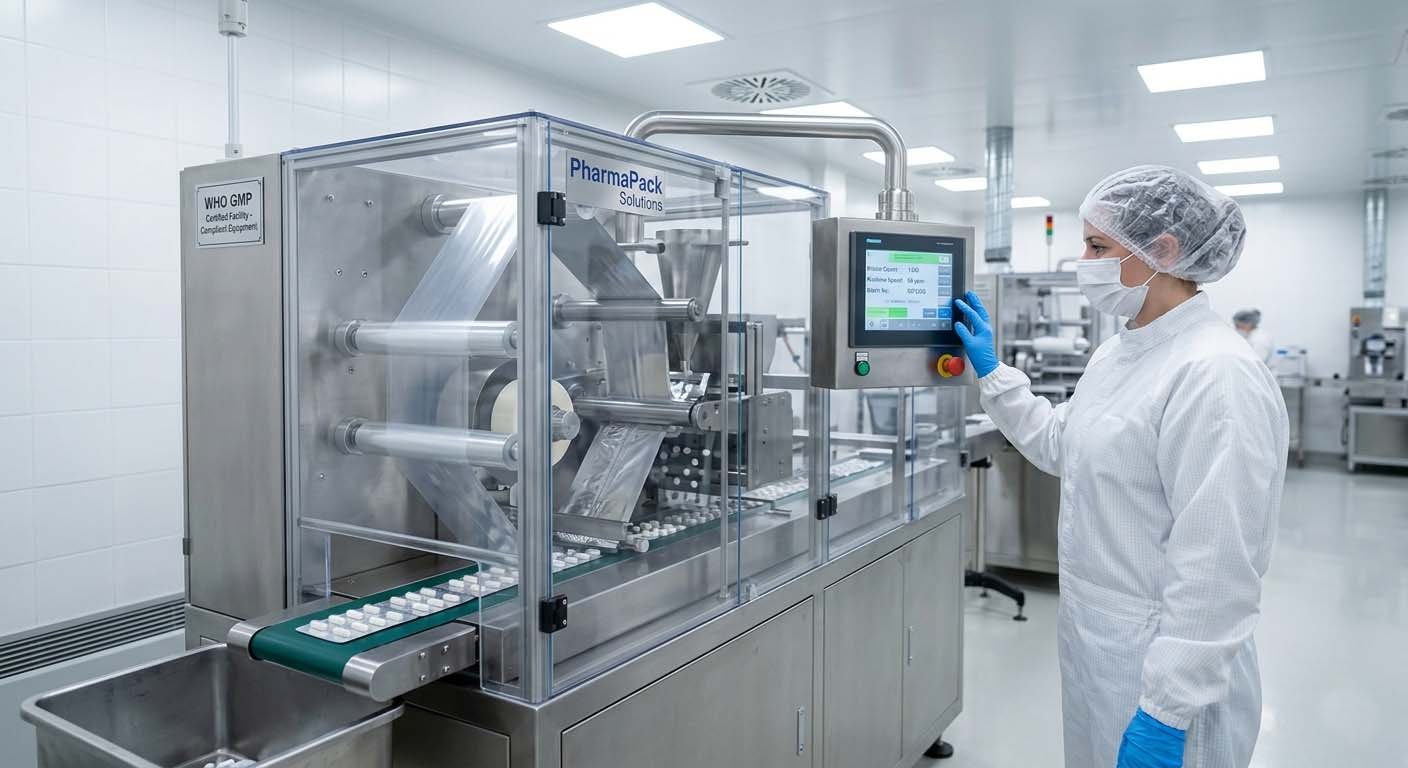
cGMP cleanroom operation: HIJ nutraceutical blister lines are supplied with pre-written IQ/OQ/PQ documentation packages, reducing regulatory validation timelines by up to 50%.
Common Failure Modes & Forester’s Fix
- 🔴 Symptom: FDA pre-approval inspection finds batch records for blister packaging line lack time-stamped parameter logging — results in Warning Letter citing 21 CFR Part 211.68(b) and 21 CFR Part 11.10.
⚙️ Root Cause: Blister machine purchased from a budget supplier with a proprietary PLC that cannot export audit-trail data in a 21 CFR Part 11-compatible format — no SCADA interface, no electronic signature module, no secure data export port.
🔧 Forester’s Fix: Retrofit with a Siemens S7-1500 PLC (or Allen-Bradley CompactLogix) with OPC-UA data gateway. Enable encrypted parameter logging to network-attached storage (NAS) with RAID-1 redundancy. Configure LDAP user authentication with role-based access control. Timeline: 6–8 weeks for retrofit + re-validation. - 🔴 Symptom: EU Notified Body audit rejects IQ/OQ/PQ documentation package — OQ protocol lacks worst-case temperature and speed boundary testing as required under EU GMP Annex 15, Section 10.5.
⚙️ Root Cause: Machine vendor supplied a generic OQ template with nominal-condition testing only — no worst-case (minimum and maximum) parameter matrix, no statistical process capability analysis (Cpk ≥1.33 required).
🔧 Forester’s Fix: HIJ validation team provides pre-structured worst-case OQ test matrix: 3 speed levels × 3 temperature levels × 3 consecutive batches = 27-run validation matrix. Cpk calculation is automated in the HIJ validation workbook (Excel-based, auditor-ready format).
How to Select the Right Nutraceutical Blister Packaging Machine: A 6-Step Procurement Protocol
Selecting the correct vitamin blister packing machine requires a structured evaluation process that sequences product-level requirements before machine specifications — not the reverse. Buyers who start with throughput speed end up with a machine that is fast but non-compliant. The correct sequence, validated across 200+ nutraceutical line installations that HIJ Machinery has supported across Southeast Asia, Latin America, and the Middle East, is as follows:
-
Step 1 — Classify Your Product’s Moisture SensitivityAssign each SKU a moisture sensitivity class using ICH Q1A(R2) stability zone data and USP moisture classification. Hygroscopic Class III & IV products (Vitamin C, B-complex, magnesium citrate, probiotics) mandate PVDC or Alu-Alu forming film. Class I & II products (Vitamin D3 oil-based softgel in foil) may use Alu-PVC. This single classification dictates your entire machine architecture — thermoforming vs. cold-forming.
-
Step 2 — Define Your Product’s Physical ParametersMeasure maximum and minimum dimensions of each supplement format: tablet/capsule/softgel OD (±0.05 mm), height at sealing temperature, and Shore A hardness for softgels and gummies. These parameters directly determine cavity depth (target: product height + 1.5 mm clearance), feeder type (brush vs. vibrating plate), and sealing dwell time range (0.5–1.4 s). Require the machine vendor to produce a cavity design drawing signed off against your actual product samples — not generic drawings.
-
Step 3 — Define Target Markets and Regulatory FrameworkIdentify every regulatory jurisdiction your product will be sold in for the next 5 years. US (21 CFR Part 111 + Part 11), EU (GMP Annex 1/11/15), Brazil ANVISA, GCC, ASEAN — each adds compliance requirements to the machine’s PLC, documentation package, and validation protocol. Document these in a User Requirements Specification (URS) before issuing any RFQ. A vendor who cannot respond to a URS is not a compliant supplier for regulated market entry.
-
Step 4 — Calculate Required Throughput with OEE Factored InConvert your annual production target to machine-speed requirements using a realistic Overall Equipment Effectiveness (OEE) factor. Industry average OEE for nutraceutical blister lines is 68–72% (accounting for changeovers, film splices, and reject events). If your target is 10 million blisters/year and your packaging format contains 10 tablets per blister, you need: 1,000,000 blister cycles/year ÷ 250 production days ÷ 8 hours ÷ 0.70 OEE = approximately 119 blisters/minute machine speed. Most mid-range nutraceutical lines run at 100–180 blisters/minute — size accordingly, not at peak nameplate speed.
-
Step 5 — Evaluate Vendor Compliance Documentation PackageRequest the following documents from every shortlisted vendor before commercial evaluation: CE Declaration of Conformity (for EU market), IQ/OQ/PQ template package, FAT (Factory Acceptance Test) protocol, SAT (Site Acceptance Test) protocol, and electrical schematics in editable format (AutoCAD or EPLAN). A vendor who cannot produce all five within 5 business days of request is signaling that these documents do not exist — and your validation timeline will pay the price.
-
Step 6 — Conduct FAT with Your Actual Product and FilmNever accept a Factory Acceptance Test run with a substitute product or a generic PVC film. The FAT must be conducted with your actual supplement format, your specified forming film (PVDC, Alu-Alu, or PET laminate), and your lidding foil — at your specified production speed. Require the vendor to produce at minimum 500 consecutive blisters during the FAT run and submit all to the following inline QC checks: seal integrity test (ASTM F2338 vacuum decay), peel force test (ASTM F88 ≥3.5 N/15 mm), and dimensional verification (±0.1 mm cavity). FAT sign-off is your last contractual leverage point before shipment.
For buyers integrating the blister line into a complete nutraceutical production workflow — including capsule filling upstream and cartoning downstream — HIJ Machinery’s nutraceutical turnkey packaging line solutions provide a single-vendor accountability model that eliminates the multi-vendor interface risk at each machine handoff point. The entire production line — from capsule filler to blister machine to blister cartoning machine — is designed, validated, and commissioned as one integrated system under a single URS and IQ/OQ/PQ protocol.
HIJ Blister Machine Models for Nutraceutical Applications

HIJ DPP-250 Thermoforming Blister Machine
Optimized for hard tablet & hard-shell capsule vitamins. PVC/PVDC/PET forming film compatible. Speed: up to 200 blisters/min. Siemens PLC with 21 CFR Part 11 audit trail.
HIJ DPH-300 Alu-Alu Cold-Form Blister Machine
The definitive solution for Omega-3 soft-gels, hygroscopic B-vitamins, and enzyme blends. WVTR <0.01 g/m²/day. Cold-form die precision: ±0.1 mm. Full Alu-Alu lidding with UV-block specification.
FAQ: Nutraceutical Blister Packaging Machine — Buyer Questions Answered
A nutraceutical blister packaging machine is specifically calibrated for the lower sealing temperatures (160–195°C vs. 200–220°C for hard tablets), longer dwell times (0.8–1.4 s for soft-gels), WVTR-rated forming film options (PVDC ≤0.5 g/m²/day or Alu-Alu <0.01 g/m²/day), and gentler feeding mechanisms required by vitamins, minerals, botanicals, and soft-gelatin supplements. Standard pharma blister machines designed for stable small-molecule tablets are not pre-configured for these parameters and require significant modification — and re-validation — to run nutraceutical products compliantly.
Specify WVTR based on your product’s moisture sensitivity class and target market ICH stability zone. For hygroscopic B-vitamins, Vitamin C, and probiotics sold in tropical markets (ICH Zone IVb: 30°C/75%RH): specify PVDC laminate with WVTR ≤0.3 g/m²/day. For Omega-3 fish oil soft-gels, Vitamin D3/K2 combinations, and enzyme blends in any climate zone: specify Alu-Alu cold-form with WVTR <0.01 g/m²/day per ASTM E96. For non-hygroscopic minerals in temperate Zone I/II markets: standard PVC with WVTR 2–4 g/m²/day is acceptable and cost-effective.
A nutraceutical blister packaging machine price ranges from approximately USD 35,000 for a semi-automatic PVC/PVDC thermoforming line (30–60 blisters/min) to USD 180,000–280,000 for a fully automatic, servo-driven, 21 CFR Part 11-compliant Alu-Alu cold-forming line running at 100–160 blisters/min with integrated vision inspection and IQ/OQ/PQ documentation. The correct budget question is not “what does the machine cost?” but “what does non-compliance cost?” — a single FDA Warning Letter or EU import hold can suspend a USD 5+ million annual contract while remediation takes 6–18 months. HIJ Machinery offers European-quality-equivalent nutraceutical blister lines at 30–45% below European-brand pricing, with full compliance documentation included.
Yes — a properly specified nutraceutical blister machine with a servo-driven sealing station and interchangeable tooling sets can run both rigid tablets and soft-gel capsules on the same platform, with a validated changeover time of 30–45 minutes. The critical requirements are: (1) servo-controlled sealing press force (0.20–0.50 MPa programmable range), (2) PLC-stored product recipes with independent temperature, dwell time, and press force parameters per SKU, (3) interchangeable forming die sets with cavity geometries validated for each product format, and (4) a vibrating-plate feeder module (for soft-gels) that can be swapped with the brush feeder (for tablets) without mechanical modification. HIJ’s DPP-260 platform supports up to 32 stored product recipes and 4 interchangeable die sets per machine.
If you manufacture dietary supplements for export to the US, EU, GCC, or ASEAN markets, cGMP compliance is legally mandatory — regardless of whether your company holds a pharmaceutical manufacturing license. In the US, 21 CFR Part 111 mandates cGMP for all dietary supplement manufacturers. In the EU, food supplement manufacturers exporting finished products must comply with Regulation (EC) 1925/2006 and, increasingly, importers demand GMP certificates equivalent to EU GMP Annex 1 standards for primary packaging operations. In Brazil, ANVISA RDC 134/2017 requires GMP compliance for all dietary supplement manufacturers. The practical implication: your blister machine must have URS documentation, equipment qualification records (IQ/OQ/PQ), calibration logs, and 21 CFR Part 11-compatible batch records before your first export shipment.
Seal integrity on a nutraceutical blister line is validated using three complementary test methods specified in USP <1207> Package Integrity Evaluation — Non-Sterile Products: (1) ASTM F2338 vacuum decay leak test (non-destructive, 100% inline capable at <6 cc/min leakage threshold for nutraceutical blisters), (2) ASTM F88 peel-force test (destructive, performed on sampled units at start-of-batch, mid-batch, and end-of-batch — minimum acceptable: 3.5 N/15 mm), and (3) dye penetration per ASTM F1929 for initial process validation. HIJ’s blister lines include an inline vacuum-decay station as standard equipment on all models above 80 blisters/min, with automatic rejection of any blister recording a leakage rate above the validated threshold.
Get a Turnkey Nutraceutical Blister Line Engineered Around Your SKU
Tell us your supplement format, target markets, and compliance requirements — and HIJ Machinery will deliver a fully specified, compliance-ready nutraceutical blister packaging machine with forming film validation, FAT/SAT protocols, and IQ/OQ/PQ documentation included as standard.
“At HIJ Machinery, I don’t just sell you a machine; I deliver project certainty. Your Omega-3 seal integrity, your B-vitamin moisture barrier, your FDA audit — all of it is my problem until your line passes qualification.”
— Forester Xiang, Founder, HIJ Machinery