
















🌍 Global Compliance Guide
Pill Blister Packaging Regulations: FDA, EU GMP & WHO — What Actually Differs by Region
A CE-marked machine does not satisfy FDA validation requirements. An ICH Zone II stability dossier will not pass a CDSCO review for tropical markets. These are not edge cases — they are the compliance gaps that delay product launches by 6 to 18 months, and I’ve watched them happen on three continents. This guide maps the real regulatory obligations for pill blister packaging machines across every major market, with the specific clauses your QA team needs to reference before specifying equipment.
📌 Direkte Antwort
Pill blister packaging is regulated by FDA 21 CFR Part 211 and 21 CFR Part 11 in the US, EU GMP Annex 1 (2022) and Annex 15 in Europe, WHO TRS 992 Annex 3 globally, and regional frameworks like CDSCO Schedule M in India and ANVISA RDC 301 in Brazil — each imposing distinct material traceability, audit-trail, and IQ/OQ/PQ validation requirements that cannot be substituted for one another.
FDA pharmaceutical recalls (2019–2023) with packaging as root cause
ICH climate zones requiring different blister material specifications
Typical delay when wrong compliance framework is applied at spec stage
Separate validation protocols (IQ, OQ, PQ) required under all major frameworks
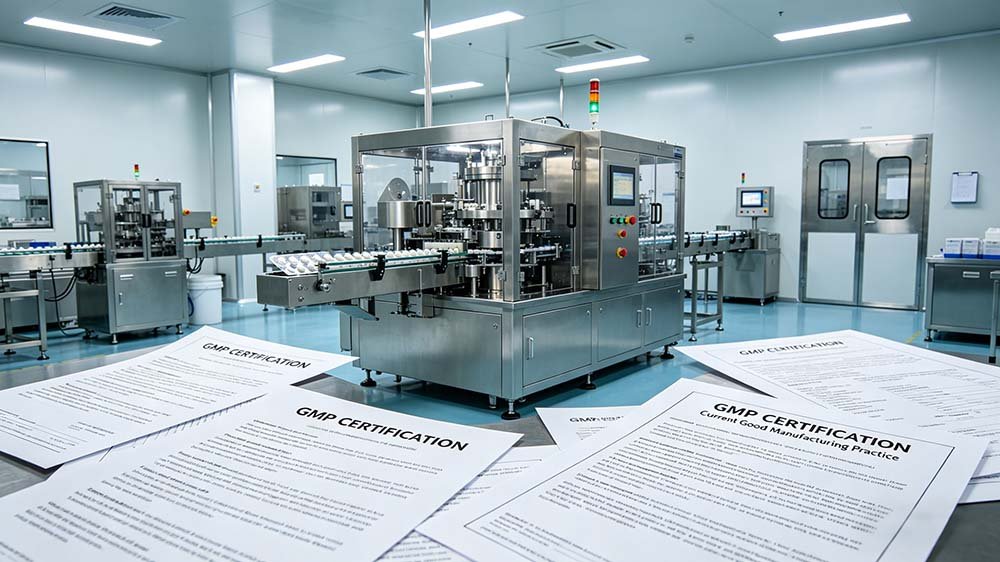
A GMP-compliant blister packaging machine configured for dual FDA / EU GMP compliance. Material contact surfaces, audit-trail logging, and cleanroom clearance heights must all be specified before equipment order.
Why Pill Blister Packaging Regulations Are Not Interchangeable
Pill blister packaging compliance requires meeting the specific regulatory framework of each target market — FDA 21 CFR, EU GMP Annex 1, and WHO TRS 992 are three distinct systems with overlapping but non-identical requirements, and assuming one certification covers another is the most expensive mistake a procurement team can make.
I’ve been in this situation more than once. The most painful version was in 2021, when a client in Karachi had purchased a European line, CE-marked, with a full declaration of conformity under the Machinery Directive. The equipment was technically excellent. The problem surfaced four months into the pre-approval inspection preparation: the audit trail logging did not meet 21 CFR Part 11 requirements, because the manufacturer had never designed it to. The client was planning to export to the US.
The retrofit cost $47,000. The timeline delay: nine months. Neither was in the original budget.
That conversation — where I had to explain that CE and FDA are not equivalent — is one I’ve had at least a dozen times. So let’s map this properly.
⚖️ Primary Regulatory Frameworks Referenced in This Guide
FDA 21 CFR Teil 11
EU GMP Anhang 1 (2022)
EU-GMP-Anhang 15
WHO TRS 992 Anhang 3
ICH Q1A(R2)
PIC/S PE 009-16
CDSCO Schedule M
ANVISA RDC 301
USP
ASTM F2338
FDA Regulations for Pill Blister Packaging (US Market)
FDA 21 CFR Part 211 governs current good manufacturing practice for finished pharmaceuticals, and it treats packaging operations as a manufacturing step — not an afterthought — requiring written procedures, in-process controls, and documented batch records for every blister packaging run.
21 CFR Part 211: The Core Obligations
Under 21 CFR Part 211.68, all automatic, mechanical, or electronic equipment used for packaging must be calibrated at suitable intervals, with records maintained and accessible during inspection. For a blister packaging line, this means your forming temperature logs, sealing pressure records, and vision-inspection rejection data all need to be retrievable and traceable to individual production batches.
Section 211.130 requires that packaging and labeling operations include examination of materials for identity and conformity, examination of in-process labeled containers for correctness, and documentation of each inspection step. For blister operations, this typically translates into: cavity fill inspection (automated vision), sealing integrity testing per USP <1207>, and printed lot/expiry verification via camera system.
FDA enforcement records for 2019–2023 show packaging as root cause in 12% of pharmaceutical recalls — the number I use when procurement teams tell me the PVC cost saving of $0.006 per card justifies skipping a more robust inspection module. That’s the number. Use it.
21 CFR Part 11: Electronic Records and Audit Trails
This is where most non-US equipment suppliers create problems for their clients. 21 CFR Part 11 applies whenever a blister packaging machine uses electronic records in place of paper records for GMP-required data. If your line has a touchscreen HMI that logs batch parameters, and you’re filing those logs as your official cGMP records, Part 11 applies. Full stop.
The four requirements that trip up the most equipment specs:
Audit trail: The system must automatically record all changes to GMP data, including who made the change, when, and what the previous value was. A log that only records the final parameter is not compliant.
User authentication: Individual login credentials, not shared passwords. Each operator must have a unique ID traceable to a person.
Record retention: Electronic records must be protected against alteration and retained for the duration required under 211.180 (at least one year beyond the expiry of the batch).
System validation: The software itself must be validated — documented evidence that the system does what it claims. This means a separate software validation protocol, not just equipment IQ/OQ/PQ.
Container Closure Integrity: ASTM F2338 and USP <1207>
The sealing test standard we specify for FDA-market blister lines is ASTM F2338 dye-ingress at 60 mbar, which aligns with what USP <1207> specifies for container closure integrity testing. This is not negotiable for any product where the blister seal is the primary protective barrier against moisture, oxygen, or contamination.
⚠️ FDA Compliance: Common Gaps Found During Pre-Approval Inspections
Audit trail logs parameter changes but not user identity
The system must record who made the change, not just what changed. Requires individual user accounts at the HMI level — often requires a software upgrade from the OEM, not a configuration change. Specify this in your URS before order, not after FAT.
CE declaration presented as evidence of FDA compliance
CE marking confirms conformity with EU Machinery Directive safety requirements. It does not address cGMP process controls, 21 CFR Part 11 audit trails, or USP <1207> seal integrity protocols. These are separate and require separate documentation.
No container closure integrity test data in batch records
Visual inspection of sealed blisters is not sufficient for FDA submissions. You need validated test data: dye ingress, vacuum decay, or headspace gas analysis per ASTM F2338 / USP <1207>, run at defined intervals and documented in the batch record.
EU GMP Annex 1 (2022) and Annex 15: What Changed and What It Means for Blister Lines
The 2022 revision of EU GMP Annex 1 introduced a Contamination Control Strategy requirement that directly affects how blister packaging machines must be designed, qualified, and operated in any EU-regulated facility — and the changes are significant enough that equipment purchased before 2022 may require re-qualification.
The revision expanded the scope of Annex 1 to include all pharmaceutical products manufactured under sterile conditions, not just injectables. More relevantly for oral solid dosage blister operations: Section 8 now requires that packaging areas connected to manufacturing zones be included in the facility’s Contamination Control Strategy (CCS), with documented risk assessments for each contamination pathway.
What Annex 15 Requires for Blister Packaging Equipment Qualification
Annex 15 governs qualification and validation. For a blister packaging line, it defines the four-phase qualification requirement: Design Qualification (DQ), Installation Qualification (IQ), Operational Qualification (OQ), and Performance Qualification (PQ).
A QA manager in Frankfurt called me last year about a line they’d commissioned from a European supplier. The IQ documentation was thorough — every bolt torque, every cable routing diagram. The OQ ran the machine through its speed range and temperature curves. The PQ? It covered three product SKUs at one blister format size. Eighteen months later, they added a new product in a 10mm round tablet. The regulatory reviewer asked for PQ data at the new format. It didn’t exist.
They ran it. Another six weeks. That’s not a failure of the regulation — that’s a failure to plan the validation scope correctly at the start.

A blister line operator in a GMP-compliant cleanroom environment. EU GMP Annex 1 (2022) requires that packaging areas be included in the facility’s Contamination Control Strategy, with documented risk assessments for each contamination pathway.
Annex 15 Bracketing and Matrixing: What It Means for Multi-Format Lines
Annex 15 allows bracketing (validating only the extremes of a range) and matrixing (validating a representative subset of product combinations) — but these approaches must be scientifically justified and agreed with your regulatory reviewer in advance. For a blister line that will run 8 to 15 different SKUs, a properly designed bracketing strategy can reduce your PQ workload by 40 to 60%. I won’t tell you this is simple. It involves your API profiles, your format range, and sometimes a preliminary conversation with the notified body before you finalize your validation plan.
Purchasing a CE-marked blister machine for a US-export product, or an FDA-qualified line for an EU-only market, will cost you time and money at the validation stage — because each framework has specific documentation, audit-trail, and material-traceability requirements that were designed for that regulatory system, not the other. Build dual-compliance into the URS before the purchase order, not into the retrofit budget after the FAT.
- Förster Xiang, HIJ-Maschinenbau
WHO GMP and PIC/S: The Framework That Governs Most of the World
WHO TRS 992 Annex 3, supplemented by PIC/S PE 009-16, is the primary GMP reference for pharmaceutical manufacturers in more than 100 countries — including most of Southeast Asia, Latin America, the Middle East, and Africa — and its packaging requirements are more detailed than many manufacturers realize.
Of the 31 blister line projects I handled in Southeast Asia between 2018 and 2023, 11 required a forming material change after month-12 stability failure. Every single one of those failures had the same root cause: the packaging specification had been written using ICH Zone II stability data (25°C / 60% RH), but the product was being distributed in Zone IVb markets (30°C / 75% RH).
That’s not a machine problem. It’s a regulatory-framework-selection problem that shows up as a machine problem at the worst possible moment.
ICH Climate Zones and What They Mean for Blister Material Selection
ICH Q1A(R2) divides the world into four climate zones for stability testing purposes. The zone determines the temperature and humidity conditions under which your stability studies must be conducted, which in turn determines the moisture vapor transmission rate (MVTR) your blister material must achieve to maintain product quality through shelf life.
| ICH Climate Zone | Conditions (T / RH) | Key Markets | Typical Blister Material | MVTR Requirement | Regulatory Framework |
|---|---|---|---|---|---|
| Zone I — Temperate | 21°C / 45% RH | UK, Germany, Nordics | PVC 250μm | 4–6 g/m²/Tag | EU GMP Annex 1/15 |
| Zone II — Subtropical | 25°C / 60% RH | US, Japan, EU South | PVC/PVDC or PVC/PE | 0.5–2.0 g/m²/day | FDA 21 CFR / ICH Q1A |
| Zone III — Hot-Dry | 30°C / 35% RH | Middle East, N. Africa | PVC/PVDC 60 g | 0.2–1.0 g/m²/day | WHO TRS 992 / PIC/S |
| Zone IVa — Hot-Humid | 30°C / 65% RH | Brazil, India, SE Asia | PVDC 90 g or Alu-Alu | 0.05–0.2 g/m²/day | ANVISA RDC 301 / CDSCO |
| Zone IVb — Hot-Very Humid | 30°C / 75% RH | Indonesia, Philippines, W. Africa | Cold-form Alu-Alu | 0,02–0,5 g/m²/Tag | WHO TRS 992 / PIC/S |
Source: ICH Q1A(R2) climate zone classification; MVTR values for standard commercial blister films. Actual specification must be validated against your specific API moisture sensitivity profile and target shelf life.
Cold-form Alu-Alu blister packaging cuts moisture vapor transmission to 0.02–0.5 g/m²/day, compared to 4–6 g/m²/day for standard PVC — a 10x to 300x difference depending on film gauge. For a hygroscopic API distributed in Zone IVb markets, that difference is the line between a 24-month shelf life and a 6-month accelerated degradation curve.
WHO Prequalification and What It Demands from Your Equipment Documentation
WHO Prequalification (PQ) is required for products supplied to UN agencies, GAVI, the Global Fund, and many national tenders in low- and middle-income countries. The assessment includes a site inspection, and the inspection team will review your packaging equipment qualification documentation. Specifically: your IQ/OQ/PQ protocols and executed reports, your equipment cleaning validation, your change control records for any modifications made after initial qualification, and your preventive maintenance logs.
I’ve sat in on two WHO PQ pre-inspection readiness reviews. The most common documentation gap is not the IQ — that’s usually fine because the equipment supplier provides it. The gap is the PQ: companies run it once, file it, and then make format changes, add new products, or modify the sealing temperature parameters without triggering a re-qualification assessment. The WHO inspector finds a sealing temperature that’s 8°C above the PQ-validated range. In the batch record. From last month.

IQ/OQ/PQ validation documentation for an Alu-Alu blister line prepared for WHO Prequalification inspection. The executed PQ report must cover all intended product formats, not just the format run during initial commissioning.
Regional Frameworks: India (CDSCO), Brazil (ANVISA), and Southeast Asia
Beyond the three primary global frameworks, four regional regulatory systems impose additional requirements on blister packaging lines that are frequently underestimated by manufacturers entering those markets for the first time.
India CDSCO Schedule M and Zone IVb Compliance
The CDSCO reviewer cited ICH Q1A(R2) directly in a review I was supporting for a client in Pune in 2019 and asked why Zone IVb data was absent. The dossier went back. Eight months later, they resubmitted with Zone IVb stability data generated at 30°C / 75% RH. Approved. The product had been ready for 14 months before that conversation happened.
India’s Schedule M (revised 2023) now aligns significantly with WHO GMP TRS 992, but adds specific requirements for packaging area environmental monitoring, particularly humidity control documentation in blister packaging zones. If your facility is in a state with monsoon humidity profiles — Maharashtra, Kerala, Tamil Nadu — you’ll need HVAC qualification data demonstrating control of packaging zone RH within ±5% RH of the specification limit.
Brazil ANVISA RDC 301 and Change Control
ANVISA RDC 301 (2019) is Brazil’s GMP regulation for pharmaceutical products. For blister packaging, the areas that generate the most compliance questions from manufacturers entering the Brazilian market are: post-approval change control for packaging materials (any change in blister film supplier, grade, or thickness triggers a regulatory notification or variation, depending on the API), and the requirement for a validated cleaning procedure specifically for the packaging line, not just the filling equipment.
Brazil is also in ICH Zone IVa. Products registered in Zone II and then exported to Brazil without IVa stability data are at risk during ANVISA post-market surveillance inspections.
SE Asia ASEAN Common Technical Dossier and PIC/S Alignment
Most ASEAN member states have adopted the ASEAN Common Technical Dossier (ACTD) format and PIC/S membership or mutual recognition, which means their GMP inspections are broadly aligned with WHO TRS 992 and PIC/S PE 009-16. The practical implication: if your equipment documentation and validation protocols are built to WHO standards, you have a defensible starting point for regulatory submissions across Indonesia, Malaysia, Thailand, Vietnam, and the Philippines.
The exception is Singapore, where HSA follows ICH guidelines and conducts inspections with a level of technical detail closer to US FDA than to most Southeast Asian regulators. Singaporean inspectors routinely ask for electronic batch record integrity evidence — the same Part 11-equivalent questions you’d face in an FDA inspection, even though the legal framework is different.
📋 Regional Compliance: The Three Questions to Answer Before You Write a URS
Which ICH climate zone(s) will your product be distributed in?
This determines your stability testing conditions, which determines your blister material MVTR specification, which determines whether PVC, PVDC, or Alu-Alu is the correct forming film. Answer this before you specify the machine, not after you generate 12-month stability data.
Will this line need to satisfy multiple regulatory frameworks simultaneously?
If you’re building a line that will produce product for both FDA-regulated US export and WHO PQ-required global health tender markets, you need a URS that explicitly addresses both audit-trail requirements. They overlap but are not identical. Specify dual-compliance at the RFQ stage.
What is your change control strategy for packaging materials post-approval?
In most markets, changing blister film supplier or grade after product registration requires a regulatory notification, variation, or new stability data. This is not a machine issue — but the machine needs to accommodate the range of materials you might need to qualify, including cold-form Alu-Alu if Zone IVb stability data later requires it.
How to Build Dual-Compliance Capability Into Your Blister Line Specification
Building dual-compliance capability into a blister packaging line — covering both FDA and EU GMP requirements from a single equipment configuration — reduces total cost of ownership by eliminating market-specific retrofits that typically run $30,000 to $80,000 per intervention, plus the validation re-run cost of 4 to 8 weeks each time.
The specification approach I use for multi-market clients:
HMI with individual user authentication: Specify role-based access control with individual login credentials, audit trail logging of all parameter changes with user ID and timestamp, and export function for electronic records in a non-editable format. This satisfies 21 CFR Part 11 and Annex 11 (EU) simultaneously.
Material traceability from roll to card: The system must log forming film lot number, lidding foil lot number, and printed code per blister card (or per batch at minimum). Required under 21 CFR 211.130 and EU GMP Annex 16 batch release documentation.
Sealing integrity test integration: Specify in-line or at-line seal integrity testing capability conforming to ASTM F2338 / USP <1207>. Required for FDA submissions and strongly recommended for EU GMP site inspections.
Tooling changeover documentation: Each mold set must have a unique identifier logged at changeover, with tooling qualification records (dimensional verification, first-article inspection) maintained separately. Required for both Annex 15 and FDA process validation frameworks.
GMP-compliant structural design: Stainless steel 316L contact surfaces, no dead-legs, CIP/WIP-capable zones, smooth radii — documented in the Design Qualification package. Required under EU GMP Annex 1 (2022) CCS requirements and WHO TRS 992 facility design guidelines.
Alu-Alu capability (even if not immediately required): If any of your target markets are Zone IVb, specify cold-form tooling capability at the equipment stage. Retrofitting cold-form forming station hardware post-installation costs 35 to 50% more than specifying it correctly upfront.
💡 Einblicke eines Forsters – Die Perspektive eines Ingenieurs mit 20 Jahren Berufserfahrung
The Real Cost of Getting the Framework Wrong at Spec Stage
Regulatory compliance for pill blister packaging is not a single global standard — it’s a layered matrix of FDA 21 CFR, EU GMP Annex 1 & 15, and WHO PIC/S guidelines that vary significantly by target market. In my 20 years of commissioning blister lines across US, European, and Southeast Asian facilities, the most painful lesson I’ve watched manufacturers learn is purchasing a “CE-marked” machine assuming it covers FDA validation requirements. It does not. FAT/SAT protocols, 21 CFR Part 11-compliant audit trails, and material traceability documentation are entirely separate obligations. Vendors who don’t proactively flag this gap are setting you up for a failed pre-approval inspection. Before specifying any blister packaging line, lock down your URS against every target market’s regulatory framework first — not after. At HIJ, we build dual-compliance capability (FDA + EU GMP) into our turnkey blister solutions by default, so your single investment covers multiple export destinations without costly retrofits.

A pre-approval inspection review of a blister packaging line’s electronic batch record system. FDA inspectors will specifically examine audit trail completeness, user authentication logs, and seal integrity test data — documentation that must be built into the equipment specification, not added retroactively.
Frequently Asked Questions: Pill Blister Packaging Regulations by Region
❓ Does a CE-marked blister packaging machine satisfy FDA requirements?
No. CE marking confirms conformity with EU Machinery Directive safety requirements and does not address FDA cGMP obligations under 21 CFR Part 211, 21 CFR Part 11 electronic record requirements, or USP <1207> container closure integrity standards. A separate validation package — IQ, OQ, PQ, and software validation — is required for FDA compliance regardless of CE certification status.
❓ What is the difference between WHO GMP and EU GMP for blister packaging?
WHO TRS 992 Annex 3 and EU GMP Annex 1/15 share the same IQ/OQ/PQ qualification framework and similar facility design principles, but differ in several key areas: EU GMP Annex 1 (2022) now requires a formal Contamination Control Strategy document covering packaging areas, which WHO does not explicitly mandate in the same format. EU Annex 11 governs computerized systems with more prescriptive detail than WHO’s equivalent guidance. For export markets that accept WHO GMP, a WHO-qualified line provides a strong foundation — but entering the EU market requires specific Annex 11 computerized system validation that many WHO-compliant installations do not include by default.
❓ Which climate zone requires Alu-Alu blister packaging?
Cold-form Alu-Alu blister packaging is typically required for ICH Zone IVb markets (30°C / 75% RH) — including Indonesia, Philippines, parts of West Africa, and other high-humidity tropical markets — when the API has a moisture uptake rate that exceeds what PVC or PVDC films can control over the intended shelf life. The decision is API-specific: it requires accelerated stability data at Zone IVb conditions and a comparison of actual measured MVTR values for candidate packaging materials against your API degradation threshold.
❓ Does 21 CFR Part 11 apply to all blister packaging machine HMI systems?
21 CFR Part 11 applies when electronic records are used in place of paper records for FDA-required GMP documentation. If your blister packaging machine HMI logs batch parameters, operator interventions, or alarm events, and those electronic logs constitute your official cGMP batch record data, Part 11 applies. The key obligations are individual user authentication, tamper-evident audit trails, and validated software. Shared passwords and log-only-final-value systems do not comply.
❓ How do ANVISA requirements differ from FDA for blister packaging?
Brazil’s ANVISA RDC 301 aligns broadly with WHO GMP TRS 992. The practical differences from FDA: ANVISA requires a validated cleaning procedure specifically for the packaging line (FDA expects this but is less prescriptive about line-specific cleaning validation versus general equipment cleaning validation); post-approval material changes trigger a defined variation process under ANVISA that must be pre-approved before implementation, whereas FDA allows some lower-risk changes with annual report notification. Brazil is Zone IVa, so stability data requirements are more stringent than Zone II FDA submissions.
❓ What documentation does WHO Prequalification require for a blister packaging line?
WHO PQ site inspections for packaging lines review: executed IQ/OQ/PQ protocols for the packaging equipment, cleaning validation records, change control history for the line since initial qualification, and preventive maintenance logs. The most common gap is not the IQ documentation — that’s typically provided by the equipment manufacturer. It’s the PQ scope: initial PQ run on a limited product range, followed by undocumented format additions or parameter changes that were never formally assessed through change control.
❓ Can one blister packaging machine be compliant with both FDA and EU GMP?
Yes — with the right specification. The critical elements that enable dual compliance are: individual user authentication with role-based access, audit trail logging per both 21 CFR Part 11 and EU Annex 11, GMP-compliant structural design (316L SS contact surfaces, no dead-legs), and a validation documentation package structured to satisfy both Annex 15 and FDA process validation guidance. At HIJ, we configure our pill blister packaging machines for dual-compliance by default for clients with multi-market export strategies, because retrofitting after FAT costs significantly more than specifying correctly upfront.
❓ What does GMP compliance for blister packaging machines actually look like in practice?
For a detailed breakdown of how GMP compliance requirements apply to blister packaging machine selection, configuration, and validation, including IQ/OQ/PQ templates and cGMP structural design requirements, see our dedicated GMP compliance guide.
❓ How long does it take to validate a blister packaging line for regulatory submission?
Typically 12 to 24 weeks from machine installation to completed PQ report, depending on the number of product formats, the complexity of the IQ scope, and whether a pre-existing site master validation plan is in place. For a detailed timeline breakdown by validation phase, see our blister packaging line validation timeline guide.
🎯 Ready to Specify a Compliant Blister Line?
Build Dual-Compliance Into Your Blister Packaging Line From Day One
HIJ’s DPP-260 and DPH-300 blister packaging lines are configured for FDA / EU GMP / WHO dual-compliance by default — with 21 CFR Part 11-capable audit trails, Annex 11-compatible HMI systems, and full IQ/OQ/PQ documentation packages included. Tell us your target markets and we’ll map the compliance requirements before you write the URS.