
















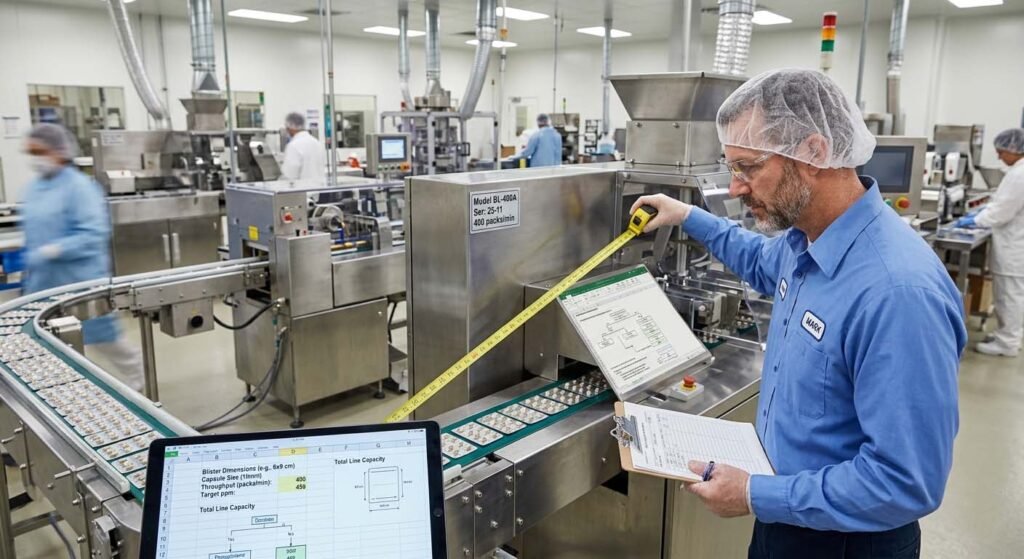
Every procurement engineer eventually asks the same question before signing a capital equipment order: “Is this machine big enough for what we need — and will it still be the right call three years from now?” The wrong answer costs far more than the price delta between a compact unit and a mid-range platform. It costs line downtime, failed regulatory audits, expensive tooling retrofits, and in the worst cases, a full line rebuild eighteen months after commissioning. Sizing a blister packaging machine is a strategic engineering decision, and it deserves a rigorous, systematic framework — not a casual UPM comparison on a vendor’s brochure.
This guide is written specifically for production managers, project engineers, and procurement leads at small-to-mid-sized pharmaceutical, nutraceutical, and OTC manufacturers who are evaluating their first serious blister line investment or planning a capacity expansion. We will walk through every critical sizing variable — from forming station width and cavity geometry to PLC integration protocols and cGMP documentation requirements — so you can build a URS that is bulletproof, audit-ready, and future-proof.
🔥 Forester’s Insight: A 20-Year Engineer’s Perspective
- The Direct Answer: Sizing a blister packaging machine is not about matching your current output — it’s about engineering headroom for compliance demands, SKU expansion, and downstream integration without triggering a costly line rebuild in 18 months.
- The Field Experience: “In my 20 years auditing production lines across Southeast Asia and Latin America, the single costliest mistake I’ve witnessed is buyers fixating on ‘units per minute’ while ignoring forming station width, tooling changeover time, and PLC protocol compatibility with existing cartoners or checkweighers. I’ve seen a mid-sized pharma plant in Colombia purchase a 150-unit/min machine, only to discover the forming depth couldn’t accommodate their blister cavity geometry — a mismatch completely invisible on the spec sheet. The machine sat idle for four months during custom tooling re-engineering, costing them an estimated $180,000 USD in lost production capacity and emergency engineering fees. Worse, the standalone vendor had zero cGMP-compliant documentation ready for their INVIMA audit.”
- The Hidden Trap: The trap is always the integration gap, not the machine itself. A machine rated at 200 blisters/min means nothing if your downstream cartoner runs at 80 cartons/min and has no buffer conveyor between them. You have just created a permanent bottleneck that throttles your entire OEE figure — and no single-machine upgrade will fix it without a full line redesign.
- The Strategic Advice: Always build your URS around your future product portfolio and regulatory roadmap, not just today’s SKU. At HIJ, our turnkey approach means we validate forming, sealing, and feeding as one certified system — eliminating the multi-vendor finger-pointing that kills FAT/SAT timelines and delays your market entry.
Step 1: Define Your True Output Requirement — Beyond Units Per Minute
The most fundamental error in blister machine sizing is treating nameplate UPM (units per minute) as the primary specification. In reality, your net effective output is a product of at least five interdependent variables: rated machine speed, planned OEE (Overall Equipment Effectiveness), product mix (number of active SKUs), average batch size, and scheduled shift hours. A machine rated at 200 blisters/min operating at a realistic OEE of 68% — accounting for changeover time, minor stoppages, and planned maintenance — delivers approximately 136 effective blisters/min. If you planned your capacity model around the nameplate figure, you have already built a 32% gap between expectation and reality before production day one.
The correct approach is to calculate your Required Effective Capacity (REC) using the formula: REC = (Annual Production Target ÷ Annual Planned Uptime Hours) × (1 ÷ Target OEE). For a facility targeting 50 million tablets/year on a two-shift, 250-day schedule with a conservative 70% OEE target, the REC calculates to approximately 119 blisters/min — which maps to a mid-range platform, not an entry-level semi-automatic. This calculation should be your first documented input into your URS before any vendor conversation begins.
For small pharma manufacturers or contract packaging organizations entering blister for the first time, a practical starting framework is the three-tier classification model. Tier 1 (R&D / small batch): 10–40 blisters/min, manual or semi-automatic feeding, forming width 80–120mm — suitable for clinical trial supply or niche OTC products under 5M units/year. Tier 2 (commercial scale, small pharma): 60–150 blisters/min, automatic servo-driven feeding, forming width 130–190mm — the most common entry point for growing generic manufacturers. Tier 3 (high-volume): 200–400+ blisters/min, multi-lane forming, integrated vision rejection, full MES/SCADA connectivity — typically reserved for multinational or high-volume generic operations.
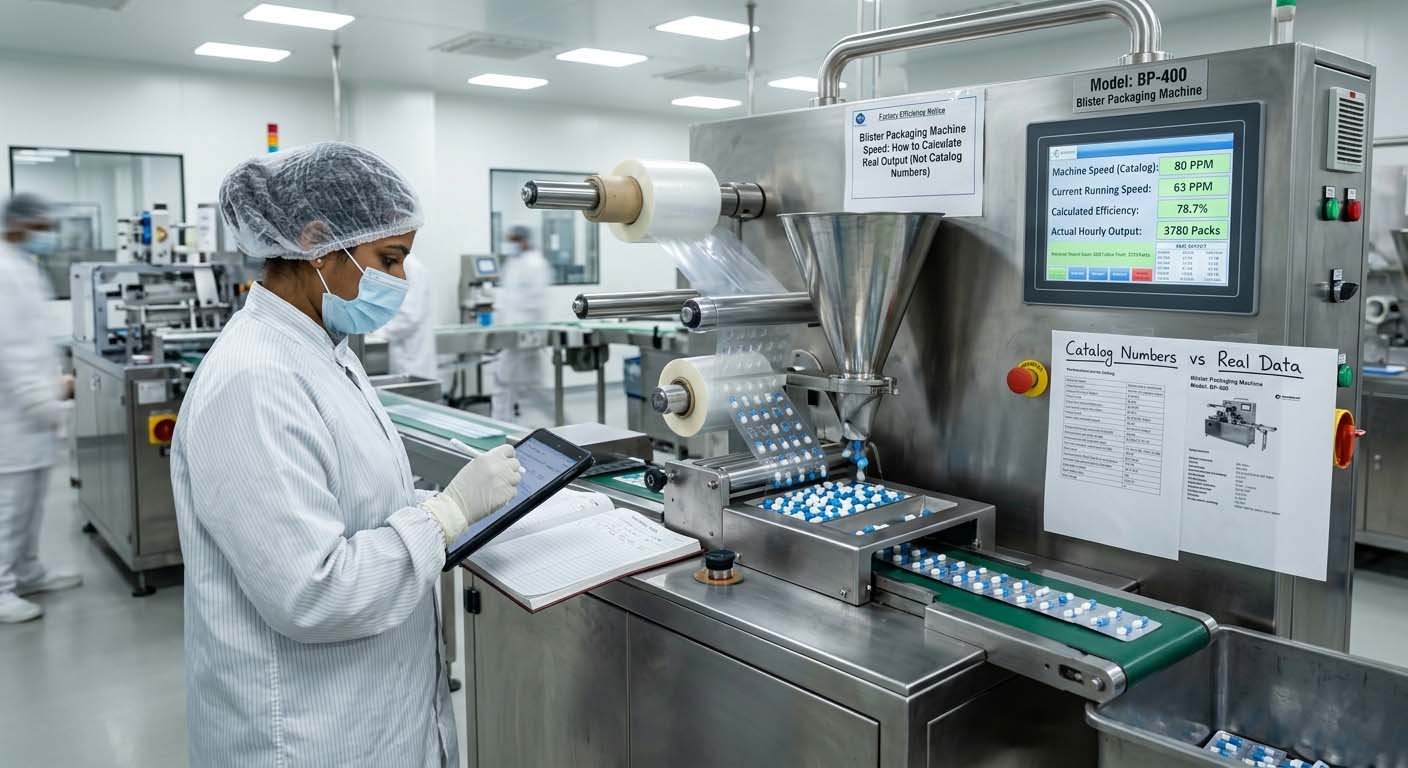
Fig. 1 — Engineering your Required Effective Capacity (REC) before vendor selection eliminates the most common sizing mistake in pharmaceutical blister line procurement.
Step 2: The Four Critical Technical Parameters That Actually Determine Machine Size
Once your REC figure is established, four core mechanical and process parameters determine which machine architecture is appropriate. These are the specifications that experienced engineers interrogate — and that most catalog comparisons completely obscure.
2.1 Forming Station Width and Cavity Geometry
Forming station width is the single most constraining hardware parameter in blister machine selection, and it is almost never highlighted prominently in vendor brochures. This dimension defines how many cavities can be arrayed across the web in a single stroke, directly setting your maximum throughput ceiling regardless of motor speed. A machine with a 130mm forming width running 4 cavities across at 150 strokes/min produces 600 blisters/min. The same motor speed on a 190mm platform running 8 cavities across produces 1,200 blisters/min — a 2× output difference from an identical rated speed figure.
Equally critical is forming depth capacity, which must match your product’s cavity geometry. Standard thermoforming platforms (PVC/PVDC/PET-based) typically offer a maximum forming depth of 12–18mm. Cold-form Alu-Alu blister packing machines can achieve 6–10mm depths with superior moisture barrier performance, but require a fundamentally different forming mechanism (cold-draw vs. thermoforming). If your product catalog includes suppositories, large softgels, or irregularly shaped dosage forms, always validate forming depth against the tallest product in your future SKU portfolio — not just the current product.
2.2 Sealing Pressure and Temperature Uniformity Across the Web
Sealing integrity is a cGMP-critical parameter. The sealing station must deliver consistent heat and pressure across the entire web width within defined tolerances — typically ±2°C temperature variance and ±0.5 bar pressure variance for pharmaceutical applications. Machines with undersized sealing platens or inadequate heat distribution systems produce edge-seal failures that escape visual inspection, leading to batch rejections during stability studies or, worse, field recalls. When evaluating a machine, always request the sealing uniformity validation data (IQ/OQ documentation) and verify the platen contact area matches your intended blister format. This is a non-negotiable element of your FAT protocol.
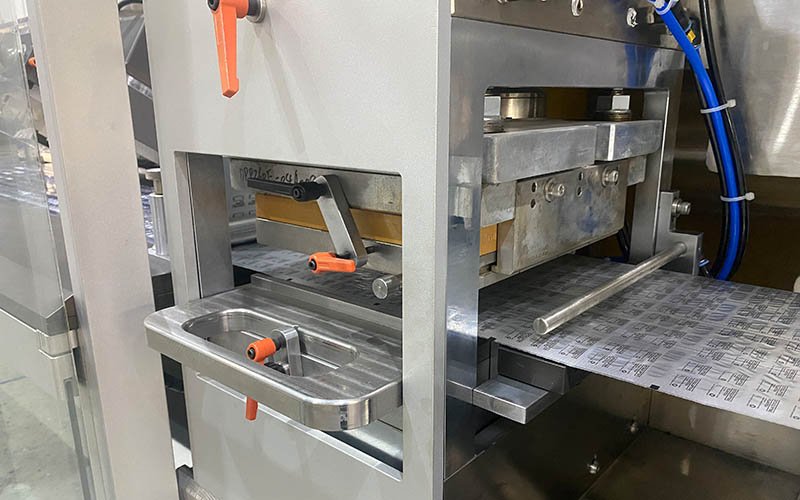
Fig. 2 — Sealing station heat and pressure uniformity across the full web width is a cGMP-critical parameter that must be validated during FAT with documented IQ/OQ protocols.
2.3 Servo Drive Architecture vs. Mechanical Cam Systems
The drive architecture choice fundamentally impacts flexibility, maintenance cost, and regulatory compliance capability. Mechanical cam-driven systems offer high repeatability at fixed speeds and lower initial cost, but format changeover requires physical cam substitution — typically 45–90 minutes of skilled technician time per changeover. Servo-driven systems allow electronic adjustment of forming depth, sealing dwell time, and indexing pitch via the HMI, reducing changeover to parameter recall (often under 15 minutes for established recipes). For any operation running more than three active SKUs or planning product portfolio expansion, servo architecture delivers a compounding ROI advantage. The additional upfront cost (typically 15–25% premium over cam-driven equivalents) pays back within 18–24 months through reduced changeover labor and scrap reduction during format transitions.
2.4 PLC Platform and Communication Protocol Compatibility
This is the integration parameter that produces the highest frequency of post-installation surprises. If your facility already operates cartoners, checkweighers, label applicators, or track-and-trace serialization systems, your blister machine’s PLC must speak the same industrial communication protocol. Dominant protocols in pharmaceutical environments include Profibus DP / Profinet (Siemens ecosystem), EtherNet/IP (Allen-Bradley/Rockwell ecosystem), and Modbus TCP/IP (universal, lower cost). A blister machine running a proprietary PLC with no standard fieldbus output cannot be integrated into a line MES (Manufacturing Execution System) without expensive custom middleware — a cost typically discovered only after installation. Always specify your required PLC brand and communication protocol explicitly in your URS, and require a demonstrated integration test at FAT.
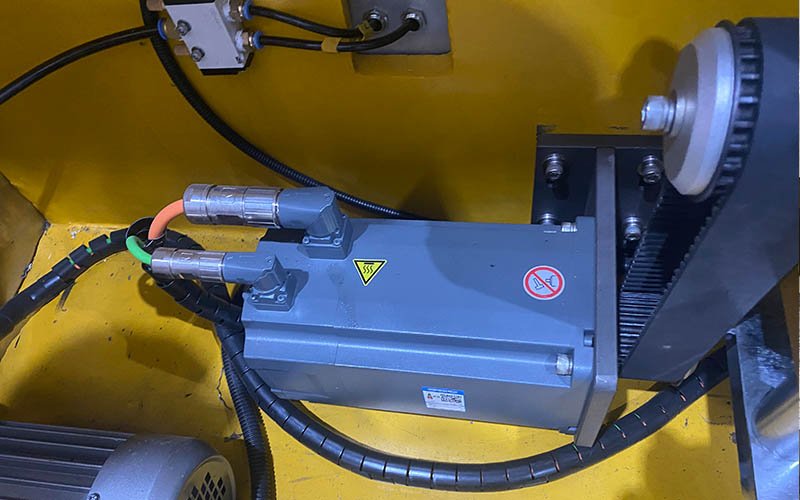
Fig. 3 — HIJ’s servo motor control architecture enables electronic format changeover via HMI recipe recall, reducing changeover time from 90 minutes to under 15 minutes and delivering compounding ROI across multi-SKU operations.
Step 3: Thermoforming vs. Cold-Forming — Matching Architecture to Your Product and Regulatory Environment
The choice between thermoforming (PVC/PVDC/PET base film) and cold-forming (Alu-Alu) is primarily driven by your product’s moisture and oxygen sensitivity, combined with the regulatory market requirements of your target geography.
PVC / PVDC / PET Base Film
Lower tooling cost, higher forming speed, transparent cavity for visual inspection. Suitable for products with WVTR requirements above 0.5 g/m²/day. Preferred for European and North American generic solid-dose markets. Forming temperature range: 100–150°C (PVC), 160–200°C (PET).
Alu-Alu (OPA/Al/PVC)
Near-zero moisture vapor transmission rate (WVTR <0.001 g/m²/day). Mandatory for hygroscopic APIs, effervescent tablets, and products targeting tropical climate zones (WHO Climate Zone III/IV). Higher tooling cost, slower forming speed, requires cold-draw die sets. See HIJ’s Alu-Alu blister packing machine range.
Dual-Format Platforms
Some mid-range and high-end platforms support both forming modes via tooling exchange. This is the optimal choice for CDMOs and contract packagers serving diverse client portfolios. Confirm forming station mechanical compatibility and sealing platen interchangeability before specifying.
For manufacturers targeting Southeast Asian markets (Indonesia, Vietnam, Philippines, Thailand) — all WHO Climate Zone IV environments — cold-form Alu-Alu capability is not optional for solid-dose APIs with any moisture sensitivity above Class II in the BCS classification. I have reviewed stability failure reports from facilities in Jakarta and Ho Chi Minh City where thermoform-packaged tablets showed moisture uptake degradation within 6 months of production — products that had passed accelerated stability studies conducted in air-conditioned test chambers that didn’t replicate real-world warehouse conditions. Your packaging material specification and your machine architecture are interlinked decisions, not independent ones.
Step 4: Multi-Vendor Patchwork vs. Turnkey Integration — The Real Cost Calculation
One of the most consequential decisions in blister line procurement is whether to source equipment from multiple specialized vendors (a blister machine from Vendor A, a cartoner from Vendor B, a checkweigher from Vendor C) or to commission a single turnkey integrator who engineers, supplies, and validates the entire line as a certified system. The patchwork approach appears more cost-competitive on initial capex comparison. In practice, it consistently generates significantly higher total cost of ownership, longer commissioning timelines, and disproportionate compliance risk.
- The Multi-Vendor Pitfall: When a production line experiences a fault at the interface between two pieces of equipment from different vendors — a common occurrence during initial commissioning — each vendor’s technical team will professionally and politely explain that the fault originates in the other vendor’s equipment. This “integration gap” finger-pointing can delay FAT/SAT completion by weeks or months. Each vendor’s documentation package uses different terminology, different acceptance criteria, and different calibration protocols, creating a compliance documentation mosaic that your QA team must reconcile manually before an audit. The hidden cost of this reconciliation is typically 200–400 engineering hours that never appear in your initial ROI model.
- The HIJ Turnkey Standard: At HIJ Machinery, our turnkey packaging solutions mean that forming, sealing, product feeding, blister cartoning, and end-of-line case packing are engineered as a single validated system from a single point of accountability. One URS. One FAT protocol. One IQ/OQ/PQ document package. Our engineering team manages all inter-machine communication integration, conveyor buffer sizing, and speed-matching calculations before the line is assembled — eliminating the discovery of integration mismatches on your production floor.
- The Documentation Advantage: Every HIJ turnkey line ships with a complete GMP documentation package: machine manuals in the client’s required language, calibration certificates for all critical instruments, FAT acceptance criteria pre-agreed with the client’s QA team, and spare parts lists with global sourcing options. For clients operating under WHO GMP, cGMP (21 CFR Part 211), or EU GMP Annex 11 frameworks, this documentation package is not a value-add — it is a project-critical deliverable that determines your audit readiness date.

Fig. 4 — A HIJ turnkey blister line integrates forming, sealing, cartoning, and case packing as a single validated system — one URS, one FAT protocol, one documentation package, zero integration gap finger-pointing.
Tooling Changeover Architecture: The Hidden Productivity Multiplier
For any operation running more than two blister formats, tooling changeover time is a direct productivity tax levied on every format switch. The industry standard for a full format changeover on a conventionally designed thermoforming machine — replacing forming dies, sealing platen, cutting tool, and feeder guides — ranges from 60 to 120 minutes with a trained technician. On a 16-hour production day with three format changes, you lose 3–6 hours of productive machine time: 19–37% of your available uptime consumed by changeover alone.
HIJ’s quick-change tooling architecture reduces this to 15–25 minutes per full format change through a combination of pre-positioned reference stops, tool-free die clamping mechanisms, and electronically stored format recipes on the Siemens S7 PLC. When evaluating any automatic blister packing machine, always demand a live changeover demonstration timed from “last good blister of Format A” to “first accepted blister of Format B” — not a theoretical changeover time from the vendor’s sales materials.
Quick Sizing Reference: Machine Class vs. Production Profile
| Production Profile | Annual Volume | Recommended Class | Forming Width | Typical Speed | HIJ Reference Model |
|---|---|---|---|---|---|
| R&D / Clinical Supply | < 5M units/yr | Semi-Auto / Compact Auto | 80–120mm | 10–40 blisters/min | DPP-250 |
| Small Pharma / OTC Entry | 5–30M units/yr | Automatic Servo Mid-Range | 130–160mm | 60–150 blisters/min | DPP-260 |
| Generic Manufacturer Scale-Up | 30–100M units/yr | High-Speed Servo + Vision | 160–220mm | 150–250 blisters/min | Tablet Blister Line |
| Alu-Alu / Moisture-Sensitive API | Any volume above 5M | Cold-Form Platform | 130–200mm | 40–120 blisters/min | Alu-Alu Blister Machine |
| Capsule Blister Packaging | Any commercial scale | Auto with Capsule Feeder | 130–190mm | 80–180 blisters/min | Capsule Blister Machine |
Frequently Asked Questions
Q1: How do I calculate the right blister machine size for a small pharma operation producing tablets and capsules across multiple SKUs?
Start with your Required Effective Capacity (REC) calculation: divide your annual production target by planned uptime hours, then divide by your realistic target OEE (use 65–72% for a new line in the first year of operation). This gives you your minimum required throughput in blisters per minute. Next, add a 25–30% capacity buffer to accommodate demand growth and unplanned downtime events. For a multi-SKU operation, also calculate your total annual changeover hours (number of format changes per week × average changeover time × 50 operating weeks) and subtract this from your available uptime before recalculating REC. For most small pharma operations producing 10–50M solid-dose units annually across 3–8 SKUs, a servo-driven automatic platform in the 80–150 blisters/min class with forming width 130–160mm represents the optimal balance of capacity, flexibility, and capital efficiency. HIJ’s DPP-260 automatic blister packing machine is specifically engineered for this production profile.
Q2: What is the difference between a thermoforming and a cold-form Alu-Alu blister machine, and which one do I need?
The fundamental difference lies in the forming mechanism and the resulting moisture barrier performance. Thermoforming machines heat PVC, PVDC, or PET base film to its forming temperature (typically 120–200°C depending on material), then use compressed air or mechanical plugs to shape the cavity. Cold-form (Alu-Alu) machines mechanically draw a three-layer OPA/aluminum/PVC laminate into the cavity mold at ambient temperature, producing a virtually hermetic enclosure with WVTR values below 0.001 g/m²/day. The decision framework is straightforward: if your API has an ICH stability classification requiring protection from moisture (Class 3 or 4 hygroscopicity) or if your target markets include WHO Climate Zone III/IV tropical regions (Southeast Asia, Sub-Saharan Africa, South America), cold-form Alu-Alu is mandatory. If your products are moisture-stable and your markets are temperate (Western Europe, North America), thermoforming with PVDC-coated base film typically provides adequate protection at lower packaging material cost.
Q3: What documentation should a blister machine supplier provide to support our GMP qualification and regulatory audit?
For any cGMP, WHO GMP, or EU GMP-regulated facility, your supplier must provide a minimum documentation package including: (1) URS (User Requirement Specification) review and sign-off confirmation; (2) IQ (Installation Qualification) protocol and executed report with component verification checklists; (3) OQ (Operational Qualification) protocol covering all critical process parameters including forming temperature uniformity, sealing pressure calibration, cutting force measurement, and speed range verification; (4) PQ (Performance Qualification) protocol and execution support; (5) Calibration certificates for all GMP-critical instruments (thermocouples, pressure gauges, load cells) traceable to national standards; (6) CE Declaration of Conformity and relevant electrical safety certifications; (7) Spare parts list with recommended critical spares inventory. Suppliers who cannot produce these documents before FAT are not ready for regulated pharmaceutical supply chains. HIJ provides the complete qualification documentation package as a standard deliverable for all pharmaceutical line projects — review our service and support capabilities for details.
Q4: How do I ensure my new blister machine integrates with our existing cartoner and checkweigher without communication issues?
Integration compatibility must be addressed at the URS stage, not after equipment delivery. Your URS must specify: (1) PLC brand and model required (Siemens S7, Allen-Bradley ControlLogix, Mitsubishi iQ-R, etc.); (2) Required industrial communication protocol (Profinet, EtherNet/IP, Modbus TCP/IP); (3) Required digital I/O signal specifications for line stop, fault, speed reference, and product reject signals; (4) HMI operating system and remote access requirements (OPC UA for MES integration is increasingly mandatory under FDA 21 CFR Part 11 for electronic batch records); (5) Physical interface requirements — conveyor height, transfer belt speed, blister accumulation buffer length. At HIJ, our turnkey line engineering team performs a pre-installation integration mapping exercise to document every inter-machine signal and mechanical interface before fabrication begins. This eliminates the integration commissioning surprises that typically extend project timelines by 4–8 weeks on patchwork multi-vendor projects.
Conclusion: Delivering Project Certainty on Your Blister Line Investment
Sizing a blister packaging machine correctly is a multi-dimensional engineering exercise that demands rigorous analysis of output requirements, forming geometry, material compatibility, drive architecture, and downstream integration long before any commercial conversation begins. The machines that cost buyers the most are not the ones with the highest price tags — they are the ones specified against today’s SKU at today’s volume with no engineering headroom, no integration validation, and no compliance documentation ready for the audit that will inevitably follow.
The framework in this guide — REC calculation, forming station width analysis, drive architecture selection, thermoforming versus cold-form decision, and turnkey versus multi-vendor evaluation — gives you a defensible, audit-ready basis for your procurement decision. Apply it rigorously in your URS, and require vendors to respond to every parameter in documented form before FAT.
At HIJ Machinery, I don’t just sell you a machine; I deliver project certainty. Every blister line we supply — from a compact DPP-250 pharma blister packaging machine to a full high-speed turnkey line with integrated cartoning and case packing — is engineered, validated, and documented to the same standard I would demand if I were the QA Director signing the batch record.
Ready to Lock Your Blister Machine Specification?
Send us your URS or production summary. Our engineering team will review your output requirements, product geometry, regulatory environment, and downstream integration needs — then provide a documented Turnkey Quote within 48 hours, with FAT/SAT protocols included at no charge.