
















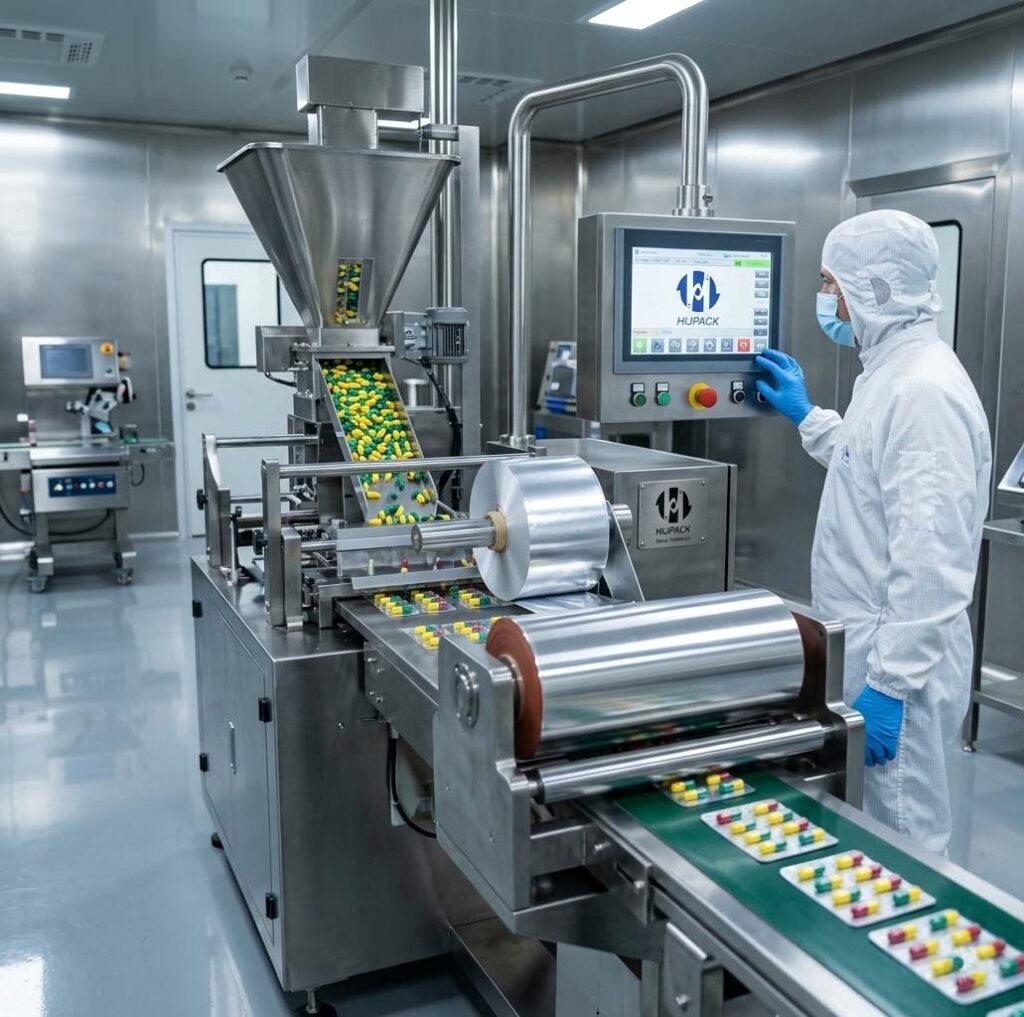
What Is a Blister Packaging Machine? A Pharma Engineer’s Exact Definition
A ブリスター包装機 is a forming-filling-sealing system that thermoforms a base film (PVC, PVDC, or cold-form aluminum) into individual unit-dose cavities, precisely loads solid dosage forms—tablets, capsules, or softgels—into those cavities, then heat-laminates an aluminum lidding foil under controlled temperature and pressure to create a hermetically sealed, child-resistant blister pack engineered for cGMP pharmaceutical containment. According to Forester Xiang, HIJ Machinery founder with 20 years commissioning blister lines across Southeast Asia and Latin America, a 12°C deviation in sealing jaw temperature causes a 40% drop in seal integrity—making validated thermal control the single most critical compliance parameter on any pharma blister line.
✅ cGMP & WHO GMP Compliant
✅ CE Certified Machines
✅ IQ/OQ/PQ Documentation
✅ 20+ Years Field Experience
👤 Forester’s Insight — 20-Year Engineer’s Perspective
The Direct Answer: A blister packaging machine is a forming-filling-sealing system that encapsulates solid dosage forms—tablets, capsules, or softgels—within a thermoformed cavity sealed by heat-laminated lidding foil, engineered to meet cGMP containment and child-resistant compliance standards.
The Field Experience: In my 20 years of commissioning blister lines across plants in Southeast Asia and South America, I’ve watched procurement teams buy “blister machines” based solely on forming speed—only to discover during FAT that the machine lacked IQ/OQ documentation, or the PLC protocol was incompatible with their existing MES. The hidden trap nobody tells you: a cheap standalone unit without a validated sealing pressure monitoring system will silently produce defective blisters that pass visual inspection but fail leak integrity testing downstream—a compliance catastrophe waiting to happen.
The Strategic Advice: Before signing any purchase order, demand a full URS review against your dosage form specs and regulatory market requirements. At HIJ Machinery, we treat every blister line as a turnkey integration project—not an isolated machine sale—because that’s the only way to guarantee the forming, sealing, and coding stations speak the same language on your production floor.
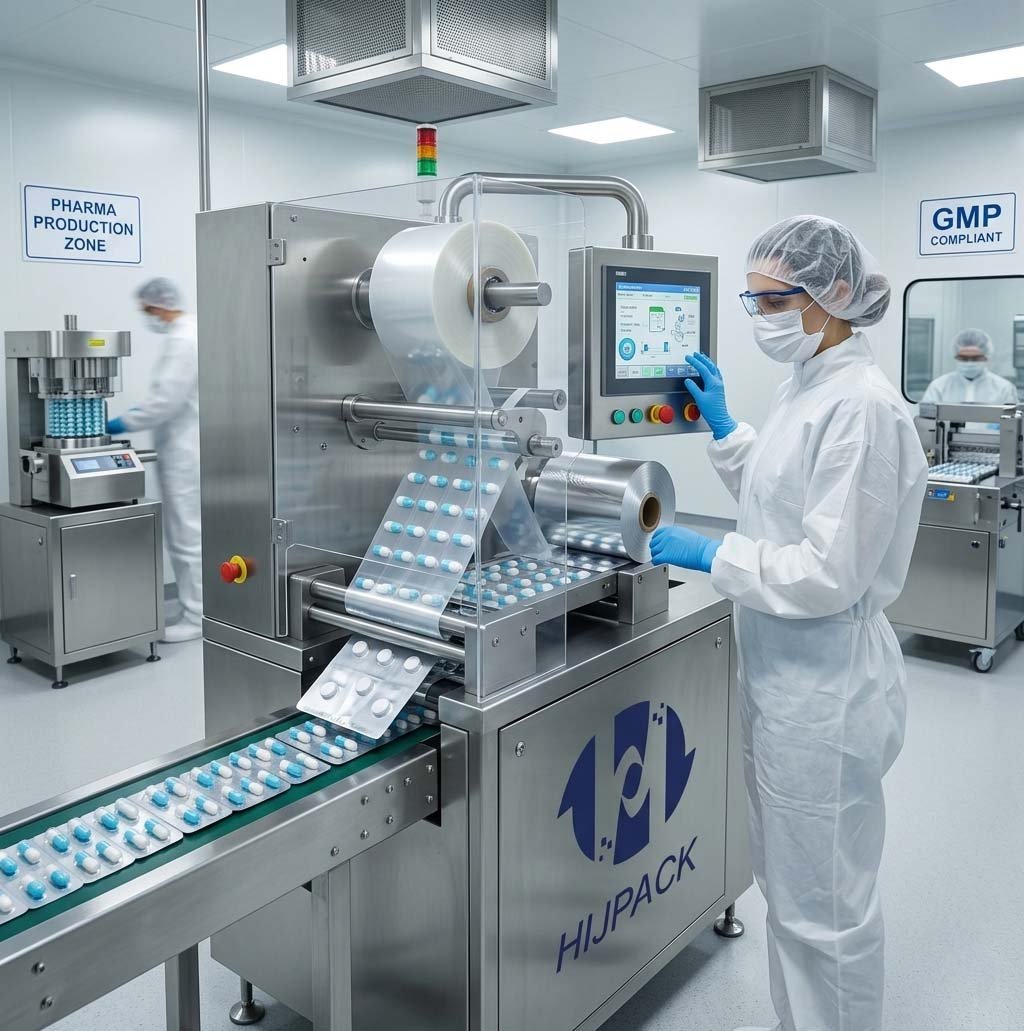
HIJ blister packaging machine processing tablets and capsules in a cGMP pharmaceutical environment — forming, filling, and sealing in a single continuous operation.
Blister lines commissioned globally by HIJ Machinery
Seal integrity drop from a 12°C sealing jaw temperature deviation
Forester Xiang’s field experience across Southeast Asia, Latin America & Middle East
How a Blister Packaging Machine Works: The 6-Station Forming-Filling-Sealing Cycle
A blister packaging machine executes a continuous, synchronized 6-station cycle that transforms flat base film into individual, hermetically sealed unit-dose packages at speeds ranging from 20 to 600 blisters per minute, depending on machine class. Understanding each station is essential before specifying a machine—because each station harbors its own failure mode that can silently compromise batch yield and regulatory compliance.
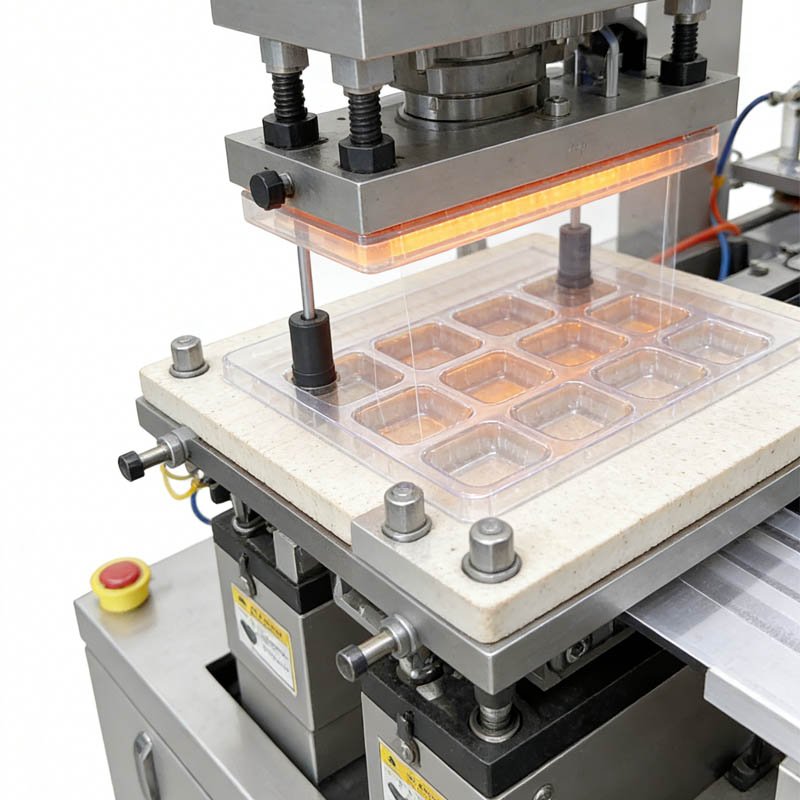
Thermoforming station: PVC base film is heated to 120–140°C and pressed into pre-engineered cavity molds — the foundation of every thermoform blister pack.
Station 1 — Material Loading & Web Feeding
The base film roll (PVC, PVDC, PVC/PE, or cold-form aluminum laminate) mounts on a dual-roll holder with automatic web tension control. Servo-driven indexing advances the film with ±0.1 mm positional repeatability—a tolerance that, if exceeded, causes cavity misregistration and feeder overfill, directly impacting dose accuracy per tablet cavity.
Station 2 — Thermoforming (Heating & Forming)
Heating plates elevate PVC film to 120–140°C within a precisely controlled ±2°C window. Compressed air at 4–6 bar then forces the softened film into the cavity mold to form individual pockets. Per EU GMP Annex 1 (2022 revision), forming temperature and pressure must be continuously monitored and logged by the PLC with tamper-evident audit trail—not just set on a dial and forgotten.
Cold-form alu-alu machines skip heating entirely: they use mechanical cold-forming dies at ambient temperature to press aluminum laminate into cavities, delivering superior moisture vapor transmission rates (MVTR) below 0.005 g/m²/24h—a critical specification for hygroscopic APIs.
Station 3 — Product Filling
Brush feeders, vibratory feeders, or pick-and-place systems deposit exactly one tablet, capsule, or softgel per cavity. Photoelectric sensors validate cavity fill status at 100% inspection before the web advances. A single mis-fill event at this station that passes undetected translates directly to a patient receiving an empty blister—a Class II recall trigger under 21 CFR Part 211.68.
Station 4 — Heat-Sealing (Forming-Filling-Sealing Convergence)
Aluminum lidding foil laminates to the formed base web under sealing jaw temperatures of 180–220°C and sealing pressure of 0.3–0.6 MPa. Dwell time is typically 0.3–0.8 seconds per cycle. As validated by USP <1207> container closure integrity testing protocols, seal strength must achieve a minimum peel force of 8 N/15 mm for standard pharma blisters. Validated sealing pressure monitoring—not just visual inspection—is the only compliant way to catch seal failures before they leave the line.
Station 5 — Coding & Printing
Inline inkjet or thermal transfer overprinting (TTO) systems stamp batch number, expiry date, and serialization codes onto the lidding foil with traceability data logged to the MES. Under 21 CFR Part 11, all electronic records generated at this station must be attributable, legible, contemporaneous, original, and accurate (ALCOA+ principles).
Station 6 — Die Cutting & Output
Rotary punch tooling or die-cutting presses separate individual blister cards from the continuous web at dimensional tolerances of ±0.3 mm. A waste removal system collects trim material for recycling. Finished cards discharge onto a conveyor feeding directly into a blister cartoning machine for secondary packaging.
Common Failure Modes & Forester’s Fix
- 🔴 Symptom: Blisters pass visual inspection on the line but fail ASTM F2338 vacuum decay leak testing at QC.
⚙️ Root Cause: Sealing jaw temperature drifting ±8°C beyond setpoint due to degraded thermocouple contact or worn heating element—invisible to the operator but devastating to seal integrity.
🔧 Forester’s Fix: Calibrate all sealing jaw thermocouples against a NIST-traceable reference every 500 operating hours. Set PLC alarm threshold at ±3°C. Replace heating elements at 8,000-hour intervals regardless of apparent condition. - 🔴 Symptom: Tablets appear cracked or chipped inside formed cavities after sealing.
⚙️ Root Cause: Sealing platen descending 0.4–0.8 mm too low due to worn cam follower bearing, generating excess compression force on tablet-height cavities.
🔧 Forester’s Fix: Measure sealing platen descent depth weekly using a dial indicator; target 0.15–0.20 mm film compression. Replace cam follower bearings at 6,000-hour intervals. Cross-reference tablet height (±0.05 mm tolerance) from QC before each batch changeover. - 🔴 Symptom: Web index repeatedly triggers a servo fault alarm, stopping production every 15–20 minutes.
⚙️ Root Cause: Web tension sensor contaminated with PVC dust, sending erratic tension feedback signals to the servo drive controller.
🔧 Forester’s Fix: Clean tension sensor optics with IPA wipe every 8-hour shift. Set servo torque limit at 85% of rated value to provide fault hysteresis. Verify encoder cable shielding continuity—broken shield ground is a frequent source of noise-induced servo faults in humid tropical production environments.
4 Types of Blister Packaging Machines: Which One Matches Your Dosage Form?
Selecting the correct blister machine type determines whether your line achieves the moisture protection, throughput, and regulatory compliance your product demands—and choosing wrong costs an average of $180,000–$400,000 in line redesign, revalidation, and production downtime based on HIJ Machinery’s project engineering experience across 40+ countries.
| Machine Type | Forming Method | Base Film Material | 速度範囲 | MVTR Performance | cGMP Ready |
|---|---|---|---|---|---|
| Thermoform PVC/PVDC Blister | Heat + compressed air forming at 120–140°C | PVC, PVDC, PVC/PE laminate | 60–600 blisters/min | 0.5–3.0 g/m²/24h | ✅ Yes |
| Cold-Form Alu-Alu Blister | Mechanical cold-press die forming at ambient temperature | Alu/OPA/PVC laminate | 20–200 blisters/min | <0.005 g/m²/24h | ✅ Yes |
| Liquid Blister Machine | Thermoform + liquid dosing pump (0.1–5 mL/cavity) | PVC or polypropylene | 20–150 blisters/min | Application-specific | ✅ Yes |
| Syringe & Device Blister | Pre-formed tray thermoforming + robotic pick-place | PET, PETG, PS trays | 10–60 units/min | Secondary barrier pack | ✅ Yes |

HIJ DPP-250: Thermoforming blister machine for tablets & capsules — up to 250 blisters/min with Siemens PLC & IQ/OQ documentation.

HIJ DPH-300: Cold-form alu-alu blister machine — MVTR <0.005 g/m²/24h, ideal for moisture-sensitive APIs in tropical markets.
Thermoforming vs. Cold-Form Alu-Alu: How to Choose
Thermoforming machines dominate 78% of global pharma blister installations because they run faster and use lower-cost base film. Cold-form alu-alu machines command a premium—both in capital cost (typically 35–50% higher) and operating cost (alu laminate film at $4.80–$8.20/m² vs. PVC at $0.90–$2.10/m²)—but deliver the only barrier technology that meets WHO TRS 992 Annex 3 packaging requirements for APIs with moisture sensitivity Class 3 or Class 4. If your API stability data shows more than 0.3% degradation per month at 40°C/75% RH (ICH Q1B accelerated stability condition), cold-form alu-alu is not optional—it’s compulsory.
Common Failure Modes & Forester’s Fix
- 🔴 Symptom: Cold-form blisters show pinholes or micro-cracks visible under UV light inspection, triggering 100% batch rejection.
⚙️ Root Cause: Cold-forming die stroke set 0.6–1.2 mm too deep relative to the alu laminate thickness (standard: 0.045–0.060 mm alu foil gauge), causing aluminum layer fracture at cavity shoulder radius.
🔧 Forester’s Fix: Verify forming die depth against film gauge certification before every roll changeover. Set die stroke to 92–95% of maximum theoretical cavity depth. Inspect cavity shoulder radius for tooling wear every 200,000 cycles—replace tooling set at 1,000,000-cycle intervals. - 🔴 Symptom: Liquid-dose blisters show overfill (+15% volume) in end cavities but correct fill in center cavities.
⚙️ Root Cause: Dosing manifold pressure unequal across nozzle array due to partial blockage of outer nozzle filters, creating pressure gradient that drives excess flow to low-resistance paths.
🔧 Forester’s Fix: Flush dosing manifold with 70% IPA at every product changeover. Replace 10-micron nozzle filters every 40 operating hours. Validate fill volume across all nozzle positions at startup using a gravimetric check (target: ±2% fill volume CV).
Blister Packaging Machine Compliance: cGMP, 21 CFR Part 11 & Validation Requirements Explained
A blister packaging machine installed in a regulated pharmaceutical facility is not merely a piece of capital equipment—it is a validated system that must satisfy EU GMP Annex 15 qualification requirements (Design Qualification, Installation Qualification, Operational Qualification, and Performance Qualification: DQ/IQ/OQ/PQ) before a single commercial batch may be released. Skipping or shortcutting this validation lifecycle is the single most common root cause of FDA Form 483 observations related to packaging equipment.

The DQ → IQ → OQ → PQ validation lifecycle for blister packaging machines — mandatory under EU GMP Annex 15 and WHO TRS 992 Annex 3 for any regulated pharmaceutical production.
The 4-Phase Validation Lifecycle for Blister Lines
- DQ (Design Qualification) — Define Before You Buy
The User Requirements Specification (URS) crystallizes every critical parameter: dosage form dimensions (±0.05 mm cavity tolerance), target throughput (blisters/min), lidding foil peel force minimum (8 N/15 mm per USP <1207>), regulatory markets (EU, US FDA, WHO, or ANVISA), PLC audit trail format (21 CFR Part 11 compliant or not), and MES integration protocol. DQ is the contract between engineering and procurement—finalize it before requesting a single quotation. - IQ (Installation Qualification) — Verify the Machine Arrived as Specified
Installation Qualification documents that every component matches the approved URS and FAT (Factory Acceptance Test) records: PLC firmware version, sealing jaw material (hard chrome or ceramic coating), sensor calibration certificates, utility connections (compressed air at 6 bar ±5%, electrical supply at 380V/50Hz ±10%), and GMP-compliant surface finishes (Ra ≤0.8 µm on product-contact surfaces per EU GMP Annex 1 (2022 revision), Section 4.20). - OQ (Operational Qualification) — Prove the Machine Performs Within Limits
OQ challenges the machine across the full operating parameter range: sealing temperature setpoint accuracy (±2°C across all 3 heating zones), web tension control stability (±5 N across full roll depletion from 300 mm to 50 mm core diameter), die-cutting dimensional accuracy (±0.3 mm on all axes), and 21 CFR Part 11 audit trail completeness. Run minimum 3 consecutive OQ runs at low, nominal, and high parameter setpoints. - PQ (Performance Qualification) — Prove the Machine Performs With Your Product
PQ runs minimum 3 commercial-scale batches using your actual API, confirming seal integrity (ASTM F2338 vacuum decay test), fill accuracy (±1 tablet/cavity at 99.98% confidence), blister card dimensional compliance, and batch record completeness. PQ data forms the scientific basis for regulatory submission and commercial batch release.
Common Failure Modes & Forester’s Fix
- 🔴 Symptom: IQ fails because machine PLC firmware version at delivery differs from the version documented in the FAT report—creating a critical instrument deviation that halts the entire qualification timeline by 4–8 weeks.
⚙️ Root Cause: Supplier updated PLC firmware after FAT completion without issuing a Change Control notification or amended FAT report—a GMP documentation breach under ICH Q10 pharmaceutical quality system requirements.
🔧 Forester’s Fix: At HIJ Machinery, all firmware versions are version-locked at FAT sign-off. Any post-FAT change triggers a formal Change Control document with a Delta-FAT protocol before shipment. Demand this commitment in your purchase contract—specify it as a delivery prerequisite, not a post-installation activity. - 🔴 Symptom: 21 CFR Part 11 audit trail shows “administrator” deleting alarm records 12 minutes after a sealing temperature excursion event—flagged during FDA pre-approval inspection.
⚙️ Root Cause: PLC access control configured with a shared “admin” account with record deletion privileges, violating individual accountability requirements under 21 CFR Part 11.10(d).
🔧 Forester’s Fix: Configure PLC with role-based access control: Operator role (view + start/stop only), Supervisor role (parameter adjustment within validated range), Administrator role (configuration only—no record deletion). Audit trail deletion must require dual electronic authorization. Validate access control matrix during OQ.
How to Select a Blister Packaging Machine: 6 Critical Engineering Parameters Every Buyer Must Evaluate
Purchasing a blister packaging machine without evaluating these 6 parameters against your specific dosage form, regulatory market, and production scale is the fastest route to a costly line redesign 18 months after commissioning—a scenario Forester Xiang has diagnosed in over 30 client plants across Indonesia, Brazil, Egypt, and Vietnam.
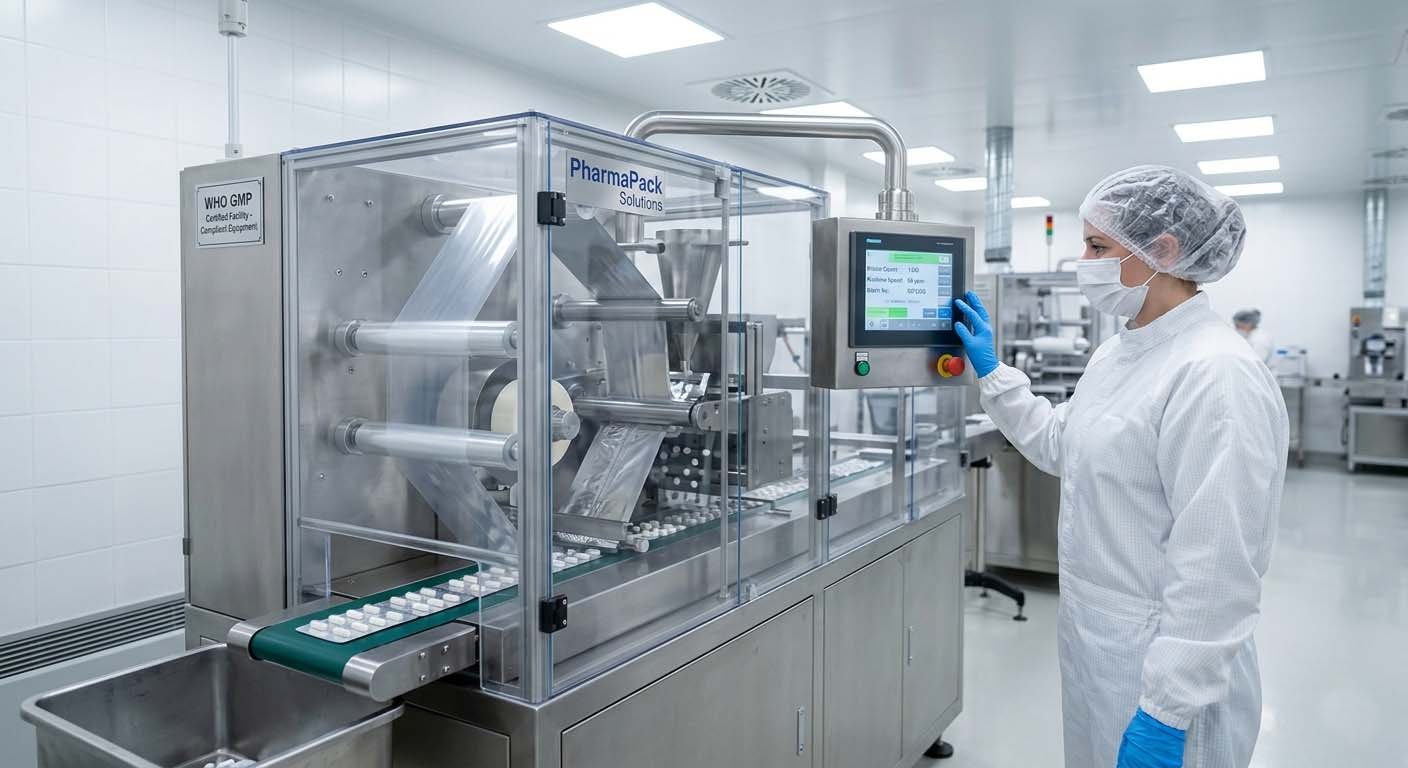
Operator monitoring a GMP-certified blister packaging machine in a pharmaceutical cleanroom — proper selection starts with defining your URS before contacting any supplier.
Parameter 1: Dosage Form Dimensions & Physical Properties
Specify tablet or capsule dimensions to ±0.2 mm (diameter, height, and shape: round, oval, oblong, or irregular), hardness (20–160 N Schleuniger range), and friability (<0.5% per USP <1216>). Fragile or film-coated tablets require brush feeder speed de-rated by 30% and cavity depth set at tablet height plus 0.4–0.6 mm clearance to prevent compression damage during sealing.
Parameter 2: Required Throughput vs. OEE Reality
Never spec a machine at its nameplate speed. Apply an OEE (Overall Equipment Effectiveness) factor of 75–82% for a well-maintained pharmaceutical blister line. If your batch requires 1,200,000 blisters/shift, size the machine at 1,200,000 ÷ 0.78 ÷ 480 minutes = 3,205 blisters/minute nameplate capacity—not 2,500. Undersizing by even 15% forces overtime shifts that violate cGMP personnel fatigue management requirements.
Parameter 3: Regulatory Market Requirements
Your target market determines your lidding foil specification, child-resistant closure design, and serialization requirement. US FDA markets require child-resistant compliance per 16 CFR Part 1700 (PPPA). EU markets require serialization and tamper-evident features per Delegated Regulation (EU) 2016/161. WHO prequalification markets (Southeast Asia, Africa, Latin America) require WHO TRS 992 Annex 3 packaging qualification. Specify all target markets in your URS before ordering any tooling.
Parameter 4: Base Film & Lidding Foil Compatibility
Confirm the machine’s heating zone temperature range covers your specified base film: PVC forming at 120–130°C; PVDC at 130–145°C; PVC/Aclar at 140–160°C. Lidding foil sealing temperature must be calibrated to achieve minimum heat-seal bond strength of 8 N/15 mm (standard) or 12 N/15 mm (child-resistant push-through), verified by ASTM F88 peel test during OQ.
Parameter 5: PLC & MES Integration Architecture
Specify the machine PLC brand (Siemens S7-1500, Allen-Bradley ControlLogix, or Mitsubishi iQ-R series) to match your existing plant MES integration protocol. Communication must support OPC-UA or MQTT for Industry 4.0 data streaming. If your facility runs a SAP Manufacturing Integration & Intelligence (MII) layer, confirm the blister machine HMI can push batch records via REST API—this single specification point can save 6–8 months of custom integration work post-installation.
Parameter 6: After-Sales Service Coverage in Your Region
A machine with 48-hour parts delivery and a local-language certified engineer available within 72 hours of a critical breakdown is worth $50,000 more than the cheapest quote on the market. Verify: Does the supplier maintain spare parts stock in-region? Is there a local service partner with certified technicians? What is the guaranteed response SLA (Service Level Agreement) for critical breakdowns? HIJ Machinery maintains regional service coverage across Southeast Asia, Latin America, and the Middle East with guaranteed 72-hour on-site response for critical line-down events.
Explore the full HIJ Machinery blister packing machine product line to compare specifications across all machine classes, or review our turnkey blister packaging line solutions for complete forming-cartoning-case packing integration.
HIJ Machinery Blister Packaging Machine Product Line: Specifications at a Glance
HIJ Machinery’s blister packaging equipment portfolio covers every solid dosage form, output requirement, and regulatory market—from entry-level semi-automatic lines at 20 blisters/min to high-speed integrated turnkey lines at 600+ blisters/min. Every machine ships with CE certification, GMP-compliant structural design, and a full IQ/OQ documentation package.
| マシンモデル | スピード | Best Application | Key Feature | コンプライアンス |
|---|---|---|---|---|
| DPP-250 Pharma Blister Machine | Up to 250 blisters/min | Tablets, capsules (round, oval, oblong) | Siemens PLC, servo indexing, ±2°C sealing control | CE, cGMP, IQ/OQ ready |
| DPP-260 Automatic Blister Machine | Up to 260 blisters/min | High-volume solid dosage forms | Dual servo drives, auto film splicing | CE, WHO GMP, FAT/SAT included |
| DPH Alu-Alu Cold Form Machine | Up to 120 blisters/min | Hygroscopic APIs, moisture-sensitive capsules | MVTR <0.005 g/m²/24h, no heating required | CE, EU GMP Annex 1 compliant |
| Tablet Blister Packing Machine | 60–400 blisters/min | All standard tablet shapes & coatings | Brush + vibratory dual-mode feeder | cGMP, 21 CFR Part 211 ready |
| Capsule Blister Packing Machine | 60–350 blisters/min | Hard gelatin & HPMC capsules (Size 00 to Size 5) | Adjustable cavity depth, anti-static feeder | cGMP, WHO prequalification compatible |
| Liquid Blister Packaging Machine | 20–150 blisters/min | Honey, sauces, condiments, liquid pharma | Precision dosing pump, 0.1–5 mL/cavity | Food-grade & pharma GMP dual compliance |

HIJ high-speed integrated blister packing line: thermoforming → filling → sealing → coding → cartoning in a single continuous validated production flow.
Every HIJ blister line is designed to integrate seamlessly with downstream secondary packaging. A blister cartoning machine receives finished blister cards at synchronised speed—eliminating manual buffer accumulation that is a primary source of GMP contamination risk.
FAQ: Blister Packaging Machine — Real Buyer Questions, Answered
What is a blister packaging machine used for in the pharmaceutical industry?
A blister packaging machine is used in the pharmaceutical industry to package solid dosage forms—tablets, capsules, and softgels—into individual hermetically sealed unit-dose cavities formed from thermoformed plastic film (PVC, PVDC) or cold-form aluminum laminate, then sealed with heat-laminated aluminum lidding foil. Each sealed cavity provides moisture barrier protection, tamper evidence, child resistance, and unit-dose traceability required under cGMP regulations (EU GMP Annex 1 (2022 revision), 21 CFR Part 211, WHO TRS 992 Annex 3). Beyond pharmaceuticals, blister packaging machines are also used in the food industry (chocolate, honey, condiments) and medical device industry (syringes, lancets).
What is the difference between a thermoforming blister machine and a cold-form alu-alu blister machine?
A thermoforming blister machine heats PVC or PVDC base film to 120–145°C and uses compressed air pressure to form cavities, achieving moisture vapor transmission rates (MVTR) of 0.5–3.0 g/m²/24h—suitable for most standard APIs. A cold-form alu-alu blister machine uses mechanical dies at ambient temperature to press aluminum/OPA/PVC laminate into cavities without heat, achieving MVTR below 0.005 g/m²/24h—providing 60 to 600 times better moisture barrier performance. Cold-form machines are mandatory for hygroscopic APIs, certain biologics, and effervescent tablets that degrade rapidly above 30% relative humidity. The trade-off: cold-form machines run 40–60% slower and use film that costs 3–4× more than standard PVC.
How much does a blister packaging machine cost?
Blister packaging machine pricing ranges from $18,000–$45,000 for entry-level semi-automatic models to $80,000–$180,000 for mid-range automatic pharma-grade machines (such as the HIJ DPP-250/DPP-260 series), and $200,000–$600,000 for high-speed integrated turnkey blister-to-carton lines. Cold-form alu-alu machines carry a 35–50% premium over equivalent thermoforming models. Additional cost factors include: tooling (cavity molds: $3,000–$15,000 per format set), IQ/OQ documentation packages ($8,000–$20,000), FAT/SAT travel costs, and regional after-sales service contracts ($12,000–$35,000/year). Always request a Total Cost of Ownership (TCO) analysis over a 10-year horizon—not just the machine purchase price.
Does a blister packaging machine need to be GMP validated?
Yes—any blister packaging machine used in a regulated pharmaceutical manufacturing facility must be GMP validated through a documented DQ/IQ/OQ/PQ lifecycle per EU GMP Annex 15 and WHO TRS 992 Annex 3. The IQ verifies installation matches the URS; the OQ verifies the machine operates within its critical process parameter (CPP) limits across the full operating range; the PQ verifies the machine consistently produces compliant blister packs with your actual product under production conditions. Machines processing product for the US market must additionally comply with 21 CFR Part 211 equipment qualification requirements, and if electronic batch records are generated, 21 CFR Part 11 audit trail and electronic signature requirements apply. HIJ Machinery provides a complete IQ/OQ protocol package and supports FAT/SAT execution as standard on all pharma-grade blister lines.
What causes blister seals to fail and how can it be prevented?
Blister seal failures are caused by 5 primary root causes: (1) sealing jaw temperature deviating more than ±5°C from setpoint (replace thermocouple every 2,000 hours); (2) sealing pressure below 0.3 MPa due to worn pneumatic cylinder seals (inspect cylinder bore wear every 6 months); (3) lidding foil tension too low (<15 N), causing foil wrinkling that creates unsealed channels (calibrate tension control at every roll change); (4) base film moisture content above 0.3% w/w due to improper storage, reducing film-foil bond strength (store PVC film at <25°C, <60% RH, sealed in original packaging); (5) contamination of the sealing surface by tablet dust or API particles, creating physical barriers to heat-seal bond formation (purge sealing station with compressed air every 30-minute production interval). Verify seal integrity per ASTM F2338 vacuum decay test at batch start, mid-batch, and batch end as minimum frequency.
How long does it take to change over a blister packaging machine to a new product format?
Standard blister packaging machine changeover time ranges from 45 minutes to 4 hours depending on machine design and the scope of format change. A forming mold and die-cutting tooling change alone takes 30–90 minutes on a conventional machine. HIJ Machinery’s quick-release tooling system—using pre-aligned mold cassettes with RFID verification—reduces full format changeover time to 25–40 minutes, which at 4 changeovers per week translates to 6–8 hours of recovered production time monthly. Each tooling set must be cleaned, inspected, and stored in a labeled, dedicated format tray to prevent cross-contamination risk between products (EU GMP Annex 15, Section 10.5 equipment cleaning verification requirement).
Can a blister packaging machine be connected to a downstream cartoning machine?
Yes—a blister packaging machine should be integrated with a downstream cartoning machine via a synchronized conveyor link and shared PLC communication to eliminate manual blister card accumulation, which is both a GMP contamination risk and a throughput bottleneck. HIJ Machinery engineers the blister-to-cartoning interface as a standard turnkey integration, synchronizing blister card output speed (cards/min) with cartoner infeed speed at ±2% speed differential tolerance. The blister machine PLC sends a “reject card” signal to the cartoner to eject defective cards before carton loading—ensuring zero defective blisters enter the cartoned finished product stream. Explore the HIJ turnkey blister-to-cartoning line solutions for complete integration specifications.

Forester Xiang
Founder, HIJ Machinery | 20-Year Pharma Packaging Engineer
Forester Xiang has commissioned blister packaging lines across pharmaceutical plants in Southeast Asia, Latin America, and the Middle East for over 20 years. He founded HIJ Machinery to deliver European-quality blister, cartoning, and turnkey packaging solutions at manufacturing-market pricing—with full compliance engineering built in from URS to PQ validation sign-off.
Ready to Specify Your Blister Packaging Line?
Tell Forester your dosage form dimensions, target output, and regulatory market—and receive a detailed machine recommendation, format tooling cost estimate, and IQ/OQ scope outline within 48 hours. HIJ Machinery serves pharmaceutical manufacturers across Southeast Asia, Latin America, the Middle East, and Africa.
“At HIJ Machinery, I don’t just sell you a machine; I deliver project certainty.”
— Forester Xiang, Founder, HIJ Machinery