
















📊 Forester’s Field Note: Fill Volume Accuracy Is a Regulatory Non-Negotiable
Fill volume accuracy in liquid blister packaging is not a “nice-to-have.” It is a regulatory line in the sand.
A ±1% tolerance is the industry benchmark that separates cGMP-compliant lines from lines that fail FDA or EMA batch release audits.
In 20 years commissioning liquid blister lines across Southeast Asia and Latin America, I have watched facilities lose entire production batches — not from mechanical failure, but from peristaltic pump drift nobody caught during SAT.
The hidden trap: budget machine suppliers quote attractive prices but ship dosing systems without closed-loop feedback control.
Fill deviation silently creeps past ±3% within weeks of operation, and you only discover it during a regulatory inspection — not on the factory floor.
Before signing any equipment contract, demand a documented FAT protocol that stress-tests fill accuracy across your full viscosity range.
O nosso liquid blister packaging machines at HIJ use servo-driven positive displacement pumps with real-time volumetric verification — because turnkey accountability means we own the accuracy problem, not you.
🎯 Direct Answer
Liquid blister fill volume accuracy of ±1% is the cGMP-recognized benchmark per Ph. Eur. 2.9.26 and USP <1>.
Dosing systems that drift beyond ±3% risk batch rejection under 21 CFR Part 211.68 and EU GMP Annex 1 (2022) — typically triggered by peristaltic pump wear or thermal viscosity shift without closed-loop correction.
±1%
cGMP fill volume tolerance benchmark (Ph. Eur. 2.9.26)
±3%
Deviation threshold triggering batch rejection review (21 CFR 211.68)
12%
FDA recalls 2019–2023 with packaging process deviation as root cause
6 wks
Typical peristaltic pump drift timeline without closed-loop correction
What Does ±1% Fill Volume Accuracy Actually Mean — and Why Does It Matter?
🎯 Direct Answer
±1% fill volume accuracy in liquid blister packaging means the delivered volume in every cavity stays within 1% of the target — for a 5 mL dose, that is 4.95 mL to 5.05 mL per unit, across all cavities, across the full production run. Ph. Eur. 2.9.26 and USP <1> set this as the minimum acceptable standard for pharmaceutical liquid primary packaging.
That number sounds simple. It is not.
For a 5 mL ophthalmic dose — the kind packed in cold-formed aluminum blister cards for single-use eye drop delivery — a ±1% variance means the absolute tolerance window is only 100 microliters. One hundred microliters across a pump that fires 40 times per minute, across a 480-minute shift, across a product whose viscosity changes by 12% between 18°C and 26°C ambient temperature. The engineering challenge is not trivial.
From a regulatory standpoint, fill volume is a critical quality attribute (CQA) for any liquid pharmaceutical product. Under 21 CFR Part 211.68, process control equipment — including dosing systems — must deliver outputs within specifications established during process validation. Under EU GMP Annex 1 (2022) for sterile products, fill accuracy is explicitly listed as a critical process parameter (CPP) requiring continuous in-process monitoring, not just periodic sampling.
The practical consequence: if your dosing system drifts, your batch record shows it. Your QP signs off on that batch record. Your batch fails release if the drift exceeds specification limits — and in a tropical market context where Zone IVb stability data is mandatory, a rejected batch is not a recoverable event. It is a $48,000 to $380,000 loss depending on batch size, plus a CAPA cycle that takes three to five months minimum.
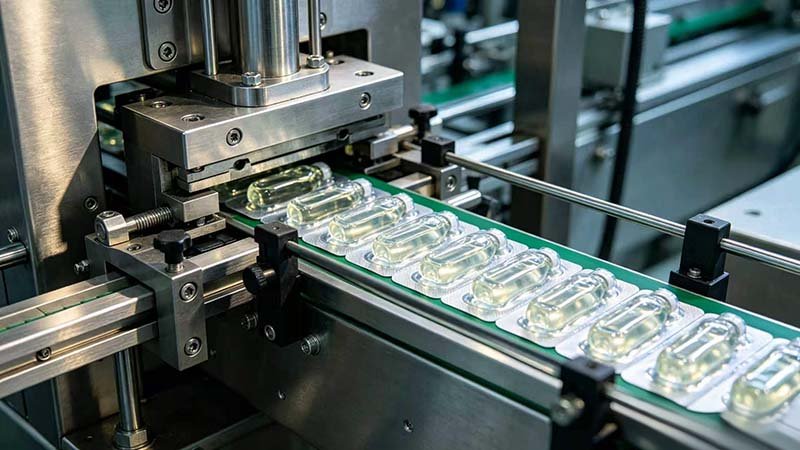
HIJ liquid blister filling station — servo-driven positive displacement pump with real-time volumetric verification for ±1% cGMP accuracy.
The Three Dosing Technologies: How Each Performs Against the ±1% Standard
🎯 Direct Answer
The three primary dosing systems used in liquid blister packaging — peristaltic pump, piston/positive displacement pump, and time-pressure (T/P) nozzle — achieve fundamentally different accuracy profiles: peristaltic pumps typically deliver ±1.5–3% at best; positive displacement pistons achieve ±0.5–1%; and T/P systems reach ±0.5% but only within narrow viscosity ranges.
The number that gets misquoted most often in supplier RFQs is the “dosing accuracy” spec. I have seen the same “±1%” claim printed on data sheets for all three pump types. That claim is not uniformly achievable — and the conditions under which it holds matter enormously.
| Dosing Technology | Typical Fill Accuracy | Viscosity Range Suitability | Drift Risk Over Time | Closed-Loop Option | cGMP Suitability |
|---|---|---|---|---|---|
| Peristaltic Pump | ±1.5–3% | Low viscosity only (<500 cP) | Elevado — tubing wear shifts baseline within 4–6 weeks | Rare in low-cost lines | Marginal — requires frequent recalibration |
| Positive Displacement Piston | ±0.5–1% | 1–10,000 cP | Low — mechanical geometry is stable | Standard on GMP lines | Preferred for regulated pharma |
| Time/Pressure (T/P) Nozzle | ±0,51 TP3T | Low viscosity only (<200 cP, narrow range) | Medium — pressure fluctuation causes drift | Yes, via pressure transducer | Suitable for thin liquids — not for viscous APIs |
| Servo-Driven Positive Displacement (HIJ) | ±0.3–0.5% | 1–15,000 cP | Very low — servo encoder tracks every stroke | Integrated real-time feedback | Full cGMP, 21 CFR Part 11 data trail |
I need to be direct about peristaltic pumps. They are inexpensive, easy to clean, and perfectly adequate for non-pharma liquid blister applications — honey portioning, condiment sachets, cosmetic samples. For those use cases, ±2% is commercially acceptable. Nobody is harmed by 0.1 mL of extra honey.
The problem arises when a manufacturer uses a peristaltic system for pharmaceutical syrup, oral rehydration solution, or ophthalmic liquid, because the tubing degrades. Silicone tubing in continuous operation loses wall integrity within four to six weeks of production. The pump’s internal pressure-to-volume ratio shifts as the tubing softens — and unless you have a closed-loop sensor that checks delivered volume after every stroke, that drift is invisible until your in-process QC sample flags it. By then, you may have filled 40,000 cards.
⚠️ Fill Volume Drift — Diagnostic & Correction
🔴 Symptom: In-process weight checks show progressive underfill over a shift
Likely cause: Peristaltic tubing wear — inner diameter has expanded 0.2–0.4 mm from repeated compression; the pump is no longer displacing the calculated volume per revolution.
Fix: Replace tubing immediately and recalibrate pump RPM against a 50-unit gravimetric check.
If your line runs more than one shift per day, establish a tubing replacement protocol every 14 days regardless of visual condition.
Long-term: upgrade to a positive displacement system with mechanical stroke verification.
🔴 Symptom: Fill weight variance increases at start-up compared to mid-run steady state
Likely cause: Product temperature at dosing nozzle has not stabilized — viscosity at 18°C is 15–25% higher than at operating temperature, causing underfill for the first 200–300 cards.
Fix: Implement a 20-minute line warm-up and product recirculation protocol before production start.
Document the equilibration window in your batch record and treat the first 300 units as non-releasable pending in-process QC clearance.
🔴 Symptom: Random single-cavity overfill detected by 100% checkweigher, no pattern
Likely cause: Needle valve seat partially blocked by particulate — intermittent blockage causes variable backpressure at the nozzle tip, resulting in unpredictable volume delivery.
Fix: Isolate and purge the affected nozzle. Check product filtration upstream of the dosing manifold — a 40-micron inline filter before the pump head typically eliminates this failure mode. Verify filter integrity is included in your PM schedule.
How Viscosity, Temperature, and Product Formulation Affect Liquid Blister Fill Accuracy
🎯 Direct Answer
Viscosity is the primary variable driving liquid blister fill accuracy deviation. A 10°C ambient temperature shift can change product viscosity by 15–30%, which directly alters delivered fill volume in pump systems without real-time compensation — making temperature-controlled product supply tanks and closed-loop dosing mandatory for regulated pharmaceutical lines.
I saw this problem clearly in a plant outside Kuala Lumpur in 2021. The stability data for their paediatric syrup had been generated in a temperature-controlled lab at 20°C. The actual production floor ran at 28–32°C during the monsoon season. Nobody had modeled the viscosity-temperature curve of the sucrose-based formulation at operating conditions — and the plant was running time-pressure dosing.
The result: fill volumes ran 1.8% low during afternoon shifts when ambient temperature peaked. The in-process checks were scheduled every two hours. By the time the second check flagged it, six batches were already filled and sealed. Three were released. Two were recalled six weeks later after market complaints about underdosing in paediatric patients. The regulatory consequence took fourteen months to resolve.
⚡ Technical Insight: Viscosity-Temperature Relationship
For Newtonian liquids — most pharmaceutical syrups, eye drops, and oral solutions — viscosity follows an Arrhenius relationship with temperature. The rule of thumb: every 5°C rise reduces viscosity by 8–15% depending on formulation. For a positive displacement pump, lower viscosity means less fluid resistance, which means the piston slightly overshoots its target volume as backpressure decreases.
Non-Newtonian products — suspensions, gels, products with gelling agents like carbomer or xanthan gum — exhibit shear-thinning behavior. High pump speed means lower effective viscosity, which interacts with fill accuracy in ways that standard time-pressure dosing cannot compensate for without real-time rheology feedback.
This is why we require customers to provide full viscosity profiles across their target temperature range (typically 15–35°C) before we finalize pump selection and FAT protocols. A line that passes ±1% at 20°C may deliver ±2.4% at 30°C using the same settings — that is a failed batch on a hot July afternoon in Manila.
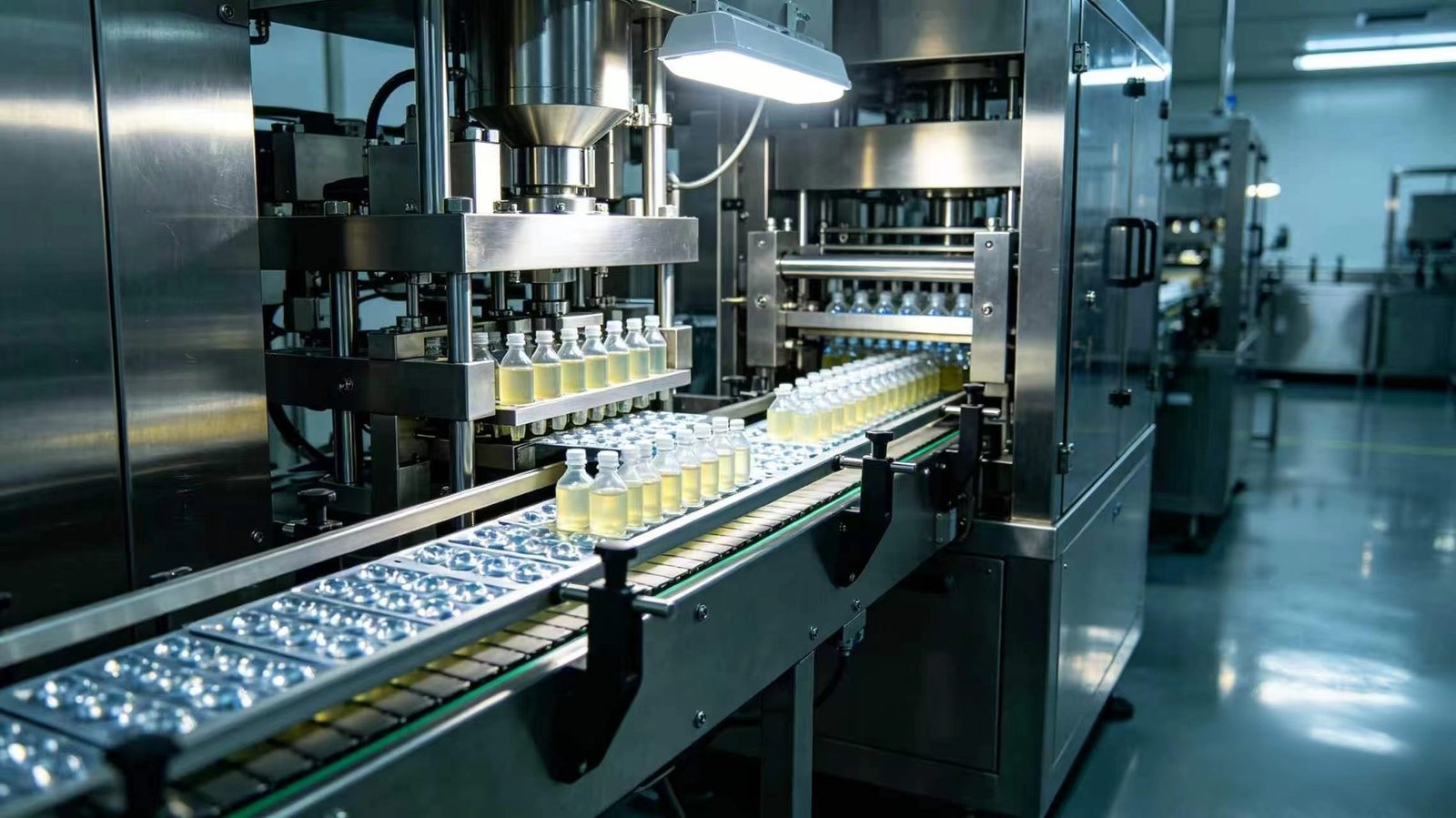
Closed-loop fill volume QC on a pharmaceutical liquid blister line — real-time weight feedback triggers automatic pump correction before deviation exceeds ±1%.
“Liquid blister fill accuracy at ±1% cannot be achieved by specifying it in a datasheet. It is achieved by engineering the dosing system for your product’s specific viscosity profile, ambient temperature range, and fill speed — then verifying it under production conditions during FAT, not in a supplier demo room at 23°C. Of the 31 liquid blister projects I handled in Southeast Asia between 2018 and 2023, the 11 that required dosing system changes post-installation shared one common factor: the viscosity data was not tested at actual plant operating temperatures.”
— Forester Xiang, Founder, HIJ Machinery
Regulatory Standards Governing Fill Volume Accuracy in Liquid Blister Packaging
🎯 Direct Answer
Ph. Eur. 2.9.26 and USP <1> set the primary pharmacopoeial standards for fill volume in liquid primary containers. These require not only that the mean fill meets target, but that individual unit variation does not exceed defined limits — which directly determines whether a ±1% system capability is sufficient or whether tighter tolerances are mandated for your specific dosage form.
📋 Regulatory Standards: Liquid Blister Fill Volume Accuracy
USP <1> Injections
21 CFR, Parte 211.68
Anexo 1 das BPF da UE (2022)
21 CFR Parte 11
ICH Q8(R2)
WHO GMP TRS 992
Ph. Eur. 2.9.26 specifies the test method for uniformity of filled containers: a minimum 10-unit sample is weighed before and after content removal; individual deviation from the stated volume must not exceed the limits specified in Table 2.9.26–1, which tighten as fill volume decreases. For volumes below 2 mL, the permitted deviation is ±10% — which sounds generous, but this is the pharmacopoeial limit, not the cGMP process target. Your validated process should be running at ±1% or better to provide adequate margin against the pharmacopoeial limit.
USP <1> takes a similar approach for injections and ophthalmic preparations: the labeled volume plus a defined overage to ensure deliverable volume meets label claim after container and tubing losses. The overage requirement means your fill system must not only be accurate — it must be accurate at the correct mean setpoint, which accounts for product retention in the delivery system. Under-estimating retention leads to underfill. Over-compensating leads to overfill that wastes API and potentially creates a safety risk for high-potency compounds.
EU GMP Annex 1 (2022) goes further for sterile products: it mandates 100% in-process weight checks on all filled units where technically feasible, replacing the historical statistical sampling approach for high-risk products. That means your liquid blister line for sterile eye drops or injectable preparations needs a fully integrated 100% checkweigher — not a manual periodic sample. This requirement alone eliminates a significant category of older filling equipment from compliant operation.
The CDSCO reviewer in a Delhi audit I attended in 2023 cited Annex 1 directly and asked for evidence of 100% checkweigher data from the previous three validation batches. The facility had a manual sampling protocol. The response took four months and a capital investment in a new checkweigher integration.
What a Proper FAT Protocol Looks Like for Liquid Blister Fill Volume Verification
🎯 Direct Answer
A cGMP FAT protocol for liquid blister fill volume accuracy must test dosing performance across the full viscosity range of the target product, at minimum three fill speed settings, and across a minimum 4-hour continuous run — not a 15-minute demonstration at nominal conditions. This is what separates a compliance-ready FAT from a sales demo with a stopwatch.
A procurement director showed me a supplier FAT report in 2022. Fifteen pages. Impressive-looking data tables. The accuracy column showed ±0.4% across the board. I asked how many units were tested. Fifty, they said. Across how long a run? Twenty minutes.
That is not a FAT. That is a product demonstration. A real FAT for liquid blister fill accuracy runs a minimum of two to four hours of continuous operation at production speed, samples units at defined intervals (typically every 30 minutes), and uses calibrated gravimetric analysis — not the machine’s own internal sensor, because the machine’s sensor is what you are trying to validate, not the reference instrument for that validation.
-
1
Product viscosity qualification at actual plant temperature range
Test fill accuracy with product at minimum, nominal, and maximum expected temperature (typically 18°C, 23°C, 28°C). Document viscosity at each point. Any pump parameter change required between temperature points is a validation finding.
-
2
Gravimetric accuracy testing across 3 fill speed settings
Run at 60%, 80%, and 100% of rated speed. Sample 30 units per speed per interval. Target: all individual units within ±1.5%; mean within ±0.5%. Any speed setting where this is not achieved requires pump adjustment documentation.
-
3
Extended run stability test (minimum 4 hours continuous)
This is where peristaltic pumps fail. Run the machine at production speed for four hours without interruption. Sample every 30 minutes. Any drift greater than 0.3% from the initial mean is a failure indicator requiring root cause analysis before installation qualification can proceed.
-
4
Start-up and restart accuracy verification
Document fill accuracy for the first 50 units after a cold start, after a 30-minute halt, and after a product change. Many lines achieve steady-state ±1% but produce underfill or overfill for the first 100–200 units after a pause. That is a batch record problem you need to solve before validation, not after.
-
5
Electronic data integrity verification (21 CFR Part 11 / Annex 11)
Confirm all fill weight data is automatically logged to a secure, non-overwritable audit trail with timestamp, operator ID, and batch number. Manual paper logs do not satisfy 21 CFR Part 11 requirements for electronic records. Verify the data cannot be modified without an audit trail entry.
For customers running our liquid blister systems through IQ/OQ/PQ validation, the FAT data from steps 1–5 above forms the baseline reference for the OQ protocol. The IQ/OQ/PQ process for liquid blister packaging machines has its own regulatory requirements — covered in detail in our IQ OQ PQ Validation Guide for Liquid Blister Packaging Machines, which walks through the full qualification sequence from design qualification through performance qualification.
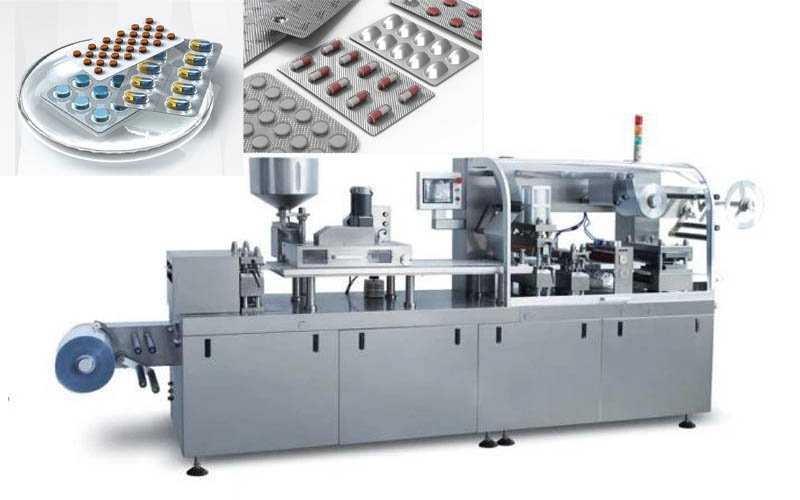
HIJ liquid blister packaging machine — integrated precision dosing module with servo-driven positive displacement pump, designed for ±1% fill accuracy under continuous pharma production conditions.
Fill Volume Accuracy for Non-Pharma Liquid Blister Applications: Different Standards, Same Principles
🎯 Direct Answer
Non-pharmaceutical liquid blister applications — including honey portions, condiments, cosmetic samples, and industrial reagent doses — do not require ±1% pharmacopoeial accuracy, but fill volume consistency still directly affects product yield, consumer perception, and legal net content compliance under EU Directive 76/211/EEC and NIST Handbook 133.
A cosmetics OEM in Jakarta came to me in 2020 with a specific problem. They were blister-packaging 1 mL serum samples for hotel amenity kits — a high-margin, high-volume product. Their fill variance was running at ±4%. At 1 mL target fill, that meant cavities ranging from 0.96 mL to 1.04 mL. The customer was not a pharma company. The product was not regulated to ±1%. But they were losing $0.003 per unit in overfill across 2.4 million units per month. That is $7,200 per month in wasted serum — just from dosing imprecision.
The principle transfers directly from pharma to non-pharma: fill accuracy is a cost driver, not just a compliance issue. The difference is who discovers the problem. In pharma, a QP catches it in batch review. In food and cosmetics, the factory accountant catches it in monthly material reconciliation — if anyone is looking.
| Application | Governing Standard | Practical Accuracy Target | Consequence of Excess Variance |
|---|---|---|---|
| Pharmaceutical liquid (oral) | Ph. Eur. 2.9.26, USP <1> | ±1% (process target) | Batch rejection, recall risk, CAPA |
| Ophthalmic / sterile liquid | Anexo 1 das BPF da UE (2022) | ±0.5–1% (100% checkweigher) | Critical deviation, regulatory action |
| Honey / condiment portion | EU Directive 76/211/EEC, NIST HB 133 | ±2–3% | Consumer complaints, net content non-compliance |
| Cosmetic sample | EU Regulation 655/2013 | ±2–4% | Material loss, brand inconsistency |
| Industrial reagent / adhesive | ISO 9001 internal spec | ±2–5% | Product performance variability, customer claims |
How HIJ Engineers Fill Volume Accuracy Into Liquid Blister Packaging Lines
🎯 Direct Answer
HIJ liquid blister packaging machines achieve ±0.3–0.5% fill volume accuracy through a servo-driven positive displacement pump architecture with real-time gravimetric feedback, temperature-controlled product supply system, and automated closed-loop correction — achieving consistent ±1% cGMP performance across viscosities from 1 cP (water-like) to 15,000 cP (thick syrup).
The engineering approach I have settled on after 20 years is based on one principle: never rely on open-loop dosing for regulated products. Open-loop means the pump fires a fixed stroke at a fixed speed and assumes the product delivers a predictable volume. That assumption is valid in a controlled laboratory at 23°C with freshly prepared product.
It is not valid at 30°C ambient in a factory in Vietnam, with product that has been recirculating in a holding tank for two hours, with a pump whose seals have 200 hours of wear on them. That is the real production environment.
Servo-driven positive displacement pump: Encoder feedback on every stroke — physical piston displacement is verified, not inferred from motor speed. Mechanical accuracy does not degrade with product viscosity changes.
Temperature-controlled product supply tank: Jacketed stainless steel tank with PID temperature control ±0.5°C maintains product viscosity at calibration conditions throughout the shift.
Real-time 100% checkweigher integration: Every filled card is weighed before sealing. Deviations beyond ±0.8% trigger automatic reject-and-alarm before the card reaches the sealing station — zero nonconforming units reach the sealed output.
21 CFR Part 11 compliant data logging: All fill weight data timestamped, attributed to operator ID, and written to a non-editable audit trail — export-ready for batch record integration.
Documented FAT with viscosity stress testing: We run FAT with your actual product formulation across your target temperature range before shipping. The FAT data package becomes the baseline for your OQ protocol.
The full scope of what a validated liquid blister installation looks like — from IQ through PQ — is detailed on our liquid blister packaging machine product page, including technical specifications for pump options, viscosity range, and validation documentation packages available on request.
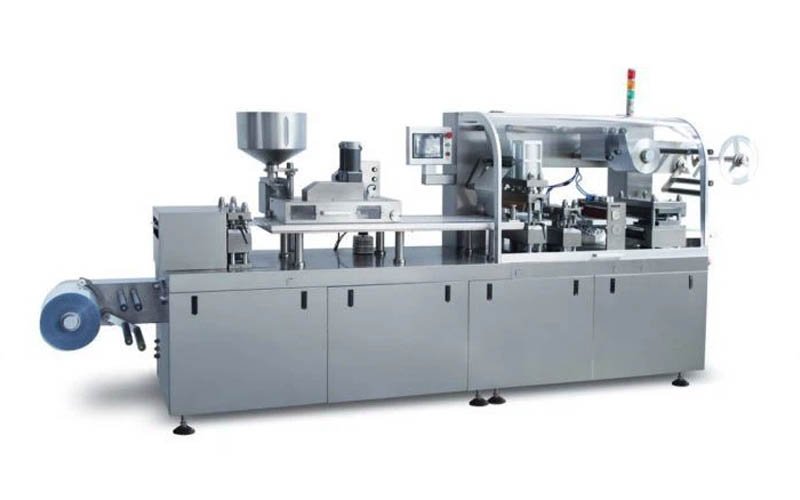
HIJ liquid blister packaging line — temperature-controlled product tank, servo dosing module, and integrated 100% checkweigher delivering verified ±0.5% fill accuracy for pharma and food-grade applications.
⚠️ Fill Accuracy Failure at OQ — Two Field Scenarios
🔴 Scenario A: Line passes FAT at ±0.8%, fails OQ at ±2.1%
What happened: FAT was conducted with a water-glycol simulant at 23°C. The actual product is a 45% w/v sucrose syrup formulated at 18°C. Plant temperature during OQ was 29°C. Viscosity difference between simulant and product at operating temperature: 840%.
Resolution: Time-pressure nozzle system replaced with a positive displacement piston pump. New FAT conducted with actual product at 18°C, 24°C, and 29°C. OQ repeated successfully at ±0.7%.
Time cost: 11 weeks. Capital cost: pump module upgrade plus re-FAT travel.
🔴 Scenario B: Checkweigher data shows ±0.5% but manual QC pulls show ±3%
What happened: The checkweigher was tared with a pre-filled card that had not been conditioned to ambient temperature — moisture condensation on the card surface added 0.12 g systematic error to the tare reference. The machine’s own monitoring showed clean data. External gravimetric QC revealed the bias.
Resolution: Establish separate tare reference cards conditioned at ambient temperature for a minimum 30 minutes before checkweigher calibration. Add checkweigher bias verification using calibrated weights to the daily pre-production checklist.
Frequently Asked Questions: Liquid Blister Fill Volume Accuracy
❓ What is the standard fill volume tolerance for liquid blister packaging in pharmaceuticals?
The cGMP process target for liquid blister packaging fill volume accuracy is ±1%, based on Ph. Eur. 2.9.26 and USP <1> individual container uniformity requirements. This is the process control target — the pharmacopoeial acceptance limit is wider (up to ±10% for volumes under 2 mL), but running close to the pharmacopoeial limit provides no safety margin against batch rejection, which is why ±1% at the process level is the accepted industry standard for cGMP-compliant lines.
❓ Can a peristaltic pump achieve ±1% fill accuracy in liquid blister packaging?
Under ideal conditions — fresh tubing, stable viscosity, controlled temperature, low production speed — a peristaltic pump may initially achieve ±1.0–1.5%. That performance degrades within four to six weeks as tubing softens. For regulated pharmaceutical applications requiring sustained ±1% over production lifetime, a positive displacement piston pump is significantly more reliable.
❓ Does EU GMP Annex 1 (2022) require 100% fill weight checking on liquid blister lines?
Yes, for sterile liquid products. EU GMP Annex 1 (2022) Section 9.40 mandates that all filled units be subject to 100% weight checking where technically feasible — replacing statistical sampling for sterile dosage forms. For non-sterile liquid blister (oral solutions, syrups), statistical in-process sampling remains acceptable, but the trend toward 100% checking is driven by growing regulatory expectations at CDSCO, ANVISA, and FDA as well. Designing a new line without 100% checkweigher capability is a decision you will likely regret within two to three years.
❓ How does temperature affect fill volume accuracy in liquid blister packaging?
Temperature changes product viscosity, which directly changes delivered volume in dosing systems without real-time viscosity compensation. A 10°C rise can reduce viscosity by 15–30% for typical pharmaceutical syrups, causing overfill in T/P systems and underfill in some piston systems as backpressure decreases. Temperature-controlled product supply tanks (jacketed, PID-regulated ±0.5°C) are the standard engineering control for this variable.
❓ What data does a FAT report for liquid blister fill volume accuracy need to include?
A cGMP-acceptable FAT report for fill volume accuracy must document: tested fill volume targets and tolerances; product viscosity at test conditions; sample size per interval (minimum 30 units); gravimetric results per cavity over minimum 4-hour continuous run; statistical analysis (mean, standard deviation, Cpk); any parameter adjustments made during FAT and justification; and calibration traceability for all measurement instruments. A 15-minute demonstration at nominal conditions with 50 units is not an acceptable FAT data package for IQ/OQ baseline documentation.
❓ What Cpk value should a liquid blister dosing system achieve for pharmaceutical validation?
A Cpk of ≥1.33 is the minimum process capability index accepted by most regulatory agencies for critical process parameters in pharmaceutical manufacturing — equivalent to a 4-sigma process. For fill volume, this means your process mean plus three standard deviations must still fall within the specification limit. A Cpk of ≥1.67 (5-sigma) provides a more comfortable validation margin and is increasingly expected by FDA and EMA reviewers for sterile liquid dosage forms.
❓ How does fill volume accuracy connect to IQ/OQ/PQ validation for liquid blister machines?
Fill volume accuracy is a critical process parameter (CPP) in the OQ and PQ phases of liquid blister packaging machine validation. OQ establishes that the dosing system delivers the specified volume within tolerance under defined operating conditions (temperature, speed, product viscosity). PQ confirms that the validated performance is sustained across three consecutive commercial-scale batches. The FAT data forms the basis for OQ acceptance criteria. For the full validation sequence, see our step-by-step guide on IQ OQ PQ validation for liquid blister packaging machines.
❓ What is the difference between fill volume accuracy and fill volume uniformity?
Fill volume accuracy describes how close the mean fill is to the target value (a bias measure). Fill volume uniformity describes how consistent individual fills are around that mean (a variation measure). Both matter: a system that averages exactly 5.00 mL but ranges from 4.50 mL to 5.50 mL has good accuracy but poor uniformity — and fails Ph. Eur. 2.9.26. A system that consistently delivers 5.15 mL when targeting 5.00 mL has poor accuracy but may have good uniformity. Regulatory requirements address both parameters; cGMP validation must demonstrate both mean accuracy and individual unit uniformity within specification.
“FDA enforcement records for 2019–2023 show packaging process deviations as root cause in 12% of pharmaceutical recalls — the number I use when procurement teams tell me the cost saving of a lower-grade dosing system justifies the risk. I ask what a single batch recall costs. That conversation usually lasts about 40 minutes. I am still not sure I always convince them on the first try.”
— Forester Xiang, Founder, HIJ Machinery
The Real Cost of Getting Fill Volume Accuracy Wrong
Liquid blister fill volume accuracy at ±1% is not a specification you achieve once and then manage passively. It is a continuous engineering commitment that requires the right dosing technology, temperature-controlled product handling, closed-loop feedback verification, and a validation protocol that tests performance under real operating conditions — not just in a demo environment at nominal conditions.
The cost of getting it wrong is not abstract. A batch recall in a mid-size Southeast Asian market runs $80,000 to $380,000 in direct costs. The CAPA cycle takes three to five months. The regulatory relationship with the reviewing authority is damaged — and in markets like India, Indonesia, and Brazil, that relationship determines your dossier review timeline for the next three years.
The investment in a servo-driven positive displacement dosing system with closed-loop verification costs more at procurement than a peristaltic alternative. The first recalled batch eliminates that price difference. Permanently.
If you are in the process of specifying a liquid blister packaging line and need technical guidance on dosing system selection, FAT protocol design, or validation documentation requirements, I am available to discuss the specifics of your product and target market. The details matter — and the answers depend on your actual formulation, not a generic datasheet.
🎯 Specify Your Liquid Blister Line with Verified Fill Accuracy
HIJ liquid blister packaging machines ship with FAT data packages documenting ±1% accuracy across your product’s actual viscosity and temperature range — not a simulant.
Talk to Forester directly about your dosing requirements, regulatory market, and validation timeline.