

















21 CFR Part 11
cGMP
Tablet Blister Line
Data Integrity
🚨 FDA Audit Readiness Guide — S8
FDA Inspection Ready: What Auditors Check on Your Tablet Blister Line
FDA auditors don’t just inspect your machines — they inspect your system: the data integrity chain from forming station to final carton. Every gap between your blister machine and cartoner is a Form 483 observation waiting to happen. This guide breaks down exactly what inspectors look for, with field-verified checkpoints from 20 years of pharma line commissioning across US-bound export facilities.
⚡ Quick Answer — What FDA Auditors Check on Tablet Blister Lines
FDA inspectors check seven areas on tablet blister packaging lines: (1) 21 CFR Part 11 electronic records and audit trails, (2) sealing parameter batch records with time-stamped logs, (3) forming temperature verification data, (4) vision system rejection records with traceability, (5) equipment qualification status — IQ, OQ, PQ documentation, (6) operator access controls and training records, and (7) inter-machine data integrity between blister machine and cartoner. Data integrity failures — especially timestamp mismatches between multi-vendor systems — are the leading cause of FDA 483 observations on blister packaging lines. For the full regulatory framework covering these requirements, see our tablet blister packaging GMP & FDA compliance guide.
of pharmaceutical recalls linked to packaging failures (FDA enforcement records 2019–2023)
Observations: data integrity is the #1 category on blister line audits per FDA Warning Letter analysis
Average dossier delay when Zone IVb stability data is absent at CDSCO review — a packaging compliance gap
More expensive to retrofit audit-readiness than to build it in during equipment specification

A cGMP-compliant tablet blister line configured for FDA inspection readiness — unified HMI logging from forming station to discharge.
Why FDA Auditors Come to Your Blister Line First
Packaging as a category accounts for 12% of pharmaceutical recalls in FDA enforcement records for 2019–2023 — that’s the number I cite when procurement directors tell me the PVC cost-saving of $0.006 per card justifies skipping a container closure integrity validation. The recall figure is the one that ends that conversation.
Tablet blister packaging is not secondary in a cGMP audit. It is primary. The blister line sits at the intersection of product protection, labeling accuracy, serialization, and batch traceability — four of the five categories most likely to generate a 483 observation. Inspectors know this. They arrive with a checklist, and they start at the blister machine.
I’ve walked US-bound export plants in Hyderabad, Ahmedabad, and Bandung where the quality team handed me a 200-page site master file and told me “we’re inspection-ready.” Then I asked them to pull the last 30 days of sealing temperature logs from the blister machine. The system printed a report. The timestamps did not match the cartoner downstream. Nobody had noticed. That gap — four seconds of clock drift between two PLCs from different vendors — became the 483 observation that triggered a comprehensive CAPA and a six-month delay to market.
Four seconds. Six months.
FDA auditors don’t inspect machines — they inspect data. On tablet blister lines, the most common 483 observation is not a sealing defect or a forming temperature deviation; it is the timestamp gap between the blister machine PLC and the cartoner that nobody unified under a single 21 CFR Part 11 validation protocol. Retrofitting that architecture costs 10× more than building it in at equipment specification.
— Forester Xiang, HIJ Machinery
The 7 Areas FDA Auditors Inspect on Tablet Blister Packaging Lines
Based on FDA Warning Letter analysis and my direct experience preparing plants for US-bound export audits, these are the seven areas inspectors systematically cover on a tablet blister line. They are not random. They follow the data integrity chain from raw material loading to final carton discharge.
📋 Regulatory Framework Covered in This Article
21 CFR Part 11
EU GMP Annex 1 (2022)
WHO TRS 992 Annex 3
ICH Q10
USP <1207>
ASTM F2338

A GMP-compliant cleanroom blister line configured for US-bound export — unified validation documentation across all stations is mandatory for FDA audit readiness.
Area 1: Electronic Records and 21 CFR Part 11 Audit Trails
21 CFR Part 11 compliance on a tablet blister line means every operator action, parameter change, and alarm event must be recorded in a tamper-evident electronic audit trail with a traceable timestamp and unique user ID. That requirement applies to the forming station, the sealing station, the vision system, the die-cutting module, and the discharge conveyor — separately and as a unified system.
What auditors actually pull: they request the audit trail for a specific batch and cross-reference the electronic record against the paper batch record. Discrepancies — even a five-minute gap — trigger a data integrity flag under 21 CFR Part 11, Section 11.10(e). I saw this in a plant outside Ahmedabad in 2021. The blister machine HMI was 21 CFR Part 11-compliant. The cartoner was not. The SOP said “transfer data manually at shift end.” The auditor read that sentence and wrote her 483 on the spot.
The fix is not complicated. It is architectural. The blister machine and cartoner must share a single validated data management layer — either a common Siemens S7 or Allen-Bradley PLC backbone, or a MES bridge with validated interface. That decision must be made at the URS stage, not after commissioning.
Area 2: Sealing Parameter Batch Records and Process Validation
Sealing parameter records are the most audited document on a tablet blister line. Inspectors look for three things: the validated sealing temperature range, the actual logged temperature for each production run, and evidence that out-of-specification events triggered a formal deviation record.
The typical validated range for PVC/aluminum heat sealing is 180–220°C at 250–350 kPa dwell pressure. For PVDC composite films, the upper limit often drops to 190–200°C to prevent delamination. Neither range matters if the logging system records the setpoint rather than the actual measured value. FDA Warning Letters from 2020 to 2023 include at least 14 instances where blister line batch records logged “180°C” because that was the thermostat setting — not the measured temperature at the sealing die face. That distinction ends audits.
Area 3: Container Closure Integrity — ASTM F2338 and USP <1207>
Container closure integrity testing on blister packs is required under USP <1207> for any product making a moisture-sensitive or oxygen-sensitive claim. The test method FDA inspectors accept without argument is ASTM F2338 dye-ingress at 60 mbar negative pressure. That’s the method our lines are set up to support — because it is what the reviewer will ask for, and “we use a visual inspection” is not an acceptable answer after 2022.
Auditors also check whether your container closure integrity data was generated at the forming and sealing parameters you actually run in production — not the parameters you used during IQ/OQ/PQ qualification. Drift matters. I have seen plants where the sealing temperature crept up 8°C over 18 months due to thermocouple calibration drift. The product still passed visual inspection. It failed the 60-mbar dye test. Nobody had repeated the CCIT study at the new setpoint. That is a cGMP deviation under 21 CFR Part 211.68.
Area 4: Vision System Rejection Records and Traceability
Automated vision systems on tablet blister lines must produce a rejected-unit log that is traceable to batch number, shift, and timestamp. Not a summary count. A record. Auditors pull the rejection log for a specific batch and ask two questions: where did the rejected units go, and what was the root cause assigned to each rejection event.
“Sent to waste” is not an answer. “Destroyed per SOP-QC-014, countersigned by QA on [date]” is. The distinction is cGMP documentation under 21 CFR Part 211.192. Plants that run their vision system in “monitor-only” mode — where the system flags defects but does not trigger physical rejection — are particularly exposed. That configuration is not accepted under current FDA guidance for automated inspection systems.
🔧 Audit Failure Diagnostics — Vision System & Batch Records
⚠️ Symptom: Vision system log shows “0 rejections” for a 4-hour run
Root Cause: System configured in monitor-only mode, or rejection gate disabled during a “test run” that was never reverted before production. This appears in FDA Warning Letters as “automated system not functioning as intended.”
Fix: Validate the physical rejection gate as a required element of the vision system OQ. Include a challenge test — deliberately introduce 5 seeded defect units per 1,000 — and verify 100% physical diversion. Document this in the OQ protocol.
⚠️ Symptom: Sealing temperature batch records show rounded values (180, 185, 190)
Root Cause: HMI is logging the setpoint, not the real-time thermocouple reading. Often caused by a PLC configuration error during commissioning that was never caught in the DQ/IQ phase.
Fix: During IQ, verify that the data historian is pulling from the thermocouple signal, not the setpoint register. Run a 30-minute empty-machine test and confirm the logged temperature fluctuates realistically (±2–4°C), not a flat line at setpoint.
⚠️ Symptom: Blister machine and cartoner timestamps differ by 2–8 minutes in the same batch record
Root Cause: Independent PLC real-time clocks from two different equipment vendors drifting without NTP synchronization. A four-second drift per day becomes a six-minute discrepancy over 90 days.
Fix: Specify NTP clock synchronization to a single site server in the URS for both the blister machine and cartoner before purchase. This is a $0 software configuration — but it must be in the URS or vendors will not deliver it.
Area 5: Equipment Qualification Documentation — IQ, OQ, PQ Status
Equipment qualification on a tablet blister line follows the IQ → OQ → PQ sequence mandated by ICH Q10 and operationalized in EU GMP Annex 15. Auditors check three things: that all three phases are completed and approved before GMP production, that the qualification covers the actual production range (not a narrower test range), and that re-qualification was triggered after any material change to the machine.
The “material change” question catches plants. A change of forming film supplier — even to a nominally equivalent PVDC grade — can constitute a change that requires OQ re-execution for the forming station parameters. A sealing die replacement requires re-qualification of the sealing station. Most plants have this procedure written in their change control SOP. Most plants also have a gap between the SOP and what was actually done when the maintenance team swapped the die at 2 AM on a Saturday. Auditors know this. They ask for the change control log and the corresponding qualification records for the same period. For a step-by-step breakdown of the IQ/OQ/PQ process for tablet blister lines, see our tablet blister machine validation guide.
Area 6: Operator Access Controls and Training Records
21 CFR Part 11, Section 11.10(d) requires unique user IDs for every operator who interacts with a computer-controlled blister line. Shared logins — “OPERATOR1” used by all three shift operators — invalidate the audit trail entirely because individual accountability cannot be established.
Training records for blister line operators must demonstrate competency in three areas: machine operation, GMP documentation procedures, and the deviation/CAPA reporting process. A training record that shows “SOP-PRD-007 read and signed” is not a competency record. An observed performance assessment is. Auditors increasingly ask for the performance assessment, not just the sign-off sheet.
Area 7: Inter-Machine Data Integrity — The Gap Nobody Tells You About
This is the area that ends audits in facilities that believe they are fully compliant. The blister machine has a validated 21 CFR Part 11-compliant HMI. The cartoner has a validated 21 CFR Part 11-compliant HMI. Nobody validated the data handshake between them.
The gap shows up in three ways. First: timestamp mismatches, as described above. Second: batch ID format inconsistency — the blister machine records “BT-2024-0412-001” and the cartoner records “B20240412001” for the same batch, because two vendors used two different format standards and nobody wrote a unified batch ID format into the URS. Third: alarm handoff — the blister machine generates an alarm and stops, but the downstream cartoner continues running on buffered product for 45 seconds before the operator intervenes. Those 45 seconds of post-alarm output are either in the batch or they are not. If you cannot answer that question from the data system, you cannot answer it to the auditor.
Of the 27 pre-audit assessments I conducted on US-bound export tablet lines between 2019 and 2024, 19 had at least one of these three inter-machine data integrity gaps. Not 2. Nineteen.
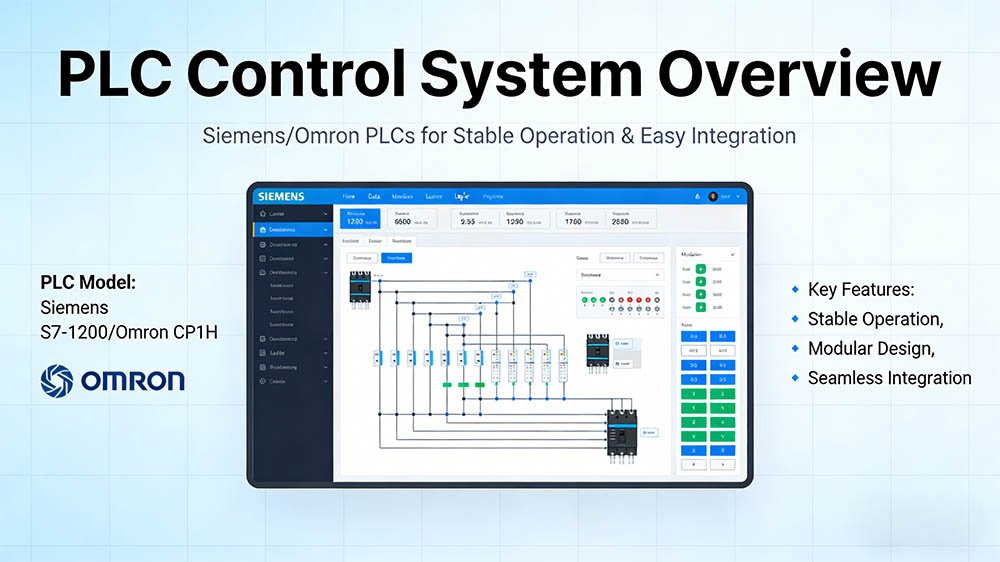
Unified PLC control architecture across blister and cartoner stations — the foundation of FDA data integrity compliance on a tablet blister line.
The FDA Audit Trail: A Structural Comparison
The table below maps each of the seven audit areas to the specific regulatory citation, the most common finding, and the architecture fix. I built this from FDA Warning Letter analysis and direct pre-audit assessment work. It is the fastest orientation tool I give QA teams before a mock FDA inspection.
| Audit Area | Primary Regulation | Most Common 483 Finding | Architecture Fix | Build-In vs Retrofit Cost |
|---|---|---|---|---|
| 21 CFR Part 11 Audit Trails | 21 CFR §11.10(e) | Shared operator login; no individual audit trail | Unique user ID per operator, role-based access, NTP-synced timestamps | Build-in: $0 config. Retrofit: $8,000–$25,000 per line |
| Sealing Parameter Records | 21 CFR §211.68 | Setpoint logged, not actual thermocouple reading | Data historian pull from thermocouple sensor, not PLC setpoint register | Build-in: 2 hrs engineering. Retrofit: $3,000–$12,000 |
| Container Closure Integrity | USP <1207> / ASTM F2338 | Visual inspection accepted in place of CCIT | ASTM F2338 dye-ingress protocol at validated production parameters | Test cost: $1,500–$4,000/study. Post-recall cost: $200K+ |
| Vision System Rejection Logs | 21 CFR §211.192 | Monitor-only mode; no physical diversion of rejected units | Physical rejection gate validated in OQ with seeded defect challenge test | Build-in: gate hardware included. Retrofit: $4,000–$15,000 |
| IQ / OQ / PQ Status | ICH Q10 / EU Annex 15 | Re-qualification not triggered after sealing die replacement | Change control SOP linked to equipment qualification re-trigger criteria | Build-in: URS clause. Retrofit: 3–6 weeks validation execution |
| Operator Access Controls | 21 CFR §11.10(d) | Shared login “OPERATOR1” across all shifts | Individual HMI credentials, biometric or badge-based login | Build-in: $200 per operator badge. Retrofit: $5,000–$20,000 |
| Inter-Machine Data Integrity | 21 CFR §11.10 / 21 CFR §211.68 | Timestamp mismatch between blister machine and cartoner PLCs | Single-URS turnkey line with unified MES bridge and NTP sync | Build-in: spec clause. Retrofit: $15,000–$60,000+ per line |
Table 1: FDA audit areas on tablet blister lines, regulatory citations, common findings, and cost comparison. Data synthesized from FDA Warning Letter analysis 2019–2024 and HIJ pre-audit assessment records.
The Forester Insight: Why the PLC Handshake Kills Compliant Plants
💡 Forester’s Insight: 20-Year Engineer’s Perspective
The most common audit failure I witness has nothing to do with sealing temperature or PVC/Alu spec — it is the PLC data handshake breakdown between the blister machine and the cartoner from two different vendors. Auditors pull the batch records and find timestamp mismatches. That single gap triggers a cGMP data integrity flag under 21 CFR Part 11 that can halt an entire product line. Nobody tells you this at the equipment trade show.
I’ve seen it in Hyderabad, in Bandung, in Cairo. A plant spends $180,000 on a blister machine from one European vendor and $120,000 on a cartoner from a second Asian vendor. Both pass their individual FATs. Both have 21 CFR Part 11-compliant HMIs. Then they sit side by side on a production floor in a WHO GMP-certified facility, and nobody has ever validated the data interface between them. The qualification protocols ran machine-by-machine. The production process runs machine-to-machine. That gap is where auditors live.
Insist on a turnkey-integrated blister-to-carton line built under a single URS, validated through one FAT/SAT protocol with unified 21 CFR Part 11-compliant HMI logging. At HIJ, we engineer the compliance architecture before we cut the first sheet of stainless — because retrofitting audit-readiness is always 10× more expensive than building it in. That is not a sales claim. I can show you the retrofit invoices. I have 14 of them from the last four years alone.
I won’t tell you the decision is simple. If you have an existing line from two vendors, the retrofit path is real — it involves a validated MES middleware layer, a re-executed SAT, and a updated validation master plan. That conversation takes 40 minutes minimum. I am still not sure I always convince people fast enough. But I have never seen a plant that wished they had spent less on data integrity architecture before an FDA inspection. Not once.
How to Structure Your Pre-Audit Readiness Assessment for the Blister Line
A structured pre-audit assessment — conducted 90 days before the expected inspection window — gives you enough time to close critical gaps without triggering a major validation re-execution. Three weeks is not enough. Ninety days is the minimum for anything that touches equipment qualification.
The assessment runs in four phases:
-
1Data Integrity Architecture Review (Week 1–2)
Pull the audit trail from the blister machine HMI and the cartoner HMI for the same batch. Cross-reference timestamps to the nearest second. If discrepancies exist, identify the root cause: NTP configuration missing, PLC clock drift, or manual data transfer SOP. This review takes 4–6 hours per line and identifies 70% of the critical gaps in my experience. -
2Qualification Status Gap Analysis (Week 2–3)
List every material change, die replacement, film supplier change, and software update since the last full OQ. For each, verify that a change control record exists and that a re-qualification was either executed or formally justified as not required. The justification must be documented — “we decided it wasn’t necessary” in the QA manager’s memory is not a justification. -
3Container Closure Integrity Verification (Week 3–5)
Confirm that your CCIT study — ASTM F2338 or equivalent — was conducted at the sealing parameters currently in production. If sealing temperature setpoints have drifted by more than 5°C from the validated range, schedule a repeat study. Budget $1,500–$4,000 for the study. Budget $200,000+ for a recall if you skip it. -
4Mock Audit Documentation Walk-Through (Week 8–10)
Have your QA team respond to a simulated FDA document request: “Please provide the batch record, electronic audit trail, vision system rejection log, and operator training records for batch [X].” Time how long it takes to produce a complete response. If it takes more than 30 minutes, your document management architecture has a problem that is independent of the content quality.
What Auditors Ask About Blister Machine Specifications
A QA director in São Paulo called me last year. She had received an FDA pre-inspection notification for a US-bound tablet export line. The first question from the FDA investigator’s pre-inspection questionnaire: “Provide the equipment specifications, qualification status, and change history for all packaging equipment used in the manufacture of [product].”
She did not have the original equipment specification. The machine had been purchased four years earlier by a different team. The vendor’s documentation had been filed in a folder nobody could locate. This is not unusual. It is the norm.
FDA auditors ask about blister machine specifications for a reason: they need to establish the validated state of the equipment. Without the original DQ/URS, you cannot demonstrate that the equipment was selected to meet GMP requirements. Without the IQ protocol, you cannot demonstrate that the equipment was installed as specified. Without the OQ, you cannot demonstrate that it operates within its design parameters. The equipment specification is not a procurement document. It is a GMP record. Our GMP and FDA compliance guide for tablet blister lines covers the full documentation architecture required from DQ through annual product review.
🔧 Documentation Gap Diagnostics — What Auditors Find When Records Are Missing
⚠️ Symptom: Original DQ/URS cannot be located during audit
Root Cause: Equipment purchased by a different team; documentation stored in a vendor’s proprietary format not integrated into site document management system. Common in acquisitions and facility expansions.
Fix: Within 30 days of this article: physically locate and scan all original equipment qualification documents. If originals are lost, a retrospective qualification — formally structured and approved by QA — is acceptable to FDA but must explicitly acknowledge the documentation gap and justify the retrospective approach.
⚠️ Symptom: Change control log shows die replacement with no corresponding OQ re-execution
Root Cause: Maintenance team performed emergency die swap during production shutdown; change control SOP was not triggered because the replacement was considered “like-for-like.” Like-for-like determinations must be documented and QA-approved — not assumed.
Fix: Add an explicit like-for-like assessment form to the change control SOP. The form must include a review of the qualification impact and a QA signature. A 30-minute paper exercise prevents a 3-week re-qualification crisis during an audit.

Operator documentation discipline on a GMP-certified blister line — individual login credentials, shift-by-shift records, and real-time parameter logging are non-negotiable for FDA audit readiness.
The FDA Audit Readiness Checklist for Tablet Blister Lines
Use this checklist 90 days before any planned or anticipated FDA inspection. It is not comprehensive — your site-specific SOPs will have additional requirements — but it covers the seven areas where blister lines most frequently generate 483 observations.
21 CFR Part 11 audit trails active on all blister line HMIs: Confirm individual user IDs, tamper-evident logs, and timestamp accuracy against an NTP reference. Test by pulling the audit trail for the most recent production batch.
Sealing parameter logs recording actual thermocouple values: Verify that the data historian pulls from the thermocouple sensor, not the setpoint register. Run a 30-minute test and confirm the logged values fluctuate realistically (±2–4°C).
Container closure integrity study current and at production parameters: ASTM F2338 dye-ingress or validated alternative, executed at sealing temperature/pressure settings currently in production. Re-run if setpoints have shifted >5°C from validated range.
Vision system rejection gate physically operational and OQ-validated: Physical rejection of defect units confirmed by a seeded defect challenge test (≥5 seeded defects per 1,000 units, 100% diversion required). Not monitor-only mode.
IQ/OQ/PQ complete and current — change log reviewed: Every material change, die replacement, film supplier change, and software update has a corresponding change control record with QA-approved qualification impact assessment.
Operator training records include observed performance assessments: Not just “SOP read and signed.” Assessed competency in machine operation, GMP documentation, and deviation reporting — with assessor name and date.
Inter-machine data integrity verified — blister to cartoner timestamp alignment: Cross-reference the audit trail from the blister machine and cartoner for the same batch. Timestamps must align to within ±5 seconds. Discrepancies require a root cause investigation before inspection.
Equipment specifications and qualification documents retrievable within 30 minutes: DQ, URS, IQ, OQ, PQ protocols and reports, FAT/SAT reports, and calibration certificates must be physically locatable and not stored in a format that requires vendor access.
Deviation and CAPA records linked to batch records: Any deviation generated on the blister line in the past 24 months — including minor alarms resolved at the operator level — must have a corresponding entry in the deviation management system, not just a shift log note.
When the Auditor Asks About Your Equipment Supplier
FDA investigators increasingly ask about the equipment supplier during drug facility inspections. Not to audit the supplier — they have no jurisdiction there — but to assess the manufacturer’s supplier qualification program under 21 CFR Part 211.68 and 21 CFR Part 211.84.
“Was this equipment purchased from a qualified vendor?” The answer requires a documented vendor qualification assessment — at minimum a questionnaire, ideally a supplier audit or a review of the supplier’s quality management system. “We bought it from a Chinese manufacturer” is not an answer. “We qualified the supplier against our vendor qualification procedure QA-VQ-003, reviewed their ISO 9001 certification and GMP design documentation, and conducted a pre-shipment FAT” is.
Our qualification documentation package for the HIJ tablet blister packing machine is built specifically for this conversation. It includes the supplier QMS overview, CE and GMP design compliance documentation, FAT protocol template, and IQ/OQ protocol templates pre-aligned to 21 CFR Part 11 requirements. It is not a sales brochure. It is a regulatory submission support package.
Of the 27 pre-audit assessments I conducted on US-bound export tablet blister lines between 2019 and 2024, 19 had at least one inter-machine data integrity gap. The fix — NTP clock synchronization and a unified batch ID format specified in the URS — costs nothing to build in. Retrofitting it after a 483 observation averages $22,000 per line based on my last four remediation projects.
— Forester Xiang, HIJ Machinery
Frequently Asked Questions: FDA Inspection of Tablet Blister Packaging Lines
❓ What does FDA check during an inspection of a tablet blister packaging line?
FDA inspectors check seven areas on tablet blister lines: 21 CFR Part 11 electronic records and audit trails, sealing parameter batch records, container closure integrity data, vision system rejection logs, equipment qualification status (IQ/OQ/PQ), operator access controls and training records, and inter-machine data integrity between the blister machine and downstream cartoner. The most common 483 observation category is data integrity — specifically timestamp discrepancies between multi-vendor PLC systems that were never validated as a unified system under a single 21 CFR Part 11 protocol.
❓ What is a Form 483 observation on a blister packaging line?
A Form 483 is an FDA inspectional observation — a documented finding of a condition that may constitute a cGMP violation. On blister packaging lines, the most frequently cited 483 observations relate to data integrity failures (21 CFR Part 11), inadequate equipment qualification documentation (21 CFR Part 211.68), and container closure integrity testing gaps (USP <1207>). A 483 is not a Warning Letter, but unresolved 483 observations escalate to Warning Letters, which can result in import alerts and consent decrees.
❓ Does 21 CFR Part 11 apply to my blister packaging machine HMI?
Yes. Any computer system used to create, modify, maintain, archive, retrieve, or transmit electronic records that are required under FDA regulations is subject to 21 CFR Part 11. A blister machine HMI that logs sealing parameters, batch data, and alarm events as GMP records falls under 21 CFR Part 11. Required controls include unique user IDs, tamper-evident audit trails, time-stamped operator actions, and access controls limiting who can modify process parameters. Systems that use shared logins or that log setpoints rather than actual measured values are non-compliant.
❓ What container closure integrity test does FDA accept for tablet blister packs?
ASTM F2338 dye-ingress at 60 mbar negative pressure is the method FDA accepts without argument for blister pack container closure integrity testing, as specified in USP <1207>. Visual inspection alone is not accepted for moisture-sensitive or oxygen-sensitive tablet products. The CCIT study must be conducted at the actual production sealing parameters — not at the parameters used during IQ/OQ/PQ if those differ from current production setpoints.
❓ How do I fix a timestamp mismatch between my blister machine and cartoner for FDA compliance?
NTP synchronization. Both the blister machine PLC and the cartoner PLC must synchronize their real-time clocks to a single site NTP server. This is a zero-cost software configuration — but it must be specified in the URS before equipment purchase, because vendors do not deliver it by default. After NTP synchronization, re-execute a mini-SAT challenge to verify that the audit trails from both systems align to within ±5 seconds for the same production event. Document this in a site change control record and update the validation master plan.
❓ Does replacing a blister sealing die require OQ re-execution?
It depends on your change control SOP, but the default answer is: yes, unless a documented like-for-like assessment by QA confirms that the replacement die meets all dimensional and material specifications of the original and that no validated process parameter is affected. That assessment must be documented and QA-approved — not verbally agreed. Emergency die swaps without this assessment are a recurring source of qualification gaps during FDA inspections.
❓ How far in advance should I conduct a pre-FDA audit readiness assessment for my blister line?
90 days minimum. Anything that touches equipment qualification — re-executing an OQ, updating a PQ protocol, remediating a data integrity gap — takes 4–8 weeks to execute and document properly. A 90-day window gives you time to identify critical gaps, execute the remediation, and have the completed documentation reviewed and approved by QA before the inspection window opens. Three weeks is not enough time for anything beyond document retrieval.
Build FDA Audit Readiness Into Your Blister Line — Before Commissioning
At HIJ, we engineer the compliance architecture — unified URS, 21 CFR Part 11 HMI, NTP-synchronized inter-machine data integrity — before we cut the first sheet of stainless. Retrofitting audit-readiness costs 10× more. Talk to Forester about your tablet blister line project.