















📦 Small Pharma Buyer’s Guide
Tablet Blister Machine for Small Pharma: What Are Your Real Options?
Small pharma operations targeting regulated markets have four viable tablet blister machine options — ranging from semi-automatic flat-plate units at $8,000 to compact fully-automatic lines above $65,000. The machine tier that fits you is determined by your regulatory market, not your current batch volume.
I’ve commissioned lines for operations running 50,000 tablets per day and for operations running 2 million. The spec decisions that matter most are almost never about speed. They’re about compliance documentation, forming system compatibility with your dosage form, and whether your supplier can hand you a validation package your QA team can actually use.
🎯 Quick Answer
Small pharma companies have four tablet blister machine options: (1) manual hand-fed units for R&D or clinical trial packaging, (2) semi-automatic flat-plate machines at 15–30 blisters/min for low-volume production, (3) entry-level roller-type automatics at 30–80 blisters/min, and (4) compact fully-automatic cGMP lines at 80–200 blisters/min. Budget ranges from approximately $8,000 to $85,000 before tooling and validation costs. See the full tablet blister packing machine cost breakdown for total-cost planning.
$8K
Entry semi-auto starting price
4
Distinct machine tiers for small pharma
15–200
Blisters/min range across all tiers
WHO GMP
Minimum compliance floor for export markets
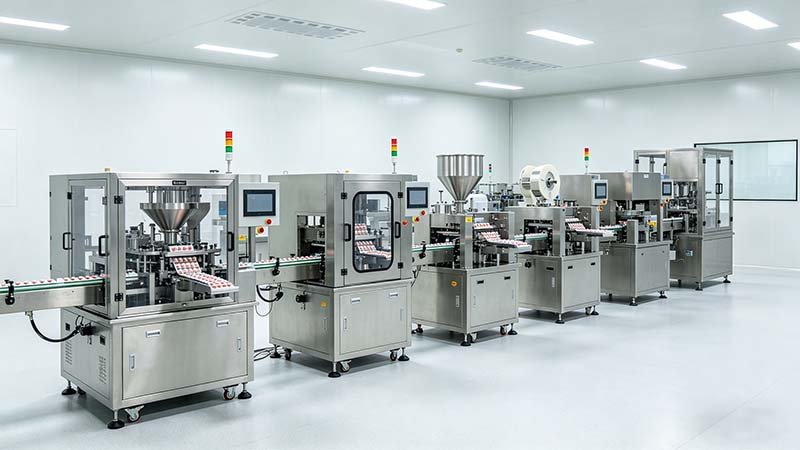
Four machine tiers serve small pharma operations — from R&D semi-automatics to compact fully-automatic cGMP lines.
What Does “Small Pharma” Actually Mean for Blister Machine Selection?
🎯 Direct Answer
For blister machine selection, “small pharma” is defined not by company revenue but by three operational parameters: daily tablet output below 500,000 units, a product portfolio of five SKUs or fewer on a single line, and a regulatory market that dictates your minimum compliance floor.
I’ll be direct about something. The word “small” misleads buyers into thinking they have more spec flexibility than they do. That’s wrong. A 12-person generic pharma company in Karachi exporting to Saudi Arabia faces exactly the same Saudi SFDA documentation requirements as a 500-person operation. The machine doesn’t know the size of your company. The auditor doesn’t either.
Three variables actually determine which machine tier a small pharma operation needs:
Target regulatory market — WHO GMP markets (many African, Southeast Asian countries) allow simpler documentation packages; FDA, EU GMP, and TGA markets require electronic batch records, 21 CFR Part 11-compliant audit trails, and IQ/OQ/PQ validation protocols regardless of your production volume.
Daily output requirement — Below 100,000 tablets/day, a semi-automatic or entry-level automatic is almost always the right choice economically. Above 300,000/day, the per-unit economics of a compact fully-automatic line start to justify the higher capital outlay.
Dosage form profile — Standard round or oval tablets run on any tier. Odd geometries, fragile coatings, or high-moisture-sensitivity APIs narrow your forming system choices and may push you up a tier regardless of volume.
Validation timeline — If you need market authorization within 18 months, you can’t buy a machine that ships without FAT/SAT protocols. That eliminates a significant portion of low-cost catalogue machines.
Of the 31 blister line projects I handled in Southeast Asia between 2018 and 2023, 11 required a forming material change or compliance package retrofit after month 12 stability failure or regulatory review rejection — the number I use when buyers tell me “we just need something basic.” Basic is a relative term. It never means undocumented.
The 4 Tablet Blister Machine Options for Small Pharma — Tier by Tier
🎯 Direct Answer
Small pharma operations can select from four tablet blister machine tiers: manual hand-operated units (Tier 1), semi-automatic flat-plate machines (Tier 2), entry-level roller-type automatics (Tier 3), and compact fully-automatic cGMP-compliant lines (Tier 4) — with machine price, output speed, and validation documentation support increasing at each tier.
Tier 1: Manual / Hand-Fed Blister Units
These are the machines that most small pharma manufacturers start with — and most eventually regret. Speed: 5–12 blisters/min, operator-dependent. They work for clinical trial packaging, stability study samples, and internal R&D work where batch traceability is managed manually. Full stop.
The moment you need to submit a dossier to any national medicines regulatory authority — CDSCO, TFDA, NAFDAC, SFDA — manual blister units generate batch records that fail the consistency requirements of WHO TRS 992 Annex 3. I’ve seen this conversation play out three times. The manufacturer is surprised. They shouldn’t be.
⚠ Market authorization risk: Manual blister units are appropriate only for R&D and clinical trial packaging. They cannot generate the equipment-validated batch records required by WHO GMP, FDA 21 CFR Part 211, or EU GMP Annex 1 for commercial release.
Tier 2: Semi-Automatic Flat-Plate Blister Machine
This is the most commonly purchased tier by small pharma startups. Output: 15–30 blisters/min. Forming system: heated flat plate presses PVC or PVDC film into cavity shapes in a step-and-repeat cycle. The operator hand-feeds tablets into cavities before the lidding foil seals over.
Price range: $8,000–$22,000 for the machine. Not turnkey. You still need tooling ($3,000–$8,000 per format), a separate inkjet coder ($2,000–$5,000), and — critically — a supplier who will provide IQ/OQ documentation and a calibration certificate. Most catalogue suppliers at this price point do not include this. Ask before you buy. Get the answer in writing.
For WHO GMP markets with output requirements below 80,000 tablets per 8-hour shift, Tier 2 is often the right answer economically. It is not the right answer for FDA, EU, or TGA regulated markets where 21 CFR Part 11 electronic records are audited.
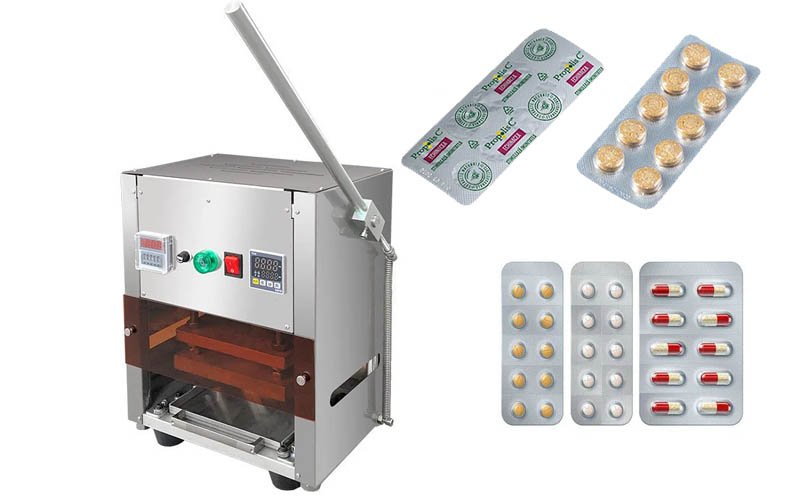
Semi-automatic flat-plate blister machine: the most common entry point for small pharma operations targeting WHO GMP markets.
Tier 3: Entry-Level Roller-Type Automatic Blister Machine
Output: 30–80 blisters/min. Continuous roller forming. Fully automated tablet feeding via vibratory or brush-type feeder. This is where the gap between “cheap automatic” and “compliant automatic” becomes critical for small pharma buyers.
A roller-type automatic at this tier from a reputable supplier — one with a cGMP structural design, stainless steel contact parts, Siemens or Allen-Bradley PLC with audit trail capability, and documented FAT/SAT protocols — costs $28,000–$55,000. The same-tier machine from a catalogue supplier with stripped-out documentation costs $12,000–$18,000. The $16,000 difference is exactly what a compliance retrofit costs 18 months later. I’ve quoted both versions. I know which conversation I’d rather have at the beginning.
For a full-spec cGMP tablet blister packing machine at Tier 3 compliance, the HIJ DPP-250 operates at up to 60 blisters/min with WHO GMP-compliant documentation and full validation support included.
Tier 4: Compact Fully-Automatic cGMP Line
Output: 80–200+ blisters/min. Servo-driven forming and sealing. Integrated vision inspection, automatic rejection, 21 CFR Part 11-capable touchscreen HMI with electronic batch records and audit trail. This tier starts at $55,000 for the blister machine alone — add tooling, inline coder, and optional blister-to-carton integration and total capital commitment reaches $85,000–$150,000.
Small pharma operations targeting FDA, EU, or TGA markets with volumes above 200,000 tablets per day should start here. Not because the speed requires it, but because retrofitting a Tier 3 machine to Tier 4 compliance standards costs more than the Tier 4 machine did. That’s not a hypothetical. I watched a manufacturer in Lagos spend $34,000 retrofitting a machine they paid $19,000 for. The math doesn’t work.
Tablet Blister Machine Comparison: 4 Tiers for Small Pharma Operations
🎯 Direct Answer
The four tablet blister machine tiers differ primarily in output speed, automation level, compliance documentation depth, and total cost of ownership — with Tier 2 semi-automatics suited to WHO GMP markets and Tier 4 fully-automatics required for FDA and EU GMP regulated export.
| Machine Tier | Output Speed (blisters/min) | Machine Price Range (USD) | Forming System | cGMP Documentation Included | 21 CFR Part 11 Capable | Best Fit: Regulatory Market |
|---|---|---|---|---|---|---|
| Tier 1 — Manual / Hand-Fed | 5–12 | $2,000–$6,000 | Hand press or basic flat plate | No | No | R&D / Clinical Trials only |
| Tier 2 — Semi-Auto Flat-Plate | 15–30 | $8,000–$22,000 | Heated flat plate (PVC/PVDC) | Partial (supplier-dependent) | No | WHO GMP domestic / export markets |
| Tier 3 — Entry Roller-Type Auto | 30–80 | $28,000–$55,000 | Continuous roller (PVC/PVDC/Alu-Alu) | Yes (reputable suppliers) | Optional add-on | WHO GMP + SFDA + CDSCO export |
| Tier 4 — Compact Fully-Auto cGMP | 80–200+ | $55,000–$85,000+ | Servo roller — multi-material capable | Yes — full IQ/OQ/PQ support | Yes — standard | FDA / EU GMP / TGA regulated markets |
🧑 Forester’s Insight — 20-Year Engineer’s Perspective
The Real Cost of Getting This Decision Wrong
In my 20 years of walking production floors from Karachi to São Paulo, I’ve seen small manufacturers get burned twice: first by purchasing a cheap standalone blister machine with zero cGMP documentation, then again paying a third party to retrofit an HMI and rewrite PLC logic just to pass an FDA audit. The hidden trap? Many low-cost suppliers strip out the validation package — no FAT/SAT protocols, no IQ/OQ support — leaving you commercially dead in regulated markets before you even run your first batch.
Before you finalize any URS, define your target market’s compliance ceiling first, then work backwards to the machine spec. At HIJ, our philosophy is simple: even our entry-level blister lines ship with full cGMP-compliant documentation and turnkey integration support — because saving $15,000 upfront should never cost you a market license.
I won’t tell you the tier decision is simple. It involves your API profile, your target markets, your validation timeline, and sometimes your relationship with the regulatory reviewer. But the framework above gets you 80% of the way there before you talk to any supplier — including us.
What Compliance Documentation Does a Small Pharma Blister Machine Actually Need?
🎯 Direct Answer
At minimum, any tablet blister machine used for commercial pharmaceutical production requires a material certificate (SS 316L contact parts), a calibration certificate for sealing temperature and pressure, an FAT report, and an IQ protocol — regardless of machine tier or production volume. WHO GMP markets additionally require OQ documentation; FDA-regulated production additionally requires electronic audit trail compliance per 21 CFR Part 11.
A procurement manager in Accra called me in 2022. They’d purchased a semi-automatic blister machine 14 months earlier. Ghana FDA had rejected their dossier. The rejection letter cited two items: no calibration certificate for the sealing station and no documented cleaning validation procedure from the manufacturer. The machine cost $11,000. The dossier work they’d done cost $40,000 in consultant fees. It all sat on hold.
That outcome is avoidable. Here’s the minimum documentation you should require from any supplier before signing a purchase order:
Material certificate — All product-contact surfaces must be AISI 316L stainless steel. Require the mill certificate, not a general statement.
Calibration certificate — Sealing temperature (±2°C accuracy), sealing pressure (±5%), and forming temperature for heated-plate units. Traceable to national standards.
FAT (Factory Acceptance Test) protocol — Executed at the supplier’s facility with your product or a representative placebo. Signed by both parties.
IQ protocol template — Pre-filled instrument list, utility requirements, installation checklist. Your team executes on-site; supplier provides the template and remote or on-site support.
OQ protocol template — Operational qualification tests for sealing integrity (ASTM F2338 dye ingress or equivalent), forming depth consistency, and tablet fill detection if applicable.
Cleaning validation guidance — Not a full protocol, but product contact material compatibility, recommended cleaning agents, and residue limits — enough for your team to write the site-specific protocol.
📋 Compliance Reference
Applicable frameworks for small pharma blister machine qualification: WHO TRS 992 Annex 3 (equipment qualification for pharmaceutical manufacturers in developing markets), 21 CFR Part 211.68 (automated data processing equipment — FDA), EU GMP Annex 15 (qualification and validation). For electronic records on FDA-market equipment: 21 CFR Part 11 requires audit trail, access controls, and system validation for any computerized system generating batch records.
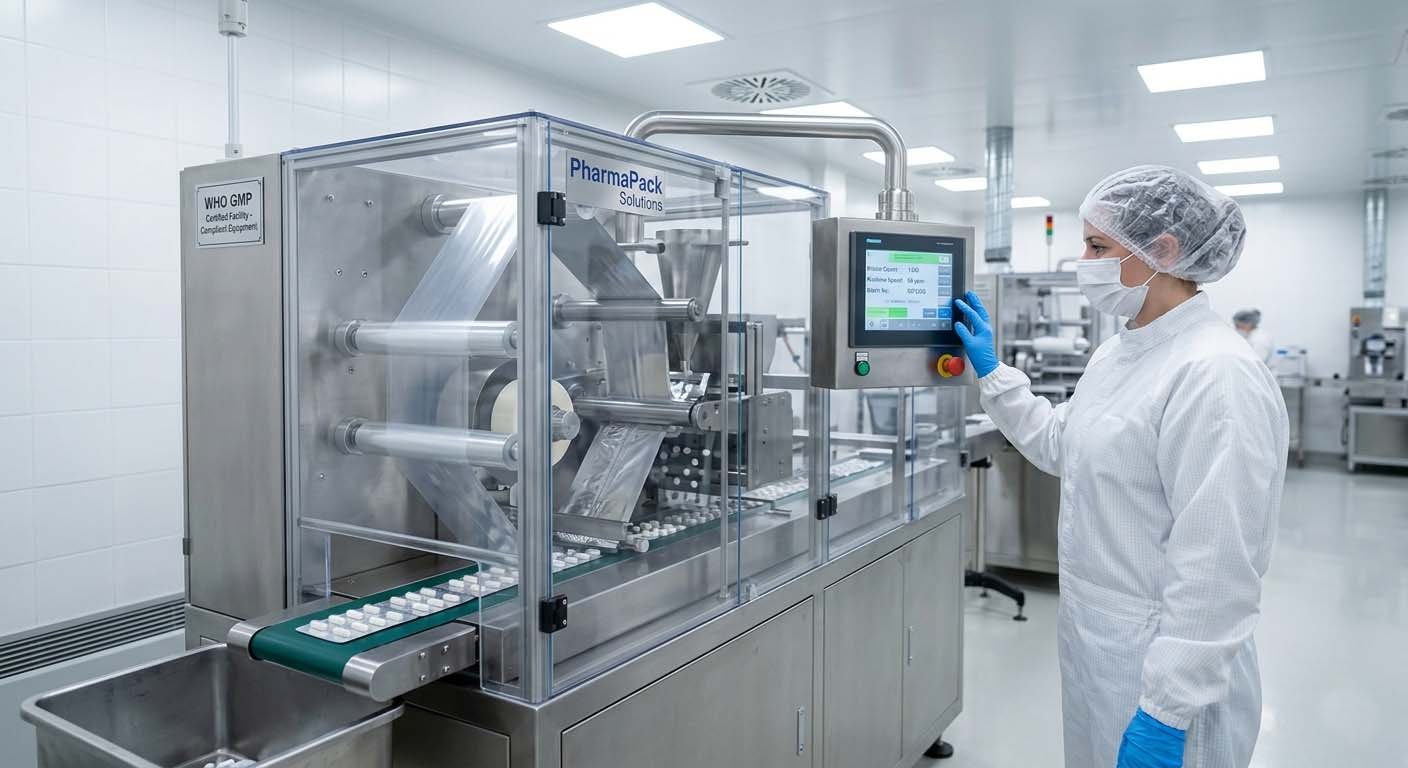
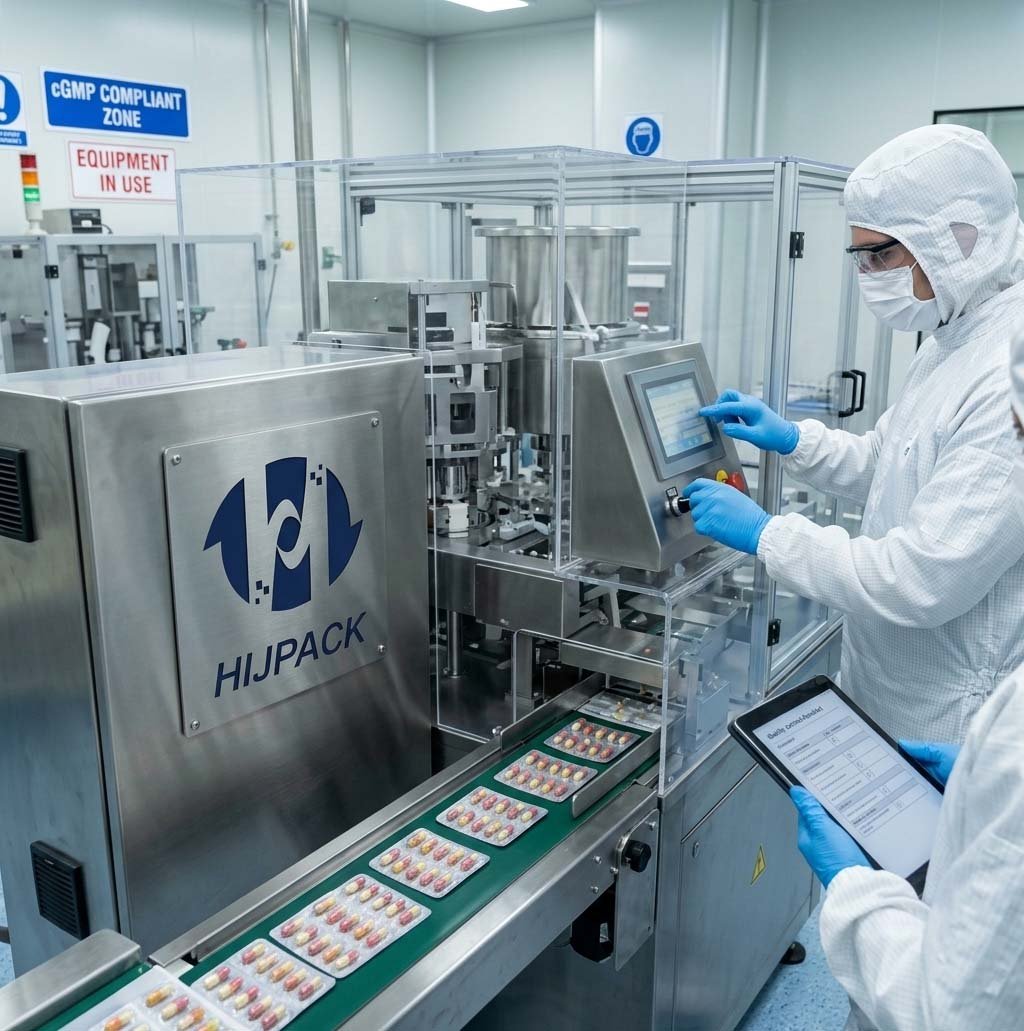
cGMP-compliant operation requires documented equipment qualification — not just the machine, but the validation package your QA team will stake their dossier on.
3 Mistakes Small Pharma Companies Make When Buying a Blister Machine
🎯 Direct Answer
The three most common purchasing mistakes for small pharma blister machine buyers are: selecting machine tier based on current volume rather than target regulatory market, underestimating total cost of ownership by ignoring tooling and validation costs, and purchasing from suppliers who cannot provide a complete validation documentation package.
⚠ Small Pharma Blister Machine — Common Purchasing Errors
Error #1: Buying for today’s volume, not tomorrow’s market
Root cause: Procurement is optimizing for lowest capital outlay. A semi-auto at $12,000 looks correct against a current output of 40,000 tablets/day. The calculation ignores that regulatory approval for export markets may require IQ/OQ/PQ documentation the semi-auto supplier can’t provide, and that requalifying a new machine in 24 months costs more than buying the right machine now.
Fix: Define your 3-year target market list before writing the URS. If any target market requires electronic batch records or 21 CFR Part 11 compliance, your minimum tier is Tier 3 with a compliant PLC.
Error #2: Calculating only machine price, not total line cost
Root cause: The $18,000 catalogue price looks affordable. But it excludes tooling ($4,000–$9,000), inline coder ($2,500), installation and commissioning ($3,000–$8,000 for on-site engineer), IQ/OQ validation execution ($5,000–$15,000 if third-party), and first-year spare parts stock ($2,000–$4,000).
Fix: Use total cost of ownership across 5 years, not machine price. The full tablet blister packing line cost breakdown covers every cost category with realistic ranges.
Error #3: Choosing a supplier based on price without validating documentation capability
Root cause: Most online catalogue suppliers can ship a machine. Fewer than 30% of the low-price-tier suppliers I’ve audited could produce a complete IQ/OQ protocol template on request — not executed, just the template. If the supplier can’t show you the documentation before you buy, assume it doesn’t exist.
Fix: Ask for a sample IQ/OQ template and a reference customer in a regulated market during supplier qualification. If they hesitate, that’s your answer.
“A small pharma company that saves $15,000 on machine purchase price and loses 14 months of market authorization time has not saved anything — they have paid 14 months of fixed costs to stand still. Define your regulatory ceiling first. Then buy the machine that clears it.”
— Forester Xiang, Founder, HIJ Machinery
How to Specify a Tablet Blister Machine for a Small Pharma Operation: 6-Step Framework
🎯 Direct Answer
Specifying a tablet blister machine for a small pharma operation requires six sequential decisions: define target regulatory market, calculate required output rate, confirm tablet geometry and material compatibility, set minimum compliance documentation requirements, establish tooling format needs, and define integration scope with downstream cartoning equipment.
The sequence matters. I’ve seen teams start with tablet geometry and end up in the wrong compliance tier, or start with price and end up with a machine that can’t seal their moisture-sensitive API correctly. Work top-down:
- 1
Regulatory market definition — List every country you expect to sell into within 36 months. Identify the highest-requirement market. That market sets your minimum machine spec. WHO GMP floor: Tier 2 with documentation. FDA/EU: Tier 3 minimum with 21 CFR Part 11 capability. - 2
Output rate calculation — Take your annual volume target, divide by 250 production days, divide by planned shift hours per day, divide by your target blister format fill count. That gives you minimum blisters/min. Add 25% design margin. That’s your URS speed requirement. - 3
Tablet geometry and API sensitivity — Standard round/oval: any tier. Unusual shapes, scored tablets, or soft gelatin coatings: confirm feeder compatibility with supplier before ordering tooling. Hygroscopic APIs: specify sealing integrity test standard (ASTM F2338 dye ingress at 60 mbar or equivalent) in your URS. - 4
Forming material selection — PVC (standard), PVDC-coated PVC (moderate moisture barrier), or Alu-Alu cold form (maximum moisture barrier). Your material choice affects forming system type — flat plate works for PVC/PVDC; cold-form Alu-Alu requires a dedicated cold forming station. See the tablet blister machine selection guide for forming system comparison. - 5
Tooling format and changeover — If you run more than two SKUs on the same line, specify quick-change tooling with a documented format changeover time under 30 minutes. Each additional format requires a separate tool set at $3,000–$8,000. Budget this into your capital plan. - 6
Downstream integration — Even if you’re not buying a cartoner now, specify blister discharge height, blister pitch, and format dimensions compatible with standard cartoning machine infeed specs. Retrofitting for line integration later costs $8,000–$20,000. Designing for it now costs nothing.
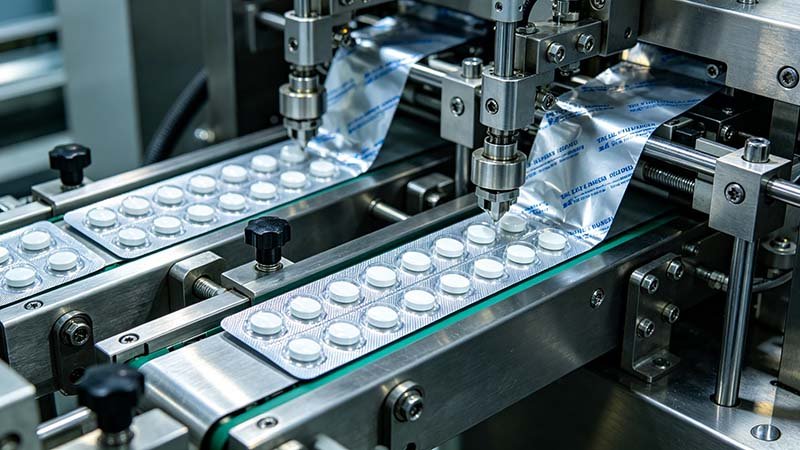
Working through the six-step spec framework before contacting suppliers reduces RFQ cycle time and eliminates post-order scope changes.
HIJ Machinery’s Tablet Blister Machine Options for Small Pharma Buyers
🎯 Direct Answer
HIJ Machinery offers two primary tablet blister machine platforms suited to small pharma operations: the DPP-250 for WHO GMP and SFDA markets at 40–60 blisters/min, and the DPP-260 fully automatic platform for FDA and EU GMP regulated markets at 60–100 blisters/min — both shipping with full cGMP documentation, IQ/OQ protocol templates, and FAT execution at our Wenzhou facility.
I’ll be specific about what “full cGMP documentation” means at HIJ, because this phrase is used loosely by a lot of suppliers. When we ship a DPP-250 or DPP-260, the documentation package includes: material certificates for all 316L contact parts, factory calibration certificate for sealing station (±2°C, ±5 kN sealing pressure), executed FAT report with your representative product or placebo, IQ protocol template pre-filled for your machine serial number and utility specs, OQ protocol template with acceptance criteria for sealing integrity (ASTM F2338), filling accuracy, and forming depth consistency. We also provide on-site commissioning support and remote OQ guidance as standard. Not as a paid add-on.
That’s not because we’re generous. It’s because buyers who can’t qualify their machine don’t come back for their second line. Project certainty is a business model, not a marketing phrase.
For small pharma operations that need a complete packaging solution — blister machine through to cartoning — our turnkey packaging line solutions integrate blister packing, inspection, and cartoning on a single validated line, reducing the qualification scope from three separate URS documents to one.
“Of the 31 blister line projects I handled in Southeast Asia between 2018 and 2023, 11 required either a compliance package retrofit or a forming material change after month-12 stability failure — every one of them could have been prevented by defining the regulatory market ceiling before writing the URS, not after receiving the first rejection letter.”
— Forester Xiang, Founder, HIJ Machinery
What Does a Tablet Blister Machine Actually Cost for Small Pharma? A Realistic Budget
🎯 Direct Answer
A small pharma tablet blister line budget should account for four cost categories beyond machine price: tooling ($3,000–$9,000 per format), inline coding and inspection equipment ($2,500–$12,000), installation and commissioning ($3,000–$8,000), and IQ/OQ/PQ validation execution ($5,000–$18,000 depending on whether your team runs it or a third party does). Total first-year cost for a Tier 2 semi-auto line in a WHO GMP market: $22,000–$48,000. For a Tier 4 fully-automatic line in an FDA market: $95,000–$160,000.
The procurement director at a small generic pharma company in Nairobi showed me the quote comparison in 2021. Supplier A: $14,500. Supplier B (HIJ DPP-250): $38,000. Same output speed on paper. She chose Supplier A. Fourteen months later she called again. The Kenya PPB inspection had flagged three items: no calibration traceability, no cleaning validation documentation, and a PLC that didn’t log operator actions. The retrofit quote from a third-party integrator was $29,000.
$14,500 + $29,000 = $43,500. For a machine that still wasn’t as capable as the DPP-250. And 14 months of production delay. Nobody did that math at the beginning.
For a detailed cost category breakdown across all line components, the full tablet blister packing machine cost breakdown guide covers machine, tooling, validation, and total 5-year ownership costs with realistic ranges by compliance tier.
Frequently Asked Questions: Tablet Blister Machine for Small Pharma
What is the minimum output speed I need for a small pharma tablet blister line?
For most small pharma operations producing under 500,000 tablets per day, a blister machine running 30–60 blisters per minute is sufficient across a standard 8-hour shift — assuming a 10-cavity blister format. Calculate your specific requirement by dividing your daily tablet target by shift hours, then by cavities per blister, then adding a 25% design margin. A 30 blisters/min machine running a 10-cavity format produces 14,400 blisters/hour, or 144,000 blisters per 10-hour shift — equivalent to 1.44 million tablets. If your volume is well below this, a semi-automatic Tier 2 machine is probably the right economic choice, provided your regulatory market allows it.
Can a semi-automatic blister machine meet WHO GMP requirements?
Yes, with conditions. A semi-automatic blister machine can meet WHO GMP requirements if it is qualified with IQ/OQ documentation, if all product-contact surfaces are 316L stainless steel with traceable material certificates, and if batch records are maintained through a manual log system validated as fit for purpose. WHO TRS 992 Annex 3 does not mandate fully automated electronic batch recording for semi-automatic equipment, but it does require that batch record data be complete, attributable, and legible. Semi-automatic units cannot satisfy FDA 21 CFR Part 11 requirements without significant PLC upgrades — that’s a different question.
What is the cheapest compliant tablet blister machine for small pharma?
Roughly $8,000–$12,000 for a semi-automatic flat-plate unit from a supplier who includes calibration certificate and IQ protocol template. Below this price, documentation packages are typically absent or unusable for regulatory submissions. That’s the real floor — not the machine price, but the documentation floor.
Does a small pharma blister machine need 21 CFR Part 11 compliance?
Only if you’re producing for FDA-regulated markets or if your quality system generates electronic batch records that are submitted as part of a drug application. For WHO GMP markets, SFDA (Saudi), CDSCO (India), or most African NMRAs, 21 CFR Part 11 is not directly applicable — though electronic audit trail capability is increasingly required as these agencies modernize their inspection frameworks. My advice: if you can afford a 21 CFR Part 11-capable PLC at Tier 3, buy it now. The cost delta at purchase is $3,000–$6,000. The cost to retrofit later is $18,000–$35,000. That’s a number I’ve quoted twice. I’d rather quote it once, at the right time.
How long does it take to validate a tablet blister machine for small pharma?
IQ typically takes 3–5 days on-site. OQ takes 5–10 days depending on the number of parameters qualified. PQ, which requires running actual product batches and linking performance to stability data, typically takes 3–6 months before a complete package is ready for regulatory submission. Total timeline from machine delivery to validated production: 4–8 months for a well-managed project with a cooperative supplier. Suppliers who delay in providing IQ/OQ templates add months to this. Ask for the templates before you sign the purchase order.
What forming material options are available for small pharma blister machines?
Three main options: PVC (4–6 g/m²/day MVTR — standard tablets in non-tropical markets), PVDC-coated PVC (0.2–2 g/m²/day MVTR — moderate moisture-sensitive APIs), and Alu-Alu cold form (0.02–0.5 g/m²/day MVTR — highly hygroscopic or light-sensitive APIs for tropical markets). Not every machine tier supports all three. Flat-plate semi-automatics typically handle PVC and PVDC only; cold-form Alu-Alu requires a dedicated cold-forming station, which is a Tier 3 or Tier 4 feature.
Can I upgrade a semi-automatic blister machine to full GMP compliance later?
Rarely at acceptable cost. A semi-automatic unit can be retrofitted with a data logger for sealing parameters and a batch record printer, but the PLC architecture on most sub-$15,000 semi-automatics does not support audit trail functionality meeting 21 CFR Part 11 requirements. The more honest answer: if your 3-year market plan includes any FDA or EU GMP regulated country, buy a Tier 3 or Tier 4 machine from the start. If your markets are exclusively WHO GMP with no 21 CFR Part 11 requirement, a well-specified semi-auto with proper documentation is a defensible choice.
Choosing the Right Tablet Blister Machine for Small Pharma: Final Assessment
Small pharma operations have more options than they think — and fewer than suppliers often suggest. The four-tier framework above gets you to the right decision faster than any catalogue comparison. Start with your regulatory ceiling. Work backwards to spec. Then evaluate suppliers on documentation depth, not list price.
The machines that serve small pharma best are not necessarily the cheapest or the most fully-featured. They’re the ones that ship with a validation package your QA team can actually execute, from a supplier who answers the phone when the sealing station temperature controller fails at 11pm before a Monday batch.
That’s what I’ve seen determine project success or failure, across 20 years and operations on five continents. The machine is the easy part. The documentation and the relationship are where the risk lives.
For a complete technical and commercial evaluation, start with the tablet blister machine selection guide for pharma buyers, then review our cGMP tablet blister packing machine specifications with full documentation package details.
📦 Small Pharma Blister Line Consultation
Find the Right Tablet Blister Machine for Your Operation
Tell us your target market, daily output requirement, and dosage form. We’ll recommend the right machine tier, documentation package, and total cost structure — no obligation, no sales pitch, just engineering.