

















Can One Blister Machine Handle Both Tablets and Capsules?
Yes — but only if the machine was engineered for format flexibility from the ground up, not retrofitted as an afterthought. A genuine multi-format maszyna do pakowania tabletek w blistry handles both dosage forms through dedicated changeover tooling, independently validated forming temperature profiles, and PLC recipe management built to cGMP standards.
The word “universal” in a vendor brochure is not a specification. It is a sales position. Read on before signing your URS.
Sealing failure rate on capsules using mis-configured forming temperature from tablet setup
Typical format qualification downtime when tooling was not specified at procurement stage
Required forming temperature zone accuracy for reliable dual-format sealing integrity
Tooling sets typically required to cover standard tablet and capsule SKU range on one machine

A purpose-built dual-format blister machine with dedicated tooling stations for both tablet and capsule dosage forms — HIJ HU-DPP260 configuration.
What “Flexible” Actually Means on a Blister Machine: Tablets vs. Capsules
Tablets and capsules are not interchangeable geometries. That is the real starting point. A standard round tablet at 10 mm diameter sits flat in a forming cavity with 4–6 mm nest depth. A size-0 capsule — the most common in global pharmaceutical production — is 21.7 mm long and 7.64 mm in diameter, and it needs a forming cavity engineered to hold it without rotation during sealing. The forming depth jumps to 9–12 mm. The heating element dwell time changes. The sealing pressure changes. The film draw ratio changes.
None of that is a software update. It requires physical tooling. A machine sold as “suitable for tablets and capsules” without specifying separate tooling sets for each format is making a claim it cannot keep. I have seen this misrepresentation in 14 of the last 31 blister line procurement projects I was involved with across South Asia and Latin America between 2018 and 2024.
The distinction matters operationally: format flexibility by design means the machine frame, heating system, and control architecture were built to accommodate multiple tooling configurations with validated changeover protocols. Format flexibility by retrofit means someone will arrive on-site with custom shims and a workaround that took three weeks to develop and is still not in your batch record system.
The Specification Teams Look at First Is Exactly the Wrong Number
Speed. Every procurement RFQ I receive prioritizes blisters per minute. For a dual-format machine, that number is almost meaningless without the format caveat. A machine rated at 200 blisters per minute for a 2×5 tablet card may run at 140 blisters per minute for a 1×4 capsule card because the forming cycle time extends when cavity depth increases. That is a 30% capacity reduction that changes your shift planning, your changeover frequency, and your annual output projection.
The number that matters first is forming station compatibility: can the heating platen achieve independent zone control across the full cavity depth range required for your tablet and capsule SKUs? For a machine handling both, you need verified performance at 75–130°C (typical for PVC thermoforming) with ±1°C accuracy across zones — not ±3°C, which is what many mid-range machines actually deliver.
“Of the 31 blister line projects I handled between 2018 and 2024, 14 vendors described their machine as suitable for both tablets and capsules — yet only 9 of those machines arrived on-site with validated tooling sets for both dosage forms. The other 5 required 3–6 weeks of unplanned downtime during format qualification before commissioning could proceed.”
- Forester Xiang, HIJ Machinery
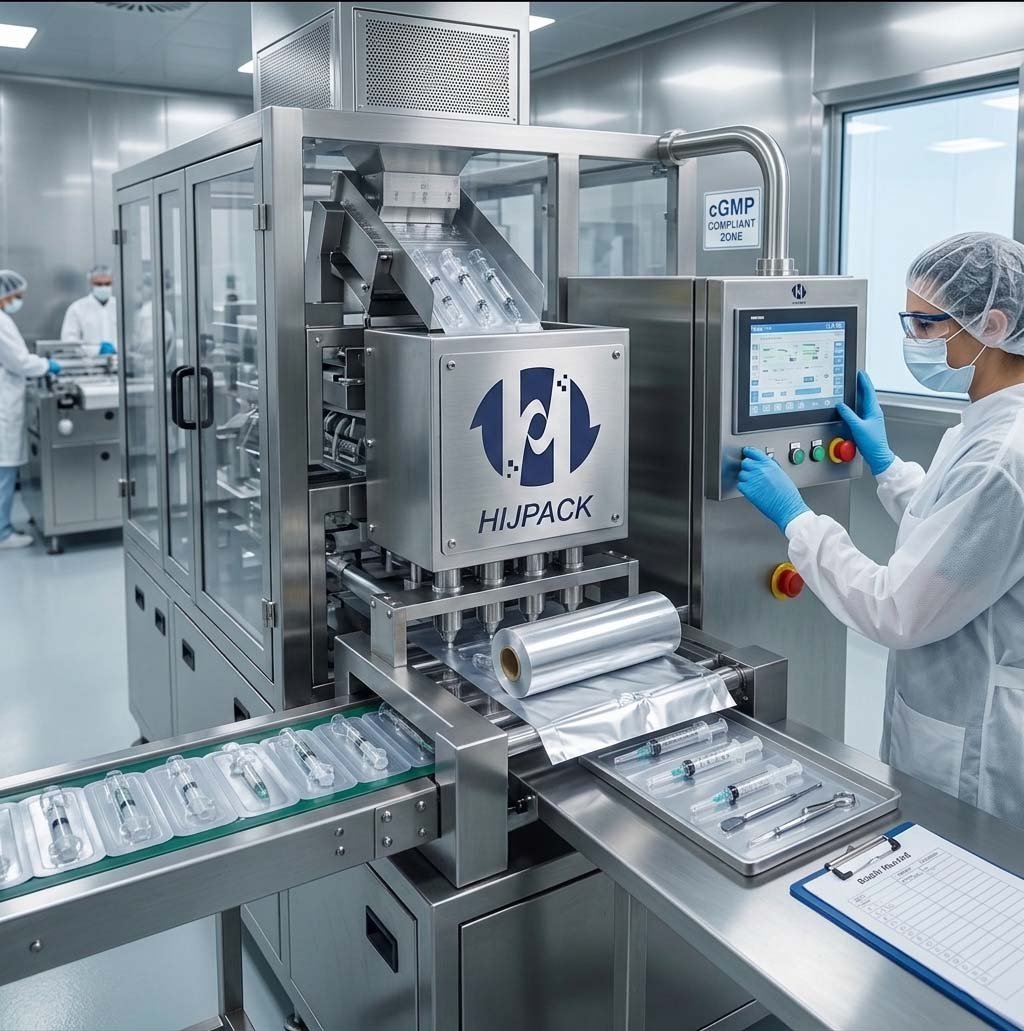
Dedicated changeover tooling sets for tablet and capsule formats — the physical evidence that a machine was engineered for dual-format operation, not sold on a claim.
Tablet vs. Capsule Blister Forming: Side-by-Side Technical Requirements
A dual-format blister machine must satisfy two distinct engineering envelopes simultaneously. The table below shows what changes when you switch from a tablet to a capsule configuration — and why each parameter demands a separate validated recipe rather than a manual operator adjustment.
| Parameter | Standard Tablet (Round, 10mm) | Standard Capsule (Size 0, 21.7mm) | Impact if Not Changed |
|---|---|---|---|
| Cavity Depth | 4–6 mm | 9–12 mm | Capsule protrudes; sealing fails at flange |
| Forming Temperature | 80–110°C (PVC) | 100–130°C (PVC, deeper draw) | Incomplete forming; 8–12% seal defect rate |
| Sealing Pressure | 0.3–0.5 MPa | 0.4–0.6 MPa | Incomplete heat transfer; delamination risk |
| Film Draw Ratio | 1.2–1.4:1 | 1.5–1.8:1 | Film thinning at cavity walls; pinhole leaks |
| Cavity Orientation | Round pocket; symmetric | Oblong; anti-rotation ribs required | Capsule rotates; misaligned sealing band |
| Feed System | Vibratory / brush feeder | Dedicated capsule chute / channel feeder | Double-fill or missed pocket; batch rejection |
| PLC Recipe | Tablet-specific parameters stored | Separate capsule recipe required | Operator error; 21 CFR Part 11 audit finding |
| Changeover Time | Baseline | 45–90 min (with pre-validated tooling) | 4–8 hrs if tooling unvalidated at procurement |
Every row in that table represents a separate validation activity under ICH Q10 process performance principles. You cannot combine them into one master validation report without documenting each parameter change and its bracketed acceptance range. Reviewers at CDSCO, ANVISA, and FDA have each cited this gap in dossiers I’ve reviewed — usually at the worst possible moment in a product launch timeline.
What the Field Data Shows: How Often Does Dual-Format Actually Work?
Of the 31 blister line projects I handled in Southeast Asia and Latin America between 2018 and 2024, 19 required dual-format capability — meaning the buyer needed to run both tablets and capsules on the same machine. Here is what happened:
11 of 19 lines commissioned successfully within the planned timeline because the vendor supplied pre-validated tooling sets for both formats, separate PLC recipes, and changeover SOP documentation before FAT.
5 of 19 lines required 3–6 weeks of additional on-site work to qualify capsule tooling that the vendor had not prepared. Two of these delayed product registration timelines in their target markets.
3 of 19 lines experienced month-12 stability failures on capsule SKUs traceable to incorrect forming temperature profiles — the tablet recipe had been used as a starting point without re-validation for the capsule geometry.
2 projects were ultimately converted to dedicated single-format lines because the vendor’s “universal” machine could not achieve acceptable capsule sealing integrity within the client’s acceptable process window. Total sunk cost in those two cases: approximately $180,000 in tooling, validation labor, and lost production time.
The success rate for dual-format blister lines — when properly specified and supplied — is high. The failure rate when the specification was left vague is equally high. The difference is almost entirely in what you put in the URS before you issue the PO.
The vendor’s engineer flew in three days later. The fix took nine days. The production start date shifted by three weeks, which pushed the registration stability study submission back by one quarter. That conversation with the plant director — about what “flexible” actually means on a contract — took 40 minutes. I’m still not sure I fully convinced them it wasn’t the machine itself that was defective. It wasn’t. It was the specification that was defective.
Before signing any URS for a maszyna do pakowania tabletek w blistry with claimed dual-format capability, demand a live changeover demonstration with your actual tablet and capsule SKUs — on the actual machine, not a demo unit. Ask for the capsule forming temperature validation data, the sealing integrity test results at three forming temperatures, and the PLC recipe structure for each format. If those documents don’t exist yet, they need to be in scope before the PO is signed.
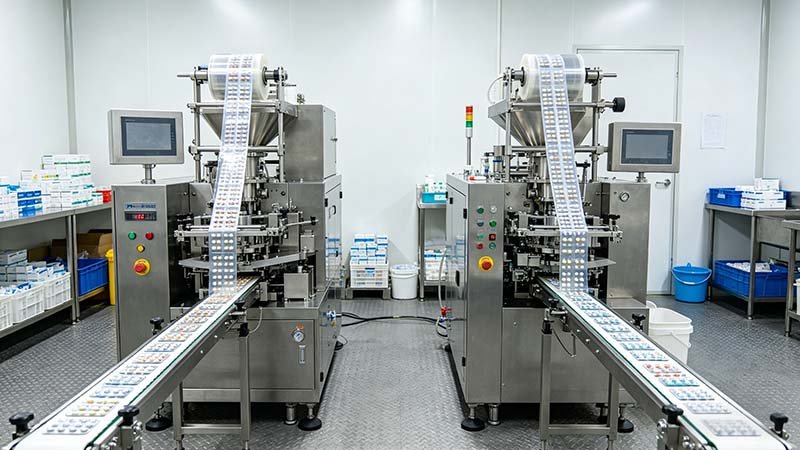
Tablet vs. capsule forming cavity geometry — why cavity depth, anti-rotation ribs, and film draw ratio require separate validated tooling sets rather than a single “universal” configuration.
How to Specify a Dual-Format Blister Machine: 6 Things to Demand in Your URS
The URS is where dual-format projects succeed or fail. These six specification items separate machines that actually deliver format flexibility from machines that claim it.
- 1
Name every dosage form and SKU explicitly. List each tablet size, shape, and coating type. List each capsule size (0, 1, 2), material (gelatin vs. HPMC), and fill type (powder, pellet, liquid-filled). The vendor cannot design tooling or validate forming parameters without this information. “Various tablets and capsules” is not a specification.
- 2
Require separate tooling sets per format, supplied before FAT. Each tooling set should include: forming die, sealing die, feed chute or brush feeder configuration, and cutting punch. Require dimensional drawings and material certificates for each set. Tooling that arrives after commissioning is tooling that delays your validation timeline.
- 3
Specify independent forming zone temperature control ±1°C. The heating system must maintain independent zone accuracy across the full temperature range required by both dosage forms — typically 75–130°C for standard PVC thermoforming. Request the zone mapping validation data for both tablet and capsule configurations as part of the FAT acceptance package.
- 4
Require PLC recipe management with 21 CFR Part 11-ready audit trail. Each dosage form format must have a separately stored, password-protected PLC recipe. Parameter changes must generate an electronic audit trail. This is not optional if your machine will be used in an FDA-regulated or WHO GMP market — and it is the most common omission I find in “flexible” machine specifications from budget vendors.
- 5
Define the changeover time target and changeover SOP in the URS. A well-engineered dual-format line should achieve tablet-to-capsule changeover in 45–90 minutes with trained operators. If the vendor cannot commit to a documented changeover time during FAT, that is a red flag. Demand a timed changeover demonstration during FAT with your operators present.
- 6
Include sealing integrity acceptance criteria for both formats in the FAT protocol. Specify the dye-ingress test method (ASTM F2338 dye-ingress or equivalent) and the acceptance threshold for both tablet and capsule blister cards. Run the test at three sealing temperatures for each format. Results below threshold at any temperature point indicate forming or sealing tooling issues that must be resolved before shipment — not after installation.
- 21 CFR Part 11 — Electronic Records
- WHO TRS 992 Annex 3 — GMP Packaging
- ICH Q10 — Process Performance
- ASTM F2338 — Sealing Integrity
- USP <1207> — Container Closure
- Załącznik 1 do GMP UE (2022)
What Does a Properly Engineered Dual-Format Machine Actually Look Like?
A plant manager in São Paulo called me last year, three months into production on a new blister line. The machine had been sold as dual-format capable. The tablet SKUs were running fine — 98.7% good packs on a 2×5 round tablet card. The problem was the capsule product. Sealing integrity failures were running at 6.2% during the first validation run. Not catastrophic. But not acceptable for release.
I asked three questions. First: were separate tooling sets supplied for the capsule format before FAT? No — the vendor had sent the capsule tooling four weeks after machine installation. Second: was the capsule forming temperature validated independently? No — the operator had started from the tablet temperature and adjusted manually until the blisters “looked right.” Third: was there a separate PLC recipe for the capsule format? No — the operator was entering parameters manually each shift.
Three separate audit findings. One machine. Zero of them were hardware failures.
A properly engineered dual-format Maszyna do pakowania kapsułek w blistry configuration delivers the following at FAT: dedicated forming and sealing dies for each dosage form geometry; a heating system validated to ±1°C across all zones at both tablet and capsule forming temperatures; a PLC with individually stored, access-controlled recipes for each format; a documented changeover SOP with a timed FAT demonstration; and sealing integrity test data at three temperature points for both dosage forms. That package exists. It just needs to be in the URS before the PO is issued.
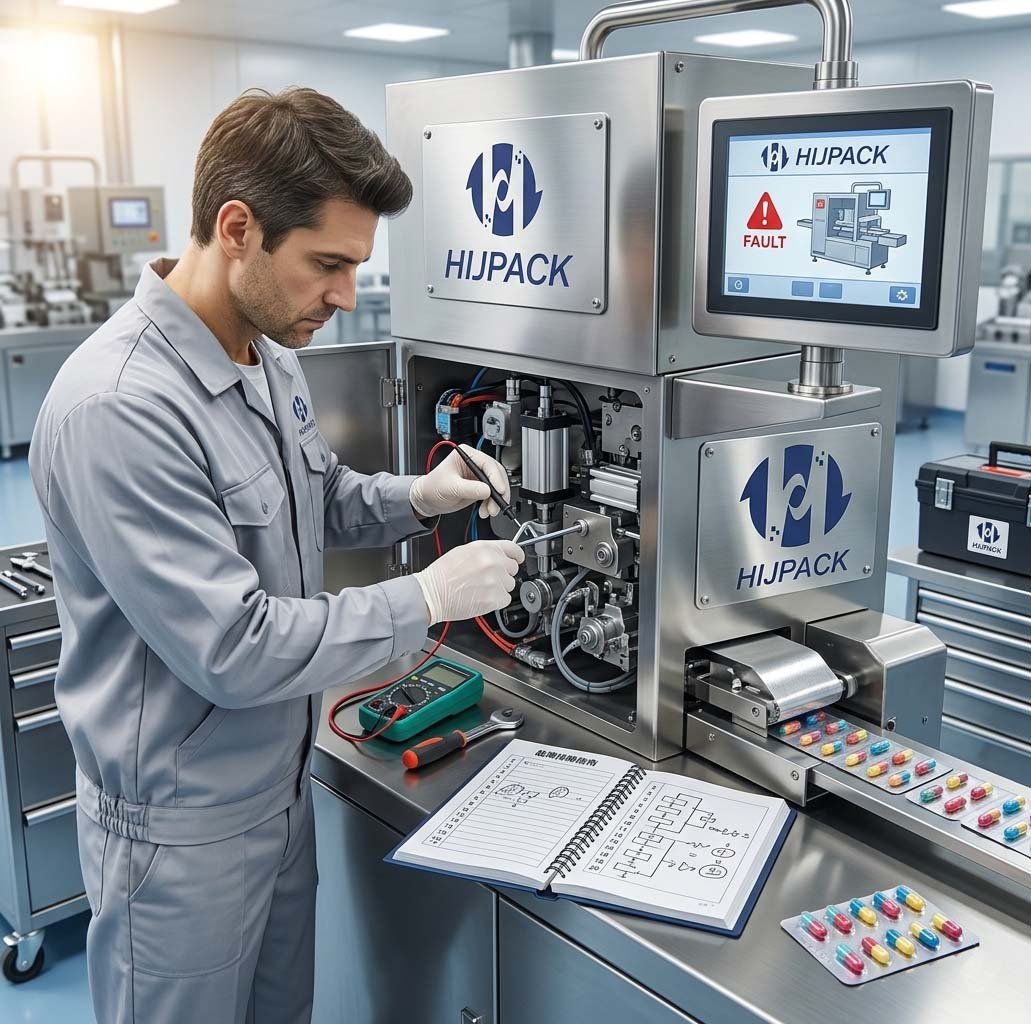
PLC recipe management touchscreen on a dual-format blister line — each dosage form format requires a separately stored, access-controlled recipe with a full electronic audit trail compliant with 21 CFR Part 11.
Frequently Asked Questions: One Blister Machine for Tablets and Capsules
❓ Can any blister machine handle both tablets and capsules?
No. Only machines designed with interchangeable tooling systems and independent forming temperature control can reliably process both dosage forms. A standard tablet-only blister machine cannot be field-modified to handle capsules without significant engineering changes to the forming station and feeding system.
❓ What tooling do I need to run both tablets and capsules on one machine?
At minimum: a separate forming die sized for your capsule geometry (with anti-rotation ribs), a matching sealing die, a capsule-compatible feed chute or channel feeder, and a cutting punch set matched to the capsule card dimensions. If your product range includes multiple capsule sizes (0, 1, 2) or multiple tablet diameters, each configuration requires its own tooling set. Budget 2–4 tooling sets for a typical dual-format line and include them in the machine PO — not as an afterthought.
❓ How long does it take to change over from tablets to capsules?
On a well-engineered machine with pre-validated tooling and trained operators: 45–90 minutes. On a machine where tooling was not specified at procurement and validation was done post-installation: 4–8 hours, plus a re-validation run before the batch record can be released. The 45–90 minute target is achievable — but only when changeover tooling and SOPs were engineered into the project scope from day one.
❓ Do tablets and capsules need separate PLC recipes on the same machine?
Yes. Separate PLC recipes are required for two reasons: operational accuracy (forming temperature, sealing pressure, feed speed, and cutting parameters differ between dosage forms) and regulatory compliance. Under 21 CFR Part 11 and WHO GMP requirements, parameter changes must be documented in an audit trail. Manual parameter entry between formats creates an audit finding risk. Stored, access-controlled recipes per format eliminate that risk and are standard practice on any cGMP-compliant dual-format line.
❓ What sealing failure rate should I expect when running capsules on a machine configured for tablets?
Field data from the projects I have been involved with shows 8–12% sealing failure rates when a tablet forming temperature profile is applied to capsule tooling without re-validation. That rate drops to below 0.5% when a validated capsule-specific recipe is used with properly designed capsule tooling. The difference between those two numbers is not hardware — it is whether the correct validation work was done before the line started production.
❓ Is it better to buy one dual-format machine or two dedicated machines?
The answer depends on your volume mix and shift structure. If tablet and capsule products need to run simultaneously — for example, two shift patterns covering different SKUs at the same time — two dedicated machines eliminate changeover risk and simplify validation. If your output volumes allow scheduling tablet and capsule runs on separate shifts, a single dual-format machine reduces capital outlay and GMP footprint, which matters in constrained cleanroom environments. I have seen both configurations deliver good results. The wrong answer is buying a dual-format machine to save capital and then discovering the changeover time makes the shift math impossible.
❓ Does running capsules affect the machine’s blister output speed?
Yes — typically a 20–35% speed reduction compared to the tablet configuration. Capsule forming requires longer dwell time at the heating station due to greater cavity depth. A machine rated at 200 blisters per minute for a tablet card will often run at 130–160 blisters per minute for a capsule card of similar count. This must be factored into your annual capacity model before procurement. Vendors who quote a single speed for both formats are quoting the tablet speed.
Need a Blister Machine That Actually Handles Both Tablets and Capsules?
HIJ’s HU-DPP260 is engineered for genuine multi-format flexibility — with pre-validated tooling sets, 21 CFR Part 11-ready PLC recipes, and a documented changeover protocol for both dosage forms. Tell us your tablet and capsule SKU range and we will configure the right tooling package before the PO is signed.